

A Simple Tip That'll Help Get Rid Of Roaches In Your Outdoor Space
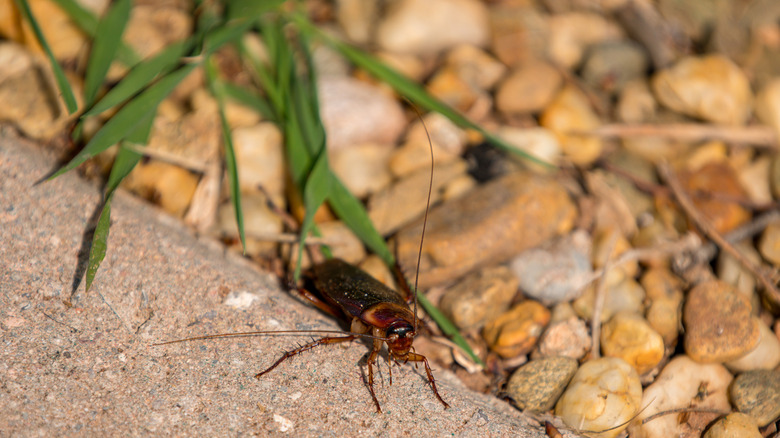
You might think of roaches as an indoor nuisance, but they have to come from somewhere before moving into your home. If your house is well-sealed off from pests, you may still find yourself dealing with a roach infestation on the outside if your property is offering them the things they're looking for: mainly food, shelter, and water. When it comes to food, roaches eat everything — they're omnivorous in a massive way. You can clean up crumbs in your home and secure foot but there's an endless supply of food for these pests outdoors, including decaying plants. On top of that, making the major mistakes of overwatering plants can attract these bugs.
Since you can't eliminate their food source outside, and your landscaping provides them with ideal hiding places from predators — think compost piles, leaves, mulch, and decaying debris — you'll need to use an alternative method to rid your yard of them. Diatomaceous earth is the answer to your outdoor roach problem, and it can even prevent them from moving indoors. But before you start dumping bags of diatomaceous earth all over your lawn, harming beneficial insects in the process, it's essential to know how to use it most effectively to eliminate your roach problem.
Using diatomaceous earth against roaches
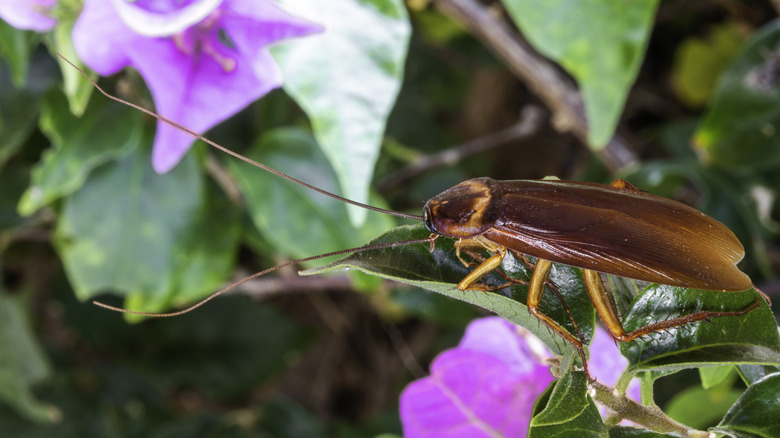
In order for diatomaceous earth to effectively kill pests, they need to come into direct contact with it. Diatomaceous earth is powdered silica harvested from the fossils of marine life, and it's abrasive. It works by scratching an insect's exoskeleton and absorbing moisture from their body, dehydrating the bug and eventually killing it. That means you will need to detect exactly where those roaches are hiding in your landscaping whether its in flower beds or under rocks and mulch. Because these insects are most active at night, and when it's warm or muggy, you will want to grab a flashlight and head outside to see where they're hanging out so you can sprinkle diatomaceous earth right where they're sure to come across it.
Once you've located the roaches' living spaces, put on some gloves and start creating lines of diatomaceous earth in those areas. To prevent them from moving indoors, you can also spread some along doors and windows. If it rains, you have dewy mornings, or there's a lot of wind, you'll need to reapply. It's also helpful to apply fresh mulch or use rocks in place of wood mulch, and to keep decaying plants cleaned up, correctly deadheading flowers to eliminate their food sources. Consider planting cockroach-repelling plants as well.