

Treat Clogged Gutters With This Cheap PVC Pipe Hack
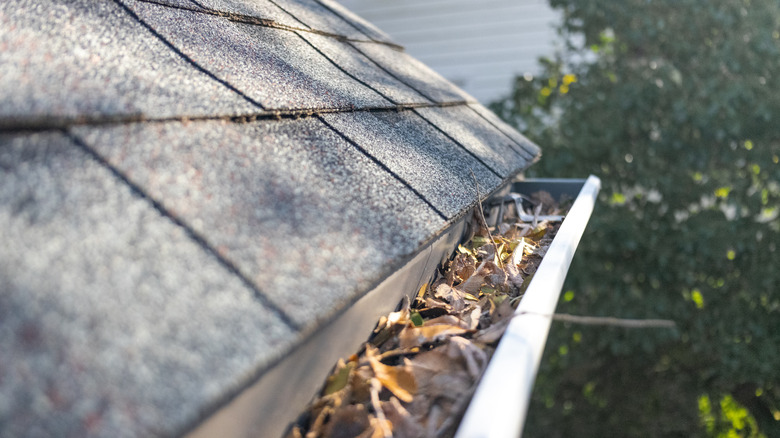
Clogged gutters aren't just annoying; they can be dangerous, too. Without proper drainage, you might end up with water overflowing onto areas that are better kept dry, resulting in a soggy garden or a slippery deck. You can use non-slip hacks to keep your deck safe, but in the long run, it might be better to clean the gutters. If climbing up a ladder isn't feasible for you — or just doesn't sound appealing — then this do-it-yourself PVC pipe hack might be the trick for you.
You can find variations on this hack on many YouTube channels, with some versions using water and others using air. No matter which option you choose, you'll need some supplies — PVC pipe, two PVC elbow connectors, a saw for cutting the pipe, and liquid cement. If you plan on using the water method, you'll also need a drill, a PVC end cap, a garden hose, and a hose adapter. For the air method, you should get a leaf blower and duct tape in addition to the basics.
Aside from some supplies, the main difference to note between the two methods is the size of the PVC itself. The water method works best with a narrower pipe size to keep the water pressure up; PVC with a diameter of ½ or ¾ inches tends to work best. A wider pipe is necessary for the air method, as you'll need to fit the end of the leaf blower into the pipe. Once you have the correct supplies, you're ready to clean those gutters.
Assembling your PVC gutter cleaner
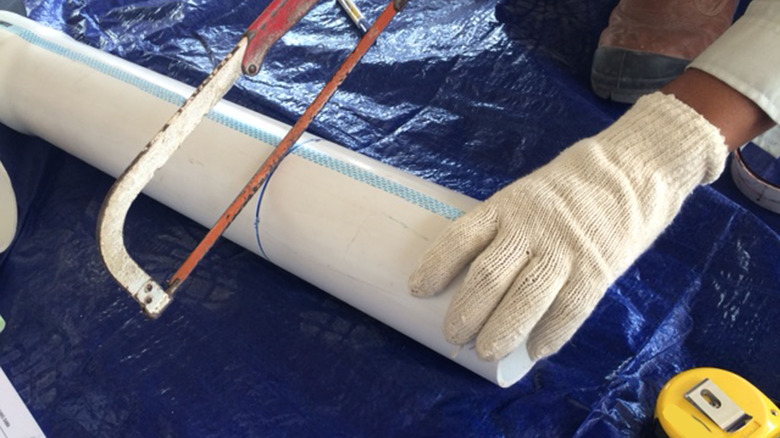
To begin your DIY gutter cleaning, start by measuring the PVC to the correct length. It should reach from you to the edge of the gutters. Try holding it in different positions to be sure it's easy for you to handle, then mark and cut the PVC. Next, cut two smaller lengths of a few inches each, keeping in mind that the final shape of the cleaner will be a hook. It shouldn't be wider or deeper than your gutter, or it might be unwieldy to use. Any leftover piping can be repurposed to help keep pests out of your garden.
Use the elbow connectors and PVC cement to attach the smaller sections to your main pipe. If you want to try the air method, all you need to do is place the nozzle of your leaf blower into the non-hook end of the pipe and secure it using duct tape. Essentially, you're just extending the leaf blower so that you can easily reach the gutter from the ground. For the water method, drill one to three small holes into the end cap and glue it into place on the end of the hook. Think of your gutter cleaner as a small shower with the end cap as the shower head. Attach the hose adapter and hose to the other end, and you're ready to go!
If you're having trouble removing blockages with the tool, you may need to increase the water or air pressure. If the problem persists, you may also need to check your gutter and see if the blockage is being caused by something more than leaves. If the gutter itself is broken, it may be time to call a professional, or even repurpose your old gutters into window box planters.