

Wet Vs Dry Logs: Which Is The Best Option For Your Next Campfire
We may receive a commission on purchases made from links.
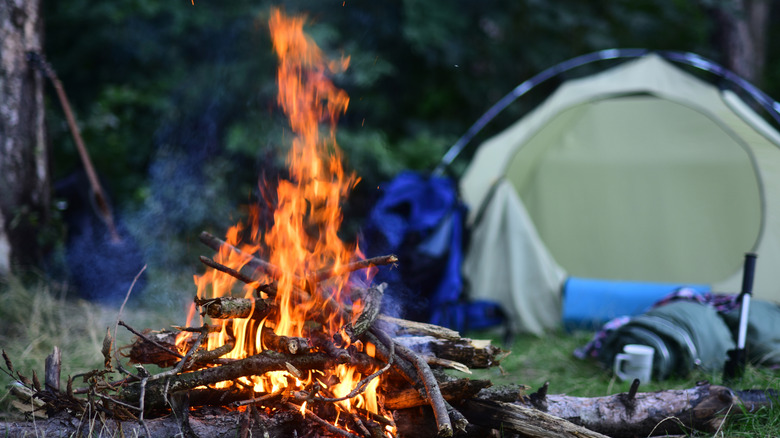
For most folks who overnight in the outdoors, building the perfect campfire is a vital part of the overall experience. Campfires not only add to the ambience of a camping trip, they also provide heat, light, and a means for cooking meals. When it comes to choosing the best type of wood for a campfire, many have a preference based on lighting ability, heat produced, or the flavor it lends to food. However, regardless of which type of wood is preferred, some have questioned whether wet or dry logs are best for campfires. That can be answered in one word: dry.
If the answer is so cut-and-dried, so to speak, there may be questions as to why it's even debatable. That, too, is explainable. For starters, for the purpose of this article, wet wood is referring to wood that has been temporarily dampened by rain, snow, or dew — not green or live limbs, which are sometimes referred to as wet wood. In fact, there are those in cold, northern regions who prefer wet wood over dry for use in their homes, believing that wet wood burns slower and longer, releasing heat more evenly, which would allegedly be helpful overnight, and that it releases humidity into the air. These theories don't align with practical reality — in fact, as stated bluntly by the State of Alaska's Department of Environmental Conservation, "Wet wood is wasted wood." Wood should always be kept dry for the most efficient burn, and that same principal applies to an open campfire, where ignition time and a clean, hot burn are needed.
Why dry wood is better for campfires
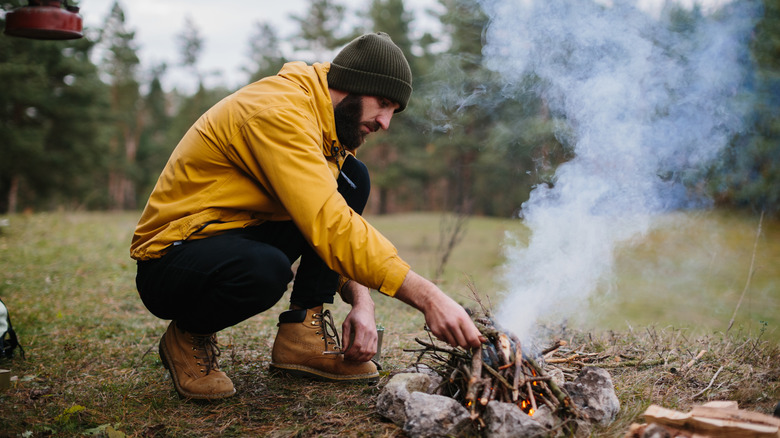
While arguments can be made (albeit, flawed ones) for using wet wood for indoor fireplaces and wood burning stoves, those advantages do not carry over to a campfire setting. In fact, when it comes to campfires, wet wood is at a decided disadvantage. For starters, dry wood lights easier and faster. This is an especially big advantage when attempting to light a campfire where wind and other natural elements add to the challenge. It is possible to start a campfire with wet wood, but it takes more work and may require the assistance of accelerants or fire starters, such as Billy Buckskin Fatwood fire starter sticks to get it going.
Additionally, while those using wet wood to warm indoor areas appreciate what they consider even heat, it's actually a sign of inefficient burning. Dry wood burns much hotter because all of the energy released is dedicated to creating heat (and light), whereas combustion in wet wood expends part of the potential energy in boiling and evaporating water within the wood before it can even burn. The higher the moisture level in the wood, the less heat it emits when burning. Essentially, this means it takes more wet wood to create the desired amount of heat or light.
Finally, wet wood creates more smoke. When it burns inside a fireplace, smoke wafts up the chimney. But in a campfire setting is literally blows with the wind, often right at you. Excess smoke can make it difficult and uncomfortable to stay close to a campfire. It can also be ruinous when you are attempting to create tasty campfire meals, as wet wood fires can be too smoky and not hot enough for cooking.