

How To Prune The Pear Tree In Your Yard
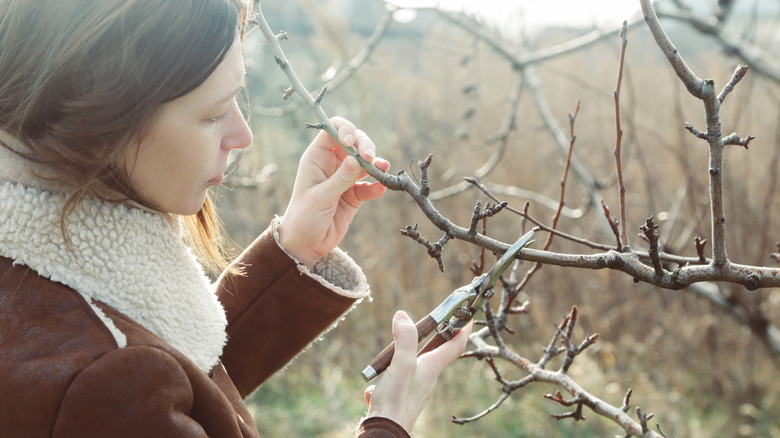
Backyard fruit trees are a homesteader's dream. If you're lucky enough to have a mature pear tree in your yard, a little pruning can go a long way. Pruning fruit trees (including pear) in the winter or early spring is the perfect time because it reduces the risk of spreading disease while the tree is dormant. Pruning also improves fruit production and helps fight pests and diseases by increasing sunlight penetration and air circulation.
Start by removing the easy stuff: anything dead or damaged. Then take a step back and picture removing only about 10 to 20% of the canopy; anything more can trigger the tree to go haywire and send out non-fruiting shoots called watersprouts, which only take energy away from the tree's fruiting production. These sprouts, also known as suckers, will often shoot up from the base of the tree; prune those as well.
Then look for branches that grow into the center of the tree or cross other limbs. Rubbing limbs can cause wounds on the tree that invite pests and diseases. Limbs that grow toward the center block sunlight and airflow, plus they are harder to access when it comes time to harvest the fruit. In the long term, you're trying to shape the tree into either a pyramid or a wine glass shape. The pyramid shape leaves a central leading branch and scaffolding branches reaching outward from it. The wine glass style maintains an open center, with most of the limbs reaching out and upward. Any branches that are low to the ground can get hacked, too. Once the weight of the fruit is on these limbs, they can hang so low your mower can't get under them, and they often get damaged from being too close to the ground.
How to prune for more fruiting
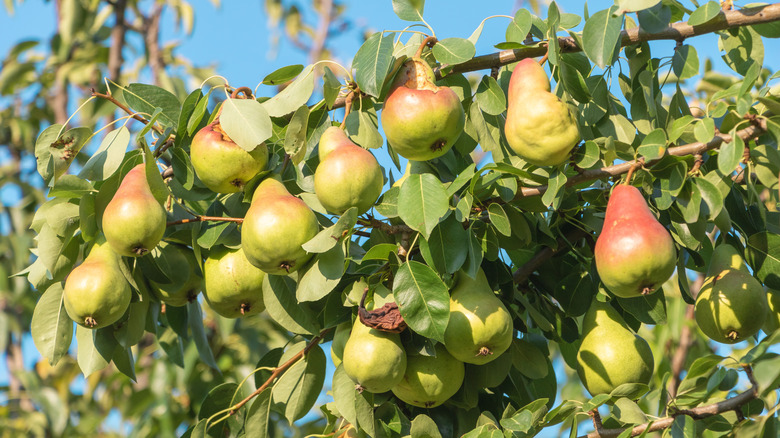
You want to make a clean break when pruning. Start with sharp and sterilized pruners or loppers and angle the cut slightly above an outward-facing bud or side branch to encourage outward and upward growth. Branches between two and three years of age tend to produce the most fruit, whereas older branches provide good structure, but less fruit, and sometimes too much shade. With this in mind, some orchardists keep their strategy simple by only removing one to two of the largest or oldest branches each year.
Otherwise, prune by shortening last year's growth by up to a third. This will encourage branching and fruiting spurs (those short, stubby shoots that will flower and fruit). Many gardeners space out their fruit spurs 4 to 6 inches apart because otherwise the fruits will compete for energy, and you'll get a weak crop. Like an artist painting on a large canvas, pause often and take a few steps back to behold your progress as a whole. You want to shape your pear tree in a way that will be structurally sound once the weight of the fruit is pulling the limbs downward, and you don't want to chop too much off at a time. Aim for proportionate balance on all sides, and just remember there's always next year. If you find your pear trees are still struggling after a few seasons of healthy pruning, you may want to run through the list of other culprits as to why they aren't producing fruit.