

Bring Life To Your Waterlogged Yard By Planting A Beautiful Oak Tree Variety
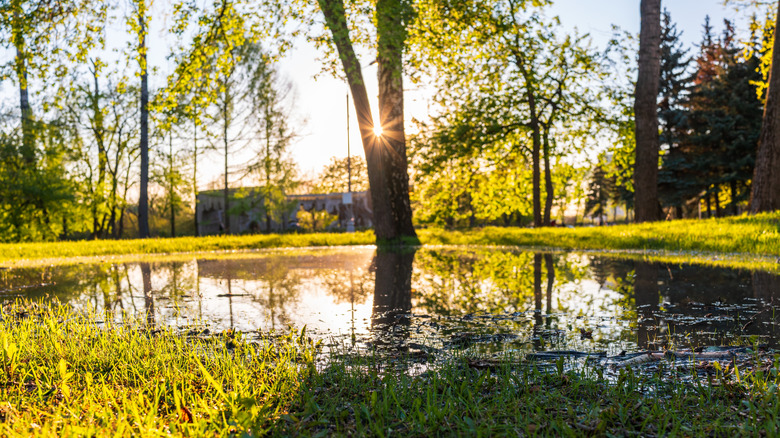
There are many reasons a yard can become waterlogged, from runoff issues to frequent torrential rains. Some yards stay boggy because they're located in swamplands or low-lying areas. Poorly draining soil — one explanation for mushrooms suddenly growing in your yard — can also be the culprit. Improving soil drainage with compost and landscaping puddle-prone areas with water-absorbing rain gardens are two strategies to consider if you live on a soggy site.
Don't stop there. Planting some swamp-loving trees can help this type of yard spring to life. One variety of oak tree loves wet conditions so much that it's named after them. The swamp chestnut oak (Quercus michauxii) grows in several types of soggy habitats in the eastern United States. Though it appreciates good drainage, which helps its roots take in enough oxygen, it can tolerate the occasional flood and adores a consistently damp growing site.
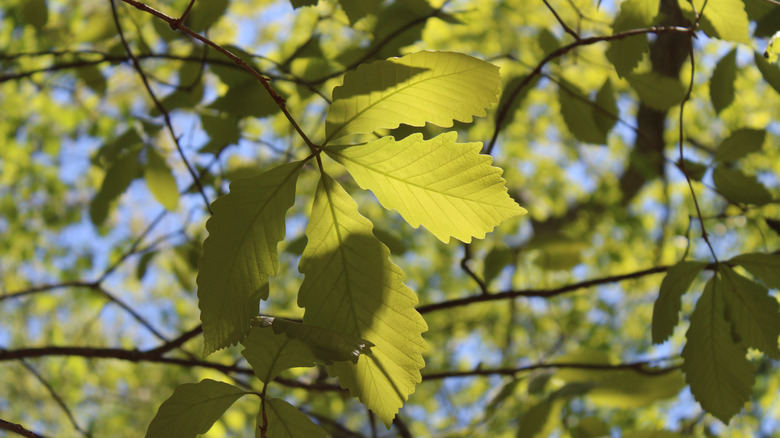
The swamp chestnut oak is a majestic tree that adds color and texture to its surroundings. Its wavy-edged leaves turn red, orange, gold, or copper in the autumn, while its light-gray bark sports dramatic furrows throughout the year. This species is a host for many fluttering friends, including imperial moths and several types of hairstreak butterflies. Swamp chestnut oak is a good source of cover, too, so many feathered friends like to nest in its branches. Plus, its acorns make tasty snacks for woodpeckers, ducks, wild turkeys, and an assortment of small mammals. Since this tree can grow 60 to 80 feet tall, it's best suited for large yards, where it will provide generous shade on hot summer days.
How to care for a swamp chestnut oak
Swamp chestnut oak is a low-maintenance plant suitable for gardening beginners, but it needs someone who can watch for pests and diseases. Like many other oaks, it can develop anthracnose, cankers, chestnut blight, oak leaf blister, and similar ailments. Swamp chestnut oak also attracts leaf miners, nut weevils, and other problem-causing insects. In particular, watch for signs of bugs that specialize in devouring oak trees. These include oak lace bugs and oak leaf skeletonizers. Nibbles from oak lace bugs lead to pale dots on leaf surfaces. If an infestation is severe, the leaves may lose quite a bit of their color. The insects can also cause leaves to curl and fall from branches. Oak leaf skeletonizers are small caterpillars that can do a lot of damage to your tree's foliage. Their feasting fills leaves with so many holes that they look like brittle tan lace.
Keeping your swamp chestnut oak as healthy as possible lowers its risk of infections and infestations. Though this species can tolerate partial shade, it thrives with at least 6 hours of daily direct sunlight. As for soil, your tree will be happiest in a planting site with a mildly acidic pH. If a soil test shows a pH level is above 6.0, lower it slightly with compost or elemental sulfur. Swamp chestnut oak performs best in USDA hardiness zones 4 through 9. If you live outside that range, consider other swamp-loving trees, such as red maple (Acer rubrum) or sweetbay magnolia (Magnolia virginiana).