

An Invasive Type Of Hornet That's Taking Over Yards And What You Can Do
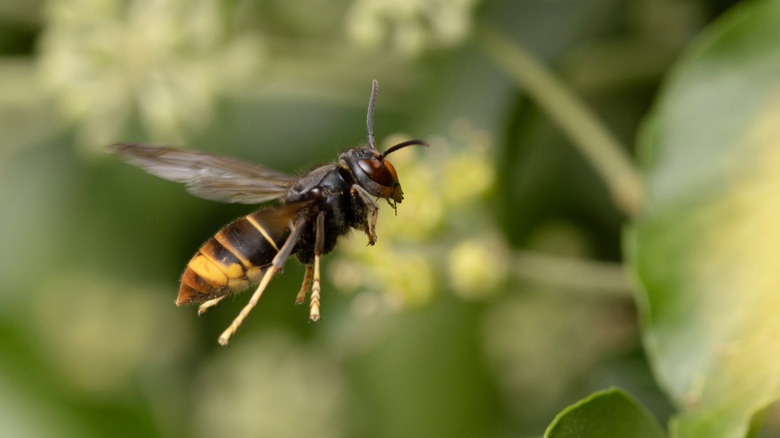
Typical hornet species are already annoying enough; now, there is another hornet making its way through some states in the U.S. The Asian hornet (Vespa velutina), also known as the yellow-legged hornet, was first discovered in the U.S. in Georgia in 2023. Soon after, they were also found in South Carolina. It's not bad enough that these hornets are an invasive species, but they also cause harm to honey bees and other pollinator insects.
Before you swat that hornet thinking it's invasive, identify whether it's a yellow-legged hornet. This hornet gets its name from the yellow on most or all of its legs, though the colors on its head and body can vary. Its nest looks like a paper egg, and they build them in trees. The larger the nest, the more hornets you'll find inside — as they usually have about 6,000 worker hornets housed inside.
However, in the spring, the queen builds a smaller nest for embryos, which is typically the size of a tennis ball, and these are often located in areas such as porches. Queen bees can be found traveling in the spring, and they play a crucial role in controlling this species. One colony of yellow-legged hornets can produce as many as 350 new queens each year. Once you've determined you're dealing with yellow-legged hornets in your yard, there are some things you can do to help eradicate this unwanted species.
What you can do about the invasive Asian hornet
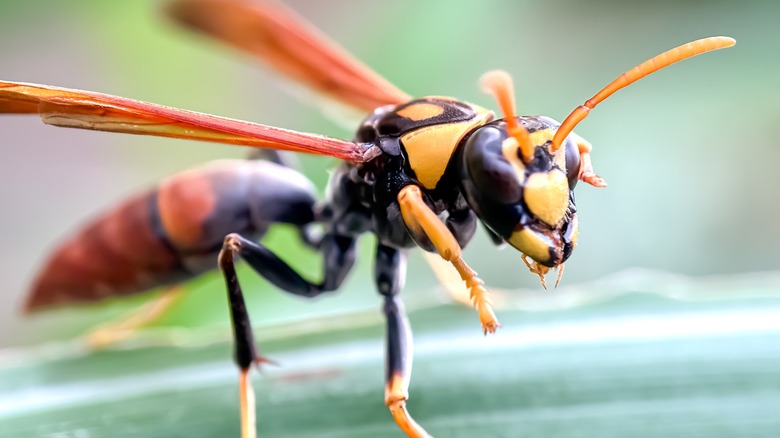
If you've discovered Asian hornets living on your property, it's time to let someone know, first of all. In South Carolina, the Clemson University Department of Plant Industry has established a notification system to track hornets found in the area. If you're in a different state, check your state's website to find out where to report sightings of invasive species. There are lookalikes, so it's essential to report a nest for verification before taking any action to destroy it, which could harm domestic species that are beneficial to our environment. While it's not the most dangerous type of stinging nuisance to humans, it poses a threat to other species including bees.
After reporting a nest or sighting, the relevant agencies can address the nest. You can be proactive by creating your own DIY Asian hornet trap with instructions from the National Bee Unit. The safest way, however, to battle this unwanted hornet is to create landscaping that offers places for native species to hide safely. This means having native plants in your yard, which require maintenance anyway. They're designed to withstand whatever weather your area throws at them, so they require less watering and care, yet offer a wealth of benefits to your local pollinators. Consider pollinator-friendly flowers for your garden and yard. This will help keep all the bees buzzing to your garden and help ensure the yellow-legged hornet doesn't wipe them out.