

10 Of The Best States To See The Northern Lights From
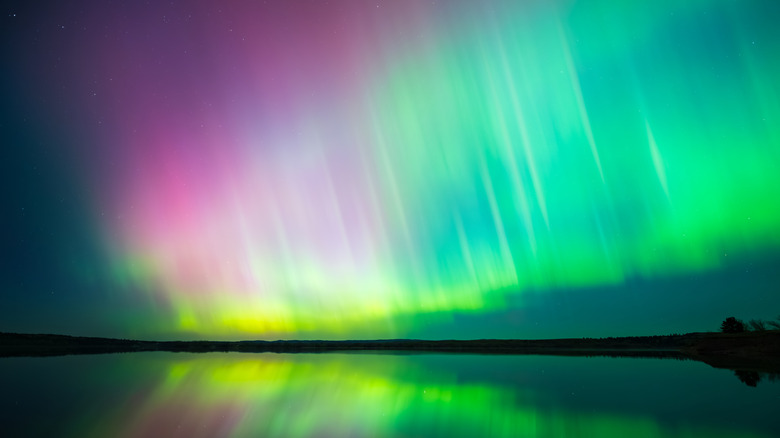
Viewing the aurora borealis, also known as the northern lights, is one of the most awe-inspiring natural events a person can experience. For some, this is the once-in-a-lifetime experience. For others, who live in the best places in the U.S to see the northern lights, it is much more common. These natural fireworks of green, yellow, and magenta are caused by particles from the sun colliding with gases in the Earth's atmosphere, heating them up and creating the spectacular colors you see in the night sky. Similar events happen in the southern hemisphere and are dubbed aurora australis.
The National Ocean and Atmospheric Administration (NOAA) has predicted more solar flares and particle activity in the coming year — even after 2024-2025, which were peak years for seeing the northern lights — meaning the aurora will continue to be strong as sun particles increase in concentration, punching through the Earth's magnetic field. This increased activity means folks as far south as South Carolina saw the show this past year, though areas in the northernmost States continue to have the best seats in the house, with the multi-colored lights more readily visible to the naked eye. Additionally, catching the aurora can be tricky predictions from as NOAA's forecasting model, OVATION, can change at the drop of a dime. Making sure you are in states with low light pollution and proper latitude is key. That is why these twelve states are the must-visit locations for checking the northern lights off your bucket list in spectacular fashion.
Alaska and Denali National Park
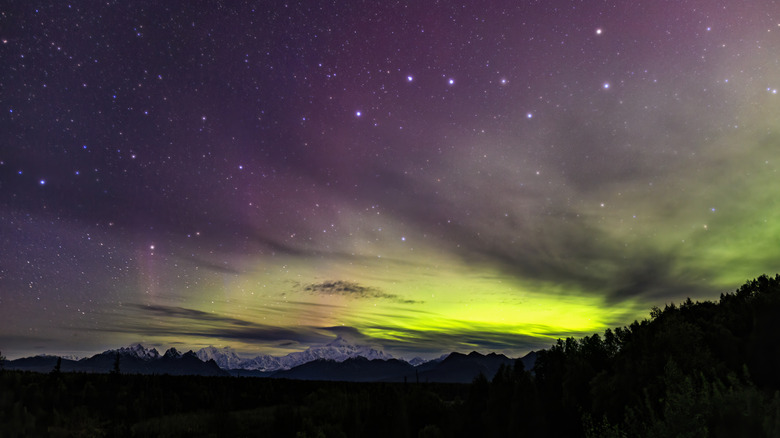
By far the premier state for catching a glimpse of the aurora borealis is Alaska, since it's the northernmost state and the only one with portions sitting within the Arctic Circle. In these northern reaches, closer to the magnetic pole, the Earth's magnetic field is much weaker, making it much easier for solar particles to penetrate and collide with the atmosphere, creating a more vibrant and spectacular phenomenon. While anywhere in Alaska will offer spectacular views, there is a wild feeling to seeing the lights from the seclusion of the state's six million acres of wild land in Denali National Park.
Maine and the Allagash Wilderness Waterway
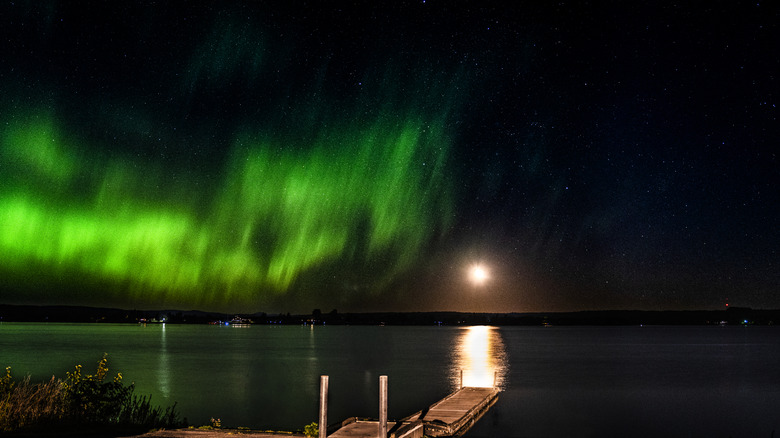
Few places in the U.S. offer the opportunity to experience the northern lights dancing above you while paddling on open water. This is precisely what makes Maine's Allagash Wilderness Waterway distinct. Its northerly location, 92 miles of canoeing, and exceptional solitude offer the chance to witness nature's light show from the water. While a majority of enthusiasts consider winter as the best time for viewing the northern lights, spring and summer are equally amazing. Accessed by both canoe and kayak, the remote waterway offers moose sightings and has historical ties to naturalists like Henry David Thoreau, adding to your viewing experience.
Minnesota and the Boundary Waters Canoe Area Wilderness
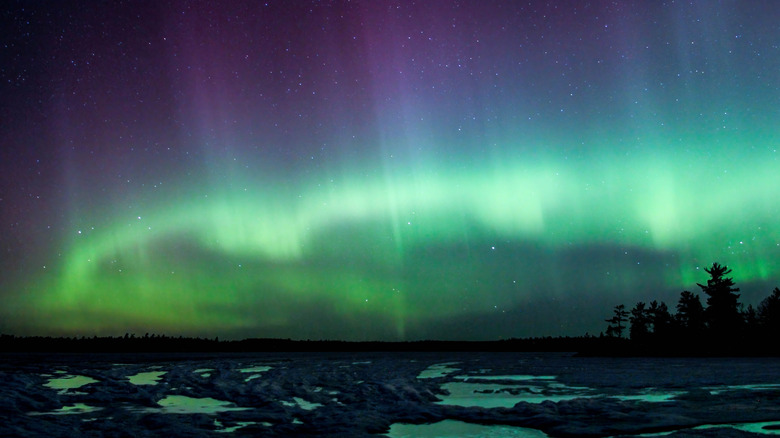
The northernmost regions of Minnesota are some of the most picturesque, under-appreciated parts of the nation. Home to the Boundary Waters Canoe Area Wilderness, one of the best places for canoeing and kayaking in the country. Here, the northern lights are sometimes so bright, they keep those camped on the shores of nearly 1,200 miles of canoe routes awake through the night. Note that some people visit frequently and never catch the lights, but the night sky is still gorgeous. Additionally, the wilderness is a popular winter camping destination, where one can cross-country ski by moonlight and perhaps see the aurora borealis.
Idaho and the Central Idaho Dark Sky Reserve
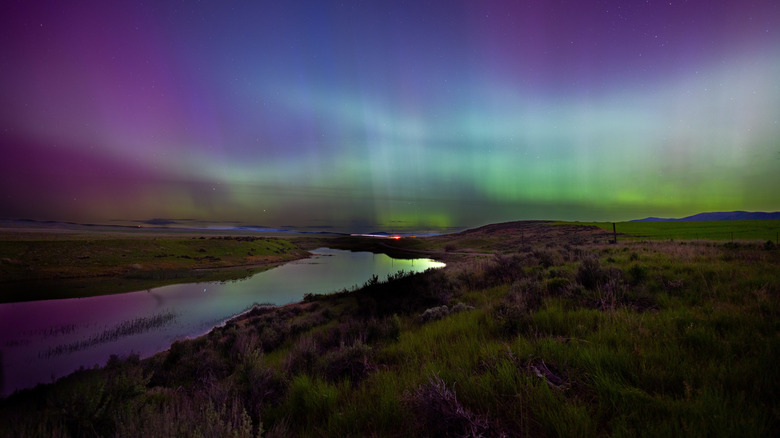
In a nation full of light pollution, few places can compete with the unadulterated nature of the Central Idaho Dark Sky Reserve. While most of Idaho lies on the southernmost edge of many of NOAA's aurora forecasts, the Dark Sky Reserve offers incredible opportunities to view the galaxy — and the lights when they probe farther south. The Reserve is one of 25 Dark Sky Reserves worldwide, and was the first in the U.S. As part of the Dark Sky Places network, the Reserve and surrounding communities pledge to reduce light pollution, making it ideal for viewing the northern lights, even from the comfort of your car (lights out!).
Michigan and the Upper Peninsula
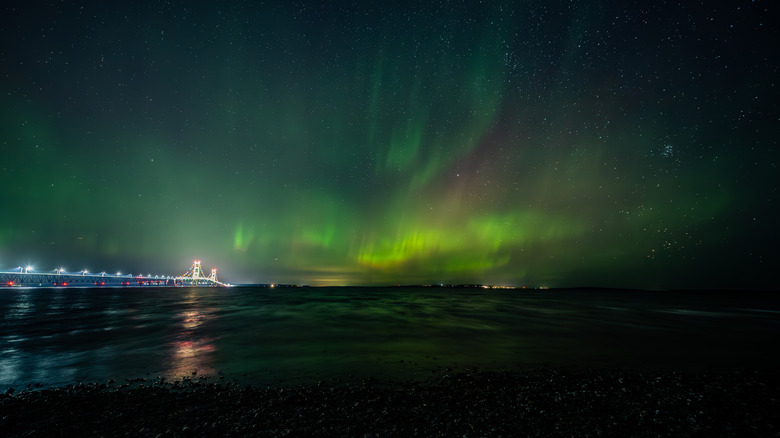
Anyone in Michigan will tell you the state is best described as two regions: The area south of the Mackinac Bridge and that north of it, dubbed the Upper Peninsula, the UP, or " da yooper." This area holds just 3% of the state's population while making up 17,000 square miles of lakeshore along multiple Great Lakes. The lakeshore, combined with unusually low population density, makes for clear views of the northern lights. The UP, known for its homey cuisine and hospitality, is often well within the bounds of NOAA viewing predictions.
South Dakota and the Badlands National Park
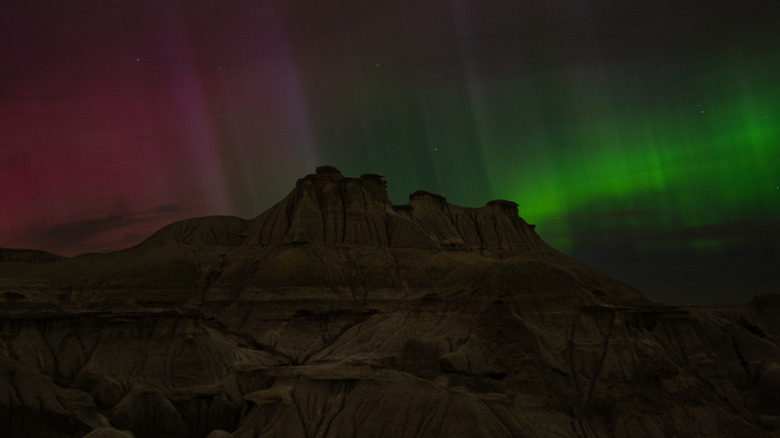
South Dakota is often considered a drive-through state rather than a destination. However, Badlands National Park combines a dramatic landscape with plenty of visibility, creating a unique environment for taking in the northern lights. Driving through one of the nation's least-populated states, one may be taken aback when stumbling across the Badlands. Here, deeply eroded mesas and fissures cover 244,000 acres and include one of the nation's most extensive fossil beds. From these barely-vegetated trenches, the night sky is bright and unpolluted by light exposure. For this reason, some of the most striking images of the northern lights have been captured in this region.
New York and The Adirondack Sky Center & Observatory
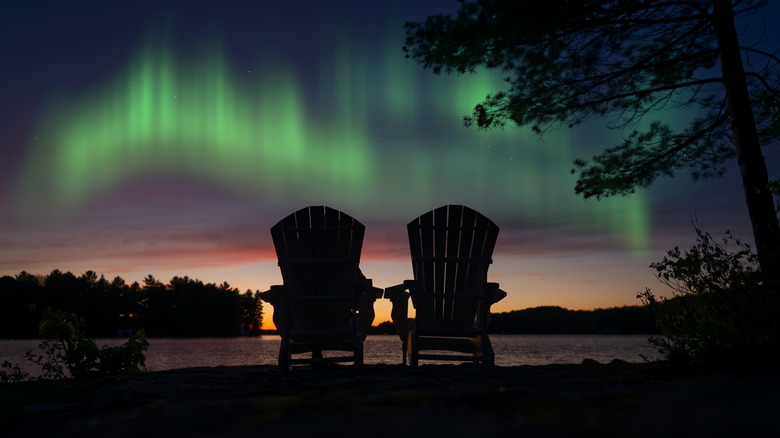
If NYC is the only destination that comes to mind in New York, you're missing out on one of the best-kept secret locations for catching a glimpse of the northern lights. Located in the northern region of the Empire State is The Adirondack Sky Center & Observatory in Tupper Lake. Perched in the mountains, the observatory is already a destination for astronomy lovers, but has yet to gain widespread recognition for its aurora opportunities. The center provides updates and forecasts on when the lights might be visible and is staffed with experts who often lecture on astronomical and atmospheric science, even how to photograph the northern lights.
Montana and Glacier National Park
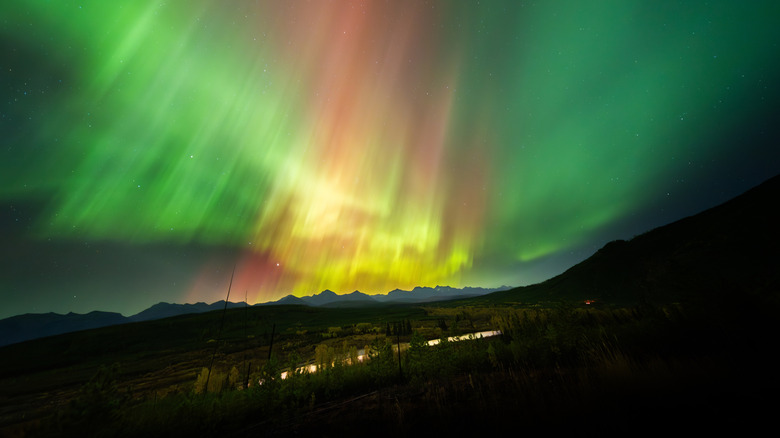
Montana is known for mountain ranges, Big Sky skiing, and Yellowstone National Park. But Glacier National Park is arguably the most visually stunning, regularly experiencing the northern lights. Located on the border with Alberta, Canada, the park offers stunning mountain views and actively moving glaciers. But it is the recession of these glaciers — leaving behind wide lakes and U-shaped valleys — that makes for the park's best viewing locations for the northern lights. Lake McDonald is centered on the west side of the park and creates a backdrop of unmatched scale, where visitors watch the lights dance over glacial ice.
Wisconsin and Door County
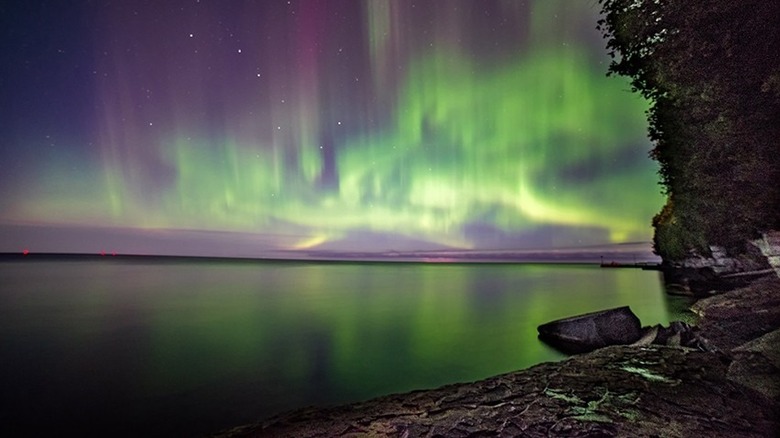
In 2025, unprecedented solar activity made the northern lights visible over Wisconsin's state capital dramatically lighting the lakes surrounding Madison. However, this is an anomaly, and the northern lights are rare in the southern portion of the state. Visitors can travel up the lake shore to Door County, where the lights are much more common. This peninsula is a distinct region of the state with deep Swedish heritage and an extensive coastline. Stretching into Lake Michigan, the county is best known for its slow pace and dark skies, and local spots like Washington Island and Rock Island State Park are prime viewing areas.
Washington and Olympic National Park
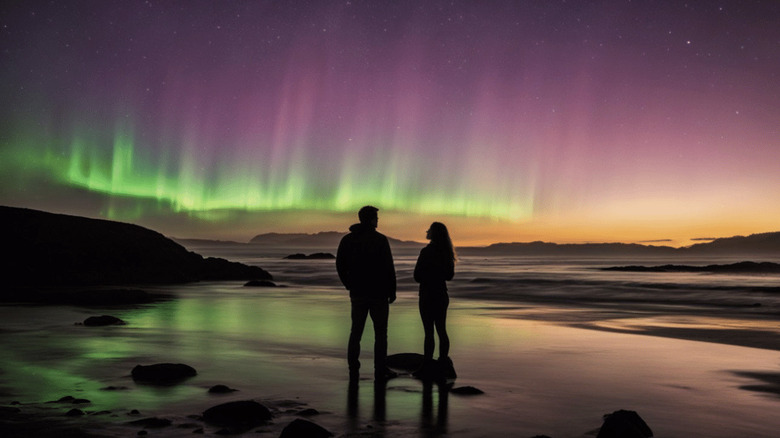
While not all of Washington state has common aurora sightings, one northern jut of land is often within NOAA's visibility radius. Across the bay, two hours west of Seattle, is Olympic National Park, one of Washington's premier wildlife and northern lights viewing destinations. Located on the Olympic Peninsula, the park has over 70 miles of wild coastline. Whether camped along these beaches or in the mountains, one can often catch the lights over the expansive vista of the Salish Sea. Among the prime viewing spots: Hurricane Ridge, Neah Bay, and Deer Park.