

How To Determine The Best Size Pavers For Your Driveway
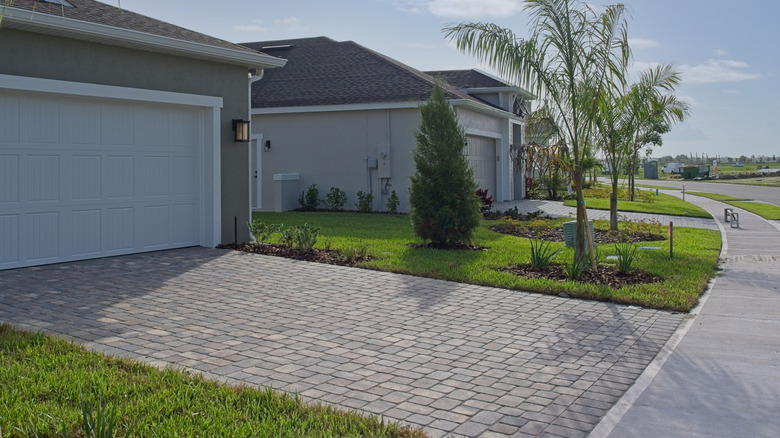
Pavers are a great way to take your landscaping to the next level and can be used for driveways, walkways, paths, and patios. Considering the risk of making costly mistakes, you may not want to do these outdoor renovations yourself. Regardless, however you approach paving a driveway, your first real step is deciding what size pavers to use. There are many different types of pavers, from large rectangular slabs to small bricks or blocks that you can use in intricate designs. They come in a variety of materials, including concrete, brick, and stone, all of which are long-lasting and durable.
The most common sizes of concrete pavers are 12" x 12", 16"x 16", and 24" x 24", while brick pavers usually come in the standard size of 4" x 8". If you're choosing stone pavers, you generally have two sizes to work with — 4" x 8" and 9" x 9". Many homeowners choose a variety of sizes to add some real style and visual appeal to the home. In addition to different sizes and materials, you also have a variety of shapes you can choose for your project, including square, rectangular, hexagon, octagon, diamond, and irregular, which are usually natural stone. If you want a specific design for your driveway, you may end up with several shapes and sizes in your finished design.
Which size pavers are better for your driveway project?
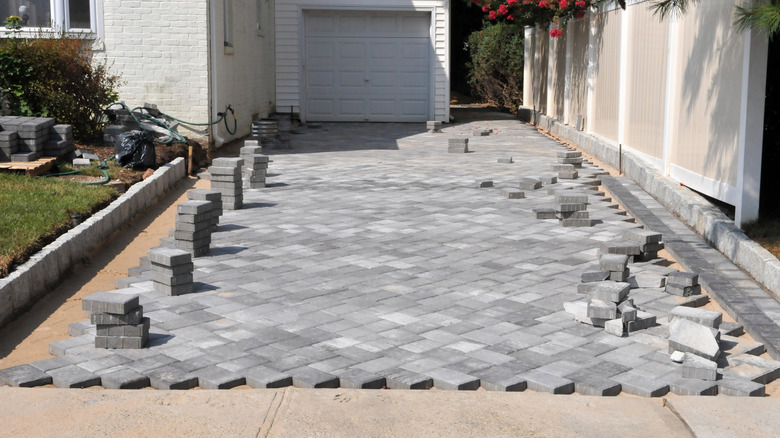
When choosing the right material and size for your pavers, you will need to take into consideration how much traffic your driveway gets each day. Even one car pulling in and out of the driveway several times a day is considered a decent amount of traffic. Large pavers handle heavy traffic and weight better than small pavers, and are a better choice for driveway projects. They are generally more durable than their small paver counterparts (thanks to their thickness), and are much harder to crack or damage. However, there are specific small pavers that can handle heavy traffic just as well, such as Interstone and Villa Stone pavers, especially if they have lots of interlocking patterns. They are also said to handle underground movement better.
Because of the obviously increased number of gaps and joints that come with small pavers, they will require more maintenance. Small pavers are simply more susceptible to things like weeds that grow between the gaps, which can also trap more dirt and debris than large pavers would allow.
Aesthetics are a different issue entirely. When it comes to style, small pavers provide more flexibility in color combinations and designs, and usually have a more intimate, creative feel. It depends on your taste, though; large pavers have a more modern look that can be bold and elegant in a brutalist fashion. If done correctly, creative pavers can make a real statement in your driveway, and are one of many updates that can add serious value to your home.
Maintaining paver driveways properly for long-lasting beauty
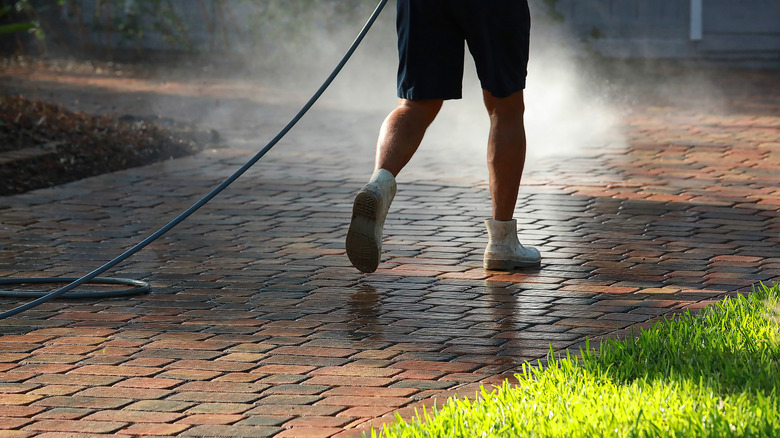
Now that you have invested in a paver driveway, you want it to last. There are some easy maintenance steps you can do to ensure your driveway looks fantastic for years to come, and they're generally the same for all paver sizes. Frequent sweeping is the first and easiest maintenance step. Giving the paver driveway a quick sweep with a push broom or regular broom prevents soil, dust, and other debris from ruining the look of your pretty pavers. You should always sweep your driveway if you happen to expect rain, because that will make cleaning it later on much easier.
Rinsing the driveway with a hose after you sweep will keep the dust and debris from car tires and shoes from getting ground into your pavers and the spaces in between them. If you live in an area that tends to get mold and moss growth, using a power washer can prevent this from becoming a problem. Both sweeping and rinsing the driveway make great chores for teenagers wanting to make some extra allowance money! Deal with any spills or stains using a mild cleaner and a brush, and try to address them as soon as you see them so they don't become set in.
You may consider sealing your pavers to help resist stains and dirt, which makes cleaning a lot easier, too, especially for small pavers. This could also help prevent weeds from growing in between the gaps, which you can also kill by manually removing, pressure washing, and then applying your preferred solution. Martha Stewart has a three-ingredient weed killer, while things like salt, white vinegar, and even sugar can kill weeds, keeping your paver driveway perfect.