

12 Types Of Crocodile Species, Ranked By Danger Level

Mother Nature has ways of letting us know that she ought to be respected, and crocodiles are a fine example. Belonging to the Crocodylidae family — part of the reptilian order of Crocodilia (which includes alligators and caimans) — certain species can weigh well over 2,000 pounds (five times the average weight of an alligator). They're also more aggressive than their cousins: While all crocodilians can inspire fear, crocodiles especially are considered some of the most dangerous animals in the world.
As with many predatory families, not all crocodiles are equally dangerous. For example, both saltwater and Nile crocodiles have more than earned the respect of humans with whom they share their waterways. Others, like dwarf crocodiles, while known to be aggressive, simply don't have the size, speed, or power to inflict the same kind of damage. Similarly, the Philippine crocodile has historically gotten a bad rap, being lumped in with the larger, more powerful saltwater crocodiles, with which they coexist. That's not to say that these species aren't dangerous: As with the 12 species featured below, any dwarf or Philippine crocodiles you find should be admired from a distance. After all, a bite is still likely to require a hospital visit, and even the smallest species are likely to be more dangerous to children than adults.
This guide ranks those crocs most likely to be dangerous from least to most threatening. We draw on attack data, where available, as well each species' specific attributes, behavioral patterns, and habitat range, especially where the latter makes human encounters more likely. We'll explore species and habitats around the world, from crocodile-infested waters in the United States to the deserts of Africa and the remote reaches of New Guinea.
12. African slender-snouted crocodiles
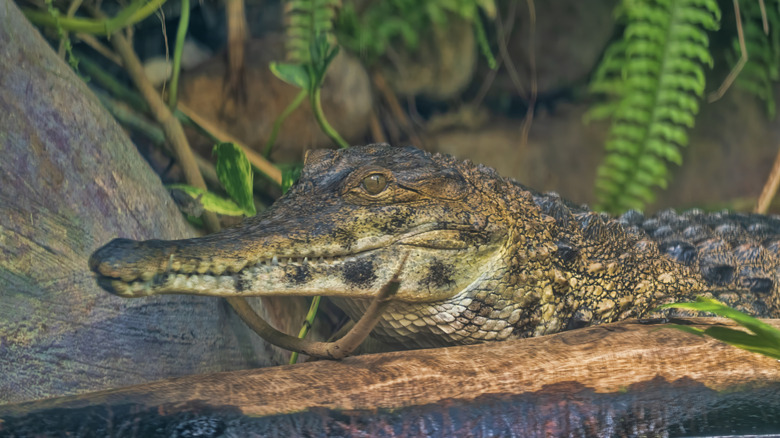
African slender-snouted crocodiles (Mecistops spp.) sometimes reach 13 feet in length, but generally average between just 6 and 8 feet. They typically sustain themselves on small animals like fish, amphibians, reptiles, and crustaceans, making humans an unlikely menu item. There is also almost no data pertaining to attacks on humans, although, since crocodile attacks go largely unreported in many regions of Africa, it's hard to say with certainty whether they happen or not.
Listed by the International Union for Conservation of Nature (IUCN) Red List as critically endangered and shy by nature, the two extant species of slender-snouted crocodiles prefer the densely vegetated rivers and shallow water bodies in the tropical rainforests of central and western Africa, making the chances for human encounters are slim. With that said, crocodiles of all species can be very protective of their eggs, so if you ever do happen to spot one in the wild, you should still keep your distance.
11. New Guinea crocodile
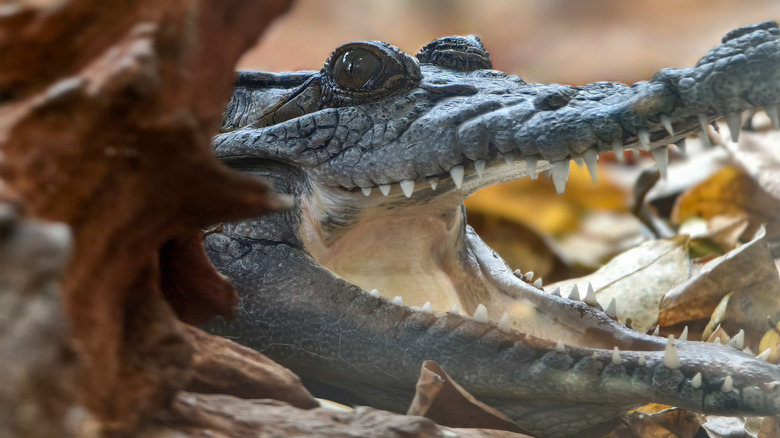
Larger and more powerful than the African slender-snouted crocodile, New Guinea crocodiles (Crocodylus novaeguineae) can grow to over 11 feet. Their habitat range is restricted to the freshwater rivers and wetlands of the Papua New Guinea mainland, as well as the Papua and West Papua regions of Indonesia. The species abounds in those areas, however, since it prefers marshes and wetlands — which are not heavily populated by humans — chances of conflict are slim. In fact, there are no confirmed attacks on humans for this species.
Behaviorally speaking, New Guinea crocodiles are nocturnal, further reducing the chances of dangerous encounters. Even if you do happen to be out in the wetlands after dark, these crocs largely feed on smaller prey like fish, amphibians, and insects, meaning you're unlikely to be considered fair game. With all of that said, it's impossible to say, categorically, that New Guinea crocodiles are not dangerous to humans. As with all crocodilian species, the key to safety is caution.
10. Siamese crocodile
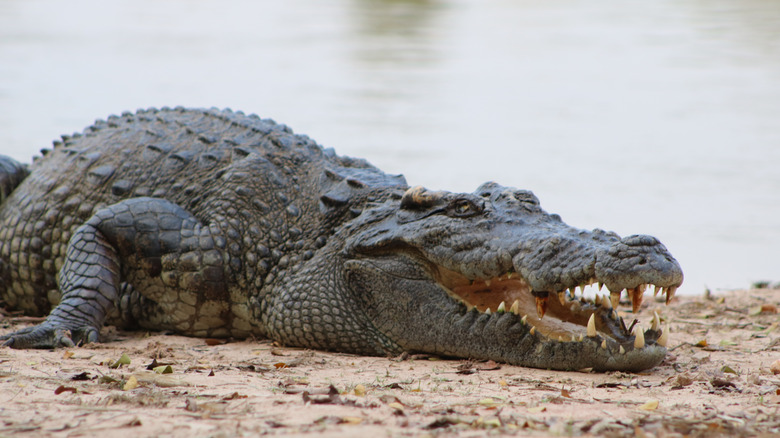
Unlike African slender-snouted and New Guinea crocodiles, attacks by Siamese crocodiles (Crocodylus siamensis) are more frequent. While reporting of attacks by crocs in general is usually more robust in Asia than in many parts of Africa (per CrocAttack), there aren't many reports to go on for this particular Asian species, and the data that exists is far from conclusive. We found records of three attacks by Siamese crocodiles between 2015 and 2024. While none were fatal, the fact that they happened (and more could have gone unreported) makes it hard to deny that these crocs are dangerous to humans.
It should be noted that Siamese crocodiles are not considered to be aggressive: Attacks are usually thought to be defensive, which means you can minimize the risk of conflict by simply keeping your distance. In reality, it's unlikely that you'll encounter them. Native to Asia, and now only found in remote Southeast Asian wetlands (often far from human populations), this species is in serious decline (it's considered one of the rarest reptiles). In fact, it's listed as critically endangered by the IUCN Red List, with populations disappearing from 99% of its former range. Finally, while it can grow up to ten feet in length, the Siamese crocodile rarely hunts anything bigger than snakes, frogs and fish, which all means that while attacks do happen, they're unlikely.
9. Cuban crocodile

A limited habitat range could explain why so few human attacks by this species have been reported. It's found in the Zapata and Lanier Swamps in southern Cuba, which lie far from human settlements. In fact, the Cuban crocodile (Crocodylus rhombifer) has the most limited range of all Crocodylia species. Although some individuals over 16 feet in length have been reported, it's generally considered to be a medium-sized species, usually growing to around 11 feet. All of this makes for rather reassuring reading, but it comes with a word of caution: These animals are agile and intelligent, and can also reach speeds on land of up to 22 miles per hour. They've also been observed leaping from the water to snatch prey from overhanging branches, and they're known to be aggressive.
We found just one record of an attack in Cuba between 2015 and 2024, and that was by another species, the American crocodile (though research has shown American and Cuban crocodile species appear to be hybridizing in the area). However, their threat to people should not be underestimated. Like other species, Cuban crocodile mothers are likely to be defensive if you approach their nest. What's more, while the behavior is still being studied, they have been observed engaging in what appears like pack-like hunting behavior.
8. Orinoco crocodile
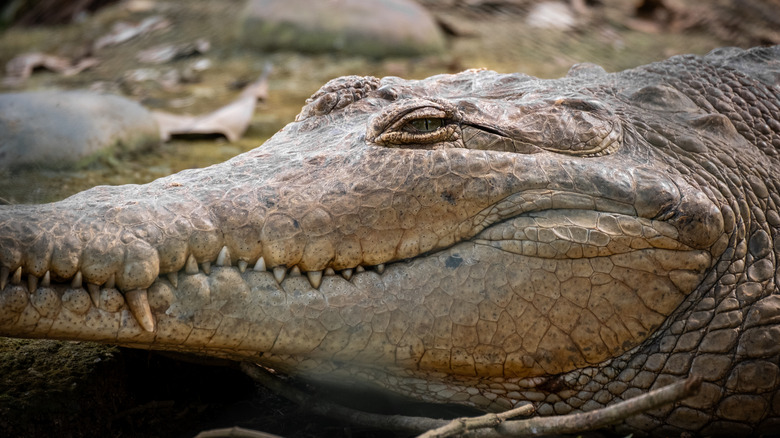
Being one of the world's largest crocodile species — certainly larger and more powerful than the others featured so far — Orinoco crocodiles (Crocodylus intermedius) can grow to over 16 feet — smaller than the 22 feet this species reportedly reached historically, but it's still intimidatingly large. In fact, they're the largest predator in South America.
Despite their size, these crocs are masters of stealth. They're opportunistic predators, lying in wait beneath the surface of the water until they're good and ready to strike. They generally lurk close to riverbanks, waiting for prey to venture close to the water's edge before attacking.
While this paints an unnerving picture, it's worth knowing that incidents are rare, and that no attacks on humans have been reported in recent decades. Found exclusively in the Orinoco River basin in Colombia and Venezuela, the species is critically endangered, its numbers having been reduced by more than 80% due to hunting, pollution, and habitat loss. It primarily hunts at night, which reduces the likelihood of encounters even further, but as with many other crocodile species, it can sometimes become very aggressive, so if you see one in the wild, be sure to keep your distance.
7. Australian freshwater crocodile

Growing up to 10 feet in length, while they're by no means the largest crocodilian, human encounters with Australian freshwater crocodiles (Crocodylus johnstoni) are still best avoided. Between 2010 and 2020, there were 16 reported attacks on humans by this species. None of these were fatal, however, and since the species is largely found in the north of Australia, adventurers exploring the southern reaches of the country are less likely to encounter it.
Even if you do bump into one, Australian freshwater crocodiles are shy, meaning they're more likely to flee humans than attack them. They may do so at surprising speeds, too, since they're able to move up to 17 miles per hour on both land and water! And they won't hesitate to bite swimmers who venture too close. Even though bites are unlikely to kill adults, they could be significantly more injurious, even deadly, to children.
6. West African crocodile
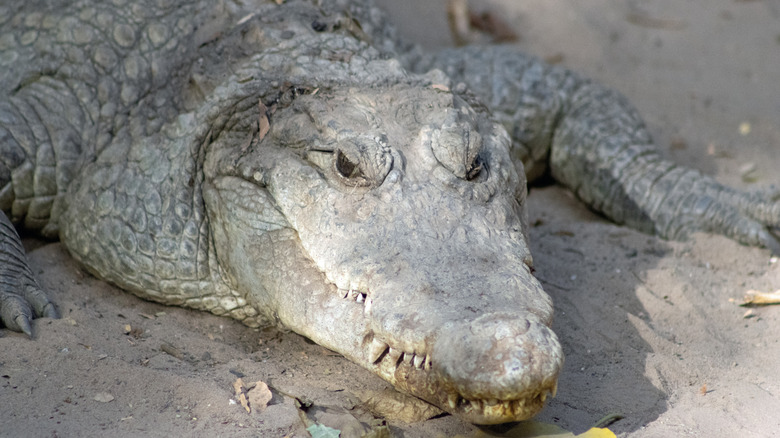
Growing up to 13 feet in length, and typically feeding on vertebrate prey once mature, the West African crocodile (Crocodylus suchus nee niloticus) was once thought to be the same as the much-deadlier Nile crocodile. However, just because the latter has a far more gruesome attack record, that doesn't mean that the former is not dangerous. In fact, the West African crocodile is the first in this list confirmed to have killed humans in recent history.
Also known as the desert crocodile, it's believed to be responsible for at least 12 attacks between 2010 and 2020, per the Crocodile Specialist Group. That doesn't sound like many, and is less than the number of recorded attacks by Australian freshwater crocs. However, of those 12 attacks, eight were fatal, making the West African crocodile considerably more dangerous. Compounding this, CrocAttack lists 12 attacks between 2015 and 2024, of which 75% (nine) were fatal. Despite the general agreement that this particular crocodile is one of the continent's less aggressive types, it's still an animal you ought to beware if you're planning a trip to the African desert. It's also important to remember that a significant number of crocodile attacks in Africa are likely to have gone unreported, meaning many more people could have fallen victim to this species than the available data suggests.
5. Morelet's crocodile
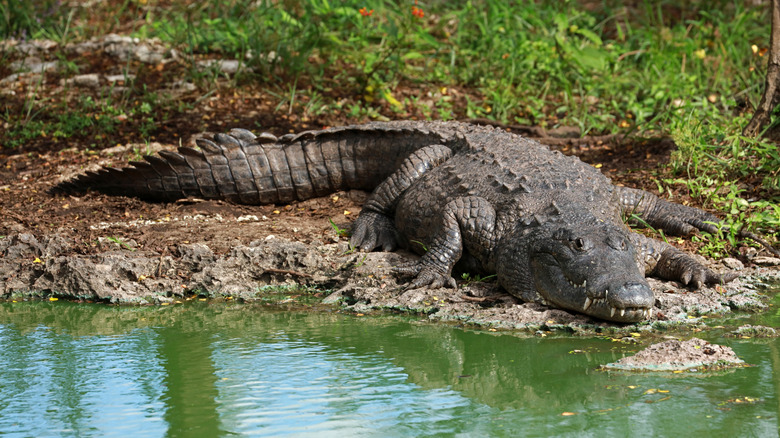
Slightly larger than the West African crocodile, growing to over 15 feet in length, it's not just its size that makes Central America's Morelet's crocodile (Crocodylus moreletii) more dangerous. It's usually more active in the evening, which reduces human encounters somewhat. But it's still an apex predator, one from which people would do well to keep their distance. Per the Crocodile Specialist Group, 73 attacks were recorded between 2010 and 2020 — considerably more than their relatives over in West Africa. Of those attacks, nine were fatal.
This species inhabits fresh waters in the Atlantic regions of Guatemala, Mexico, and Belize, including man-made water bodies. In other words, their proximity in certain areas to human populations could go a ways to explaining the number of attacks. However, it's worth mentioning that attacks by Morelet's crocodiles remain far rarer than those by other, more dangerous species. The American crocodile, for example, which shares parts of the Morelet's habitat range, is a far more prolific human hunter. Of the two, Morelet's are more naturally shy, although larger individuals are unlikely to back down in any encounters, and may even attack if they feel provoked.
4. American crocodile
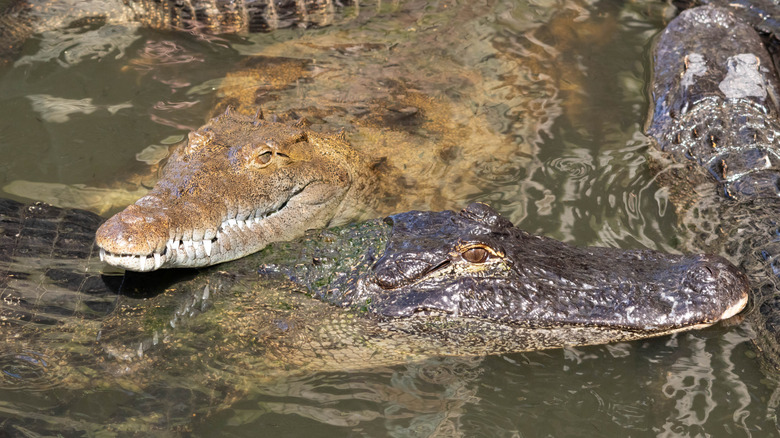
The American crocodile (Crocodylus acutus) is one of two crocodilian species native to the U.S. — the other being the American alligator. It ranges across the coastal areas of southern Florida — the one place in the world where you can see both wild alligators and crocodiles — and can also be found in Cuba, Jamaica, Hispaniola, as well as Central and South America. Like the Morelet's crocodile, the American croc is also shy. And while it can grow up to 20 feet in length, it rarely surpasses 14. It's also nocturnal, preferring to hunt in the hours of darkness and thus reducing the likelihood of conflict.
The reason it ranks as more dangerous than the Morelet's crocodile is really a matter of numbers. Between 2010 and 2020, 185 attacks (including 26 fatalities) were recorded, per the Crocodile Specialist Group. More recently — between 2015 and 2024 — CrocAttack states that the species was responsible for the highest number of attacks, and deaths, by crocodiles in the Americas — certainly more than the Morelet's. It also explains that a majority of these attacks took place across Costa Rica, Mexico, and Panama.
Such occurrences are still considered rare, especially compared with other, more dangerous crocodile species, particularly given the American crocodile's extensive range. But as the numbers clearly indicate, their shyness and relatively low attack numbers should, in no way, be taken for granted. For example, you should, under no circumstances, swim in areas where they're known to frequent. These crocodiles are excellent stealth hunters, and will gladly wait, hidden almost undetectably under shallow water, until prey ventures close enough for them to strike.
3. Mugger crocodile
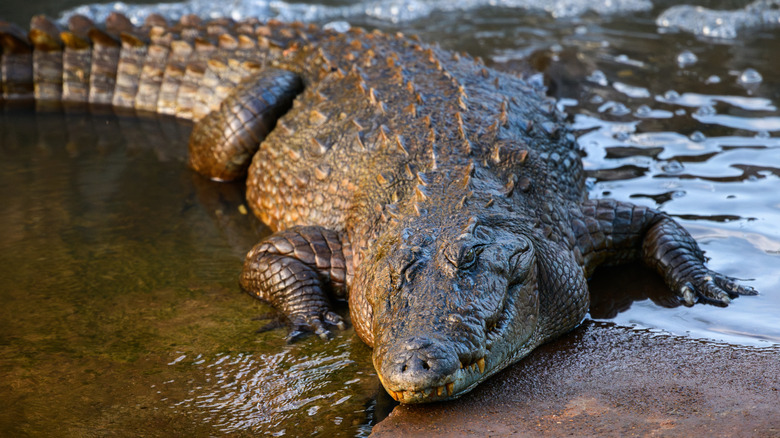
With a name that inspires precisely zero confidence in those who come across it, the mugger crocodile (Crocodylus palustris), also known as the swamp or marsh crocodile, has earned itself a sinister reputation. Responsible for the third-highest number of human attacks per year, per CrocAttack, it is the kind of animal that's way smarter than you think. Individuals have been shown to position small branches on their snouts, lying in wait at the water's edge in a bid to fool nesting birds. Mugger crocodiles grow to over 16 feet in length and can weigh up to 1500 pounds, making them both large and immensely powerful.
They're found across most of India, as well as in Burma, Iran, and Sri Lanka. They inhabit freshwater environments and saltwater lagoons, where they wait, very still, for prey to venture close. And since they tend to eat up to 25% of their body weight in a single meal (they will even eat other crocs), it's unsurprising that they've gotten pretty good at it.
They're most dangerous when forced into contact with humans, especially those, like fishermen, relying on the same waterways to cut a living. They are also often found in densely-populated, even urban areas of India. As for the data, the Crocodile Specialist Group cites 429 attacks on humans between 2010 and 2020, 171 of which were fatal. CrocAttack takes it a step further, estimating that the species could, in recent years, have been responsible for up to 60 fatalities per year.
2. Nile crocodile
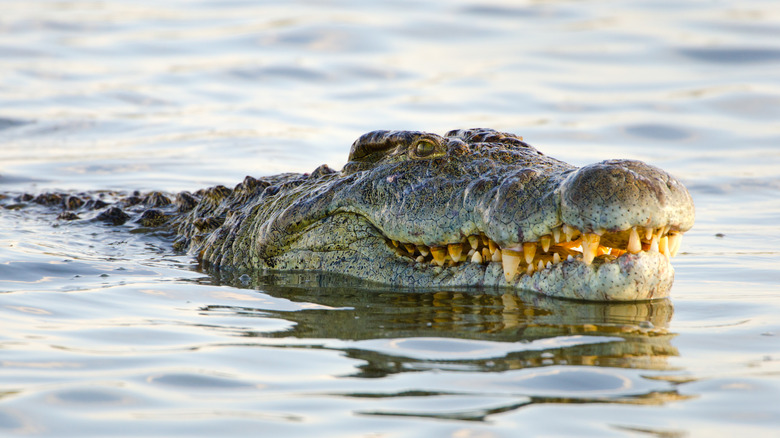
Ranging from southern Africa in Waswatini to the northernmost reaches of Sudan, the Nile crocodile (Crocodylus niloticus) is incredibly dangerous. It's smaller and less powerful than the saltwater crocodile, however, that's not really saying much as far as danger to humans is concerned. They remain apex predators, growing, on average, to nearly 15 feet in length. And since they're large enough to feed on animals like wildebeest and antelope, it's not hard to imagine how easy it would be to pull a human into the water.
Size aside, the Nile crocodile also has a highly-effective hunting strategy. It's both opportunistic and aggressive, tending to sit under the water, close to the riverbank, and wait for prey to come close. Only its eyes and nostrils protrude above the surface, making it very difficult to see, and when faced with a chance to strike, it does so hard and fast. Most attacks tend to happen along riverbanks; victims include those washing their clothes, boarding or disembarking from boats, and simply walking too close to the edge. In all, the Crocodile Specialist Group lists a total of 1,005 attacks between 2010 and 2020, more than 696 of which were fatal. CrocAttack, meanwhile, suggests that the species could be responsible for hundreds of human deaths every year.
In reality, the numbers could be far higher; many attacks are believed to go unreported each year, and in some countries, no records are kept at all. In agricultural areas, crocodile attacks also impact humans in a number of ways. One 2009 study found that, in northeastern Namibia alone, tens of thousands of fishing nets are destroyed each year by crocs, and ranchers lose somewhere between 800 and 6,000 head of cattle to the toothed predators.
1. Saltwater crocodile
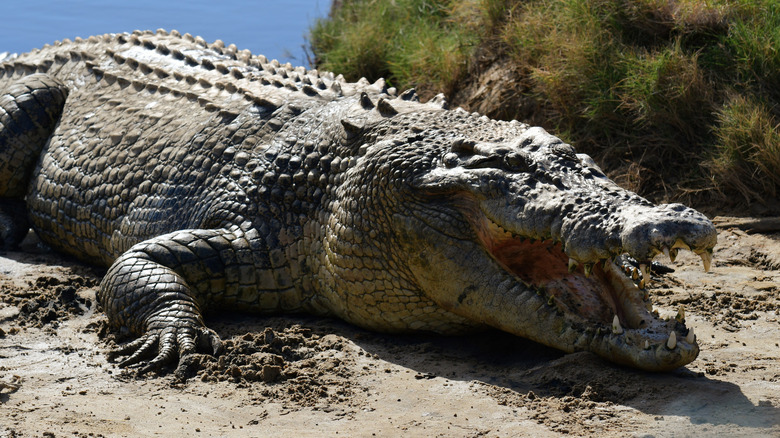
Saltwater crocodiles (Crocodylus porosus) are widely renowned as one of nature's deadliest ocean creatures. They range from northern Australia to Vietnam, favoring large and shallow areas of both fresh and saltwater, meaning there are plenty of places they can pose a threat. Adults can reach over 16 feet in length, and they're armed with large, powerful jaws designed to easily crush their prey.
They're a study in superlatives: The largest living reptile, they have the strongest measured jaw strength of any animal. They're also highly aggressive and excellent ambushers, lying in wait for prey to wander close before striking with explosive speed. So in areas saltwater crocodiles are known to visit, being in or even near the water is dangerous. Even fishing from boats can be risky, and in certain areas, like parts of the Adelaide river in Australia, swimming is all but guaranteed to be fatal.
The numbers of attacks on humans are startling. Between 2010 and 2020, the Crocodile Specialist Group reports 1,350 attacks, including 668 fatalities. In Australia alone, CrocAttack suggests that there have been 46 fatalities since 1970, and that overall, the annual death numbers are likely to range between 150 and 200 every year (many in Indonesia). And numbers are on the rise. 50 years ago, the species was on the verge of extinction, but a 1971 ban on hunting in Australia, allowed populations to quickly recover. Today, the species remains protected, but it's no longer threatened. With industries like palm oil, mining, and aquaculture all infringing upon its habitat and putting it into closer contact with humans, it's perhaps unsurprising that the statistics continue to mount.
Methodology

This guide focuses on crocodiles, ranking their danger level only as it pertains to humans. Rankings were based, where possible, on recorded attack numbers — data from authoritative sources including the Crocodile Specialist Group and CrocAttack. However, since underreporting of crocodile attacks is common in many regions, this data can't provide a complete picture. For this reason, we also considered each species' size, power, behavior patterns, and habitat range — specifically whether an overlap with human populations increases the likelihood of dangerous encounters.