

A Clever DIY Perch Pole May Be The Answer To Your Yard's Snake Problem
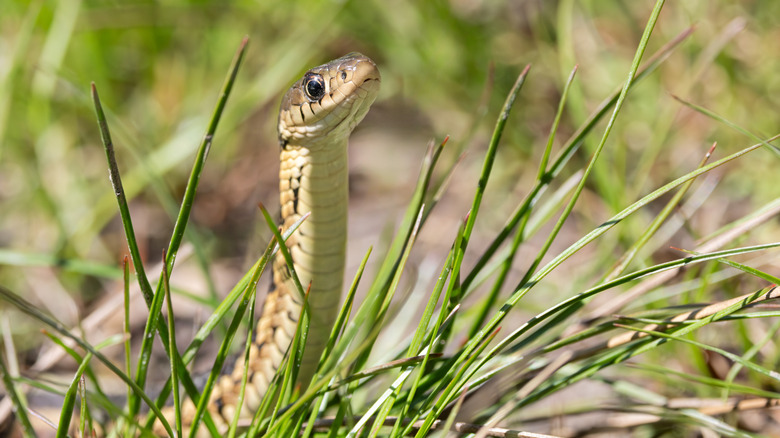
Some snakes enjoy eating rodents, which can be a helpful trait. But that doesn't mean you want them hanging out in your yard, either. If your property is overrun by snakes, any of these nine things could be attracting them to your yard. Ultimately, they're searching for food, shelter, water, and sunshine. While you may be able to eliminate a couple of the attractants from your garden or yard, you likely won't eliminate all of them. One solution to the snake issue could come from high above — a DIY perch pole. If you're thinking about birds when reading the word "perch," you're correct. A tall, sturdy pole with a perch on top could bring in raptors to prey on those snakes slithering around your yard. Hawks, owls, and even eagles eat snakes, but they need a high vantage point to spot where the snakes may be hiding in your yard.
A perch pole for birds of prey should be about 15 feet high and have plenty of clearance around it so the bird can land and fly away easily. It should also provide a clear view of the ground (and potential snakes) in the surrounding area. Naturally, a perch pole is best if your yard has ample space for raptors to visit, and if you don't have small pets that need to go outside.
Designing a perch pole
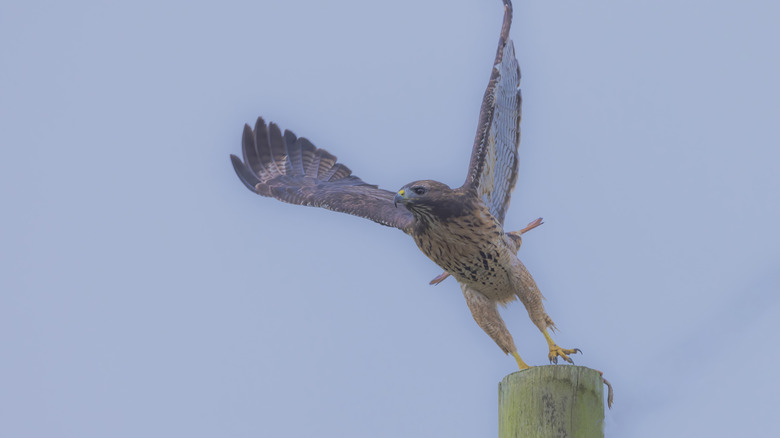
A perch pole can be made of various materials such as three-quarter-inch galvanized pipe or a 4-by-4 piece of lumber, but you'll want it to be at least 15 feet long, since about 3 feet needs to be set into the ground. Any height from 12 to 20 feet above ground works well. This pole also has a crossbar piece on top to serve as the actual perch, which should be about 2 inches in diameter and at least 18 inches long. Redwood and similar woods work well for the perch piece; just round the edges. Use a twist-on 2-inch flange or comparable material at the pole, then use screws or bolts to attach the perch to the flange. The design is flexible based on what's readily available, if the structure is sturdy and provides good footing for large birds. The horizontal perch should be aligned east-west, which offers the best visibility in changing light, and the best alignment for typical winds.
Install your perch pole well away from power lines and other obstructions. Since large birds prey on more than snakes, they'll likely eat rodents they find, too. On the downside, if you have bird feeders in your yard, hawks and other predators may be drawn to your favorite backyard birds, too. Hawks are one of a handful of bird species you never want to see at your feeder. You may want to take your feeders down until you've solved the snake situation and can remove the perch pole. If you have a chicken coop or similar structure for small animals, install the perch in an area where the animal housing is not within view.