

Easily Absorb Excess Water In Your Yard By Planting This Breathtaking Tree
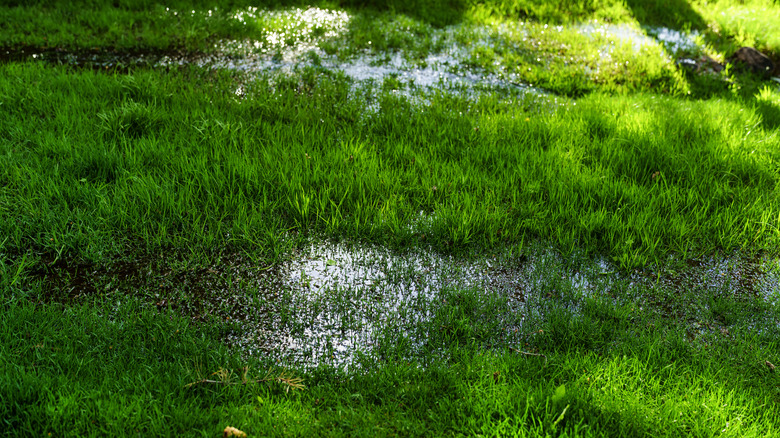
If your property has excessively wet areas after it rains or it holds standing water, you don't have to just live with it. There are several ways you can deal with all the extra water in your yard, such as planting a rain garden with pollinator-friendly flowers and native grasses — or adding a beautiful weeping willow tree (Salix babylonica) or two. This gorgeous tree is native to northern China and is extremely popular in the United States, Asia, and Europe. You often see weeping willows in parks and golf courses along creeks or beside ponds or small lakes because they are pretty to look at and are beneficial anywhere there is a lot of water — especially for erosion control and soaking up that excess water. These gorgeous trees can definitely help reduce the amount of standing water in your yard, but there are several important aspects to know about this picturesque tree before you add one to your front or back yard.
Weeping willow trees are not evergreen, but they get their leaves first in the spring and are usually the last trees to lose their leaves in the fall. You should find they have foliage during the parts of the year when most people are spending time outdoors. The weeping willow's love for water makes it the ideal addition to areas that have a lot of excess water. Because of their water-loving characteristics, they soak up extra water that sits in your yard and make it possible to use the previously soggy parts of the property again.
Why weeping willows are perfect for watery areas

Weeping willows are fast-growing trees that typically grow about 3 to 4 feet, or more, each year. They make excellent privacy trees that you don't have to wait decades for to see results. If you get a lot of rain, the trees grow even faster due to their water-loving nature and root system that is attracted to watery areas and soaks in that water. Weeping willows can grow as tall as 30 to 50 feet with a width of 30 to 40 feet at maturity. Weeping willows thrive in hardiness zones six through eight and, with their long, flowing branches, make great shade trees. If your plant hardiness zone falls within these numbers, you should have nice success with these lovely trees.
They are often planted in public places to help with erosion control along the banks of creeks, ponds, and lakes. The root system of weeping willows helps bind the soil, and the foliage actually slows the waters flowing by, thereby protecting shorelines from being washed away. Because they are so pleasing to look at, not only do they help shorelines remain stable, they improve the appearance of these public parks and other areas.
Potential problems with weeping willows and how to avoid them

Due to its water-loving nature, it's not a good idea to plant weeping willows close to residential or commercial structures due to the damage the roots can do. At least 50 feet from any structures or utility lines is the recommended distance. While they can't "sense" where water is and seek it out underneath driveways or sidewalks, if there are older water lines underground that already have small cracks in them, the roots of the willow tree can thicken and be drawn to the moisture. This can make the cracks worse and potentially break the lines. Root systems can also grow under walkways in your yard or driveway if the willows are close to your home, and can cause the stones, concrete, or pavers to dislodge or even crack.
If you want to add these gorgeous trees to your yard to fix an excessive standing water problem, or you have a pond you would like to enhance (and you can adhere to the 50-foot distance recommended), they are a great choice. The best time to plant weeping willows is in the early spring or fall. These lovely trees prefer full sun in cooler climates and full sun with afternoon shade in warmer climates. If you can ensure they get at least six hours of sunlight each day, they should thrive. Although well-draining, slightly acidic-to-neutral soil is best, willows can tolerate a variety of soil types as long as the soil is kept moist and well-watered. You should also avoid these major mistakes when watering.