

The Underrated Lily Variety To Plant In November For Beautiful Spring Blooms

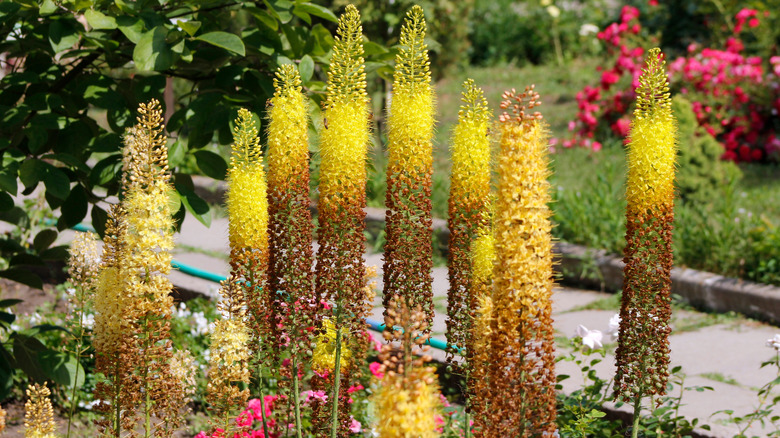
Not all lilies are created or enjoyed equally. In fact, some varieties are almost considered overlooked or underratedamong gardeners. Foxtail lily (Eremurus spp.) is a perfect example of a flower that stands out from its cousins. Its mass quantities of tiny, star-shaped blooms grow on a stalk which, when full of flowers, looks a bit like an animal tail or bottle brush. If you're hoping for some new awe-inspiring plants for your spring garden but don't want to wait until spring to plant them, you're in luck. Foxtail lilies are perfect for fall planting: even late fall. Though some gardeners pop them into the ground in September or October, you can still plant them as late as November, if your climate and weather conditions cooperate. They're sold as bare-root plants, and the tuber you receive may resemble a plant-based starfish.
This perennial plant thrives in USDA hardiness zones 5 through 8 and requires — nay, demands — full sun and well-drained, nutrient-rich soil. In these growing conditions, it's one of those low-maintenance plants that's great for beginners. Certain varieties get quite tall, such as the show-stopping Eremurus robustus, which has pink or white flowers on its 8- to 10-feet-high stalks. Foxtail lily flowers are typically bright white, yellow, orange, or pink, and look stunning against a backdrop of dark foliage.
How to grow foxtail lilies
Though they're relatively pest-resistant, root rot can be an issue, so it's crucial to plant both tubers and root stock in nutritious, well-drained soil (and reduce watering during winter). Do this as soon as you receive the bare roots, or stash roots in the fridge until you can. To plant tubers, mix the planting area's soil with manure or rotted compost, then make a hole in it about 1½ feet wide and 6 inches deep. Build up a small cone of soil in the middle, then fill the hole with an inch or so of coarse sand (unless the soil is already loamy). Place the starfish shape on top of the pile, pointy part up, and spread its roots out. Cover it with about 5 inches of soil, but leave the crown exposed. If you're planting more than one, space them 1½ to 2 feet apart. Water them well after planting.
To prep your new plants for winter, cover them with a thick mulch such as wood chips, straw, or compost, leaving the crown out. Cover the crown with evergreen branches for some protection. Push the mulch away from the plants as the plants start growing in spring (but keep it nearby until all risk of frost is over). You can deadhead as blooms fade, but if you leave the plants intact, they'll self-seed for even more plant-related perks next season.
Foxtail lilies have few pest or disease issues; they're even deer- and rabbit-resistant, though young plants could be damaged by snails and slugs. Placing a border of pistachio shells around your plants helps deter pests of the slimy kind. Besides being tall and gorgeous, foxtail lilies attract pollinators, so they could be part of your strategy to bring bees buzzing to your pollinator garden.