

The Beginner-Friendly Sport That's Perfect For Your Next Day Outdoors
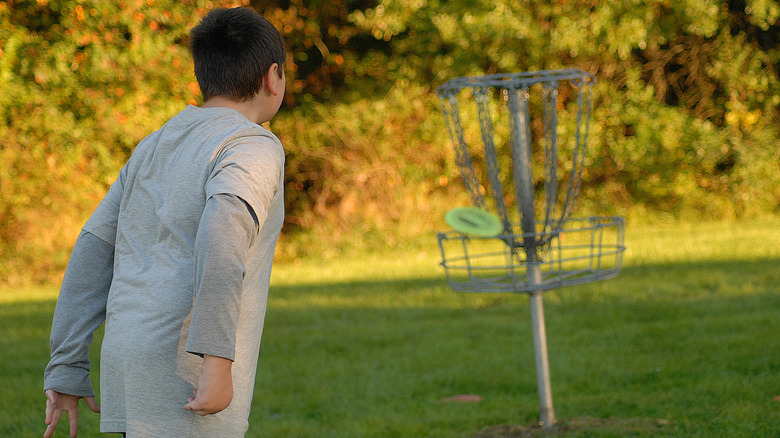
If you're looking for outdoor sports that don't come with a hefty price tag or a steep learning curve, look no further than disc golf. Also known as frisbee golf, this game follows rules similar to traditional golf — just with flying discs instead of clubs and greens fees. The game is highly accessible to beginners, with starter sets available for around $35 or even less from local shops that sell used discs. Once you have a set of discs, all you need to do is go to your nearest course whenever you want and start playing. You don't need anything else to play, but a pair of good, durable hiking shoes might help.
The rules of disc golf are quite simple. The goal is to throw your disc from the tee pad into the basket — the target — in as few throws as possible. After your first throw, your next throw will be from directly behind where your first throw landed. You will continue with this process until you eventually throw the disc into the basket. Beginners may not throw far or accurately at first, but don't worry, experienced players are usually happy to offer tips. Disc golf boasts a kind and helpful community, so other players will most likely be willing to help. At its best, disc golf combines skill and the beauty of watching discs glide through the air. At its most casual, it's simply a peaceful walk outdoors.
How to find nearby disc golf courses
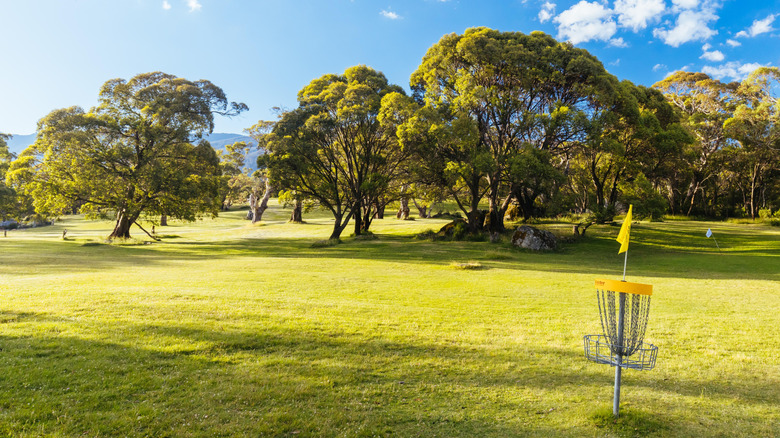
The easiest way to find nearby disc golf courses is with the UDisc app. The free app lists nearby courses, helping you find options within your area. In the course descriptions, the app will detail key info you may need to know about the courses, such as the ratings by other players, the difficulty, course conditions, how busy the course is, and the estimated time to complete the course. The description will also have detailed information about the layouts, telling you how far each hole is, and also if the course will cost money. According to UDisc, 89% of all disc golf courses in the world are free to play. This means you can go to any free course at any time and play for as long as you want. Some player reviews even note if a course is tick and insect-heavy, so it's helpful to know how to properly remove a tick, just in case.
Deciding the best course for your first attempt at disc golf can be tricky. If possible, choose a course with an easy difficulty rating, strong reviews, and no fee to play. You don't have to start on an easy course, but choosing one that matches your skill level can make the experience more rewarding. In a similar vein, if you choose a course with a higher review rating, it will be a much more pleasant experience. Sometimes courses with ratings of 3.5/5 and below may be overgrown, difficult to navigate, or poorly designed. While you are at the course, you can use the UDisc app to tell you where to go next and even track your score.
Understanding the discs and what you need
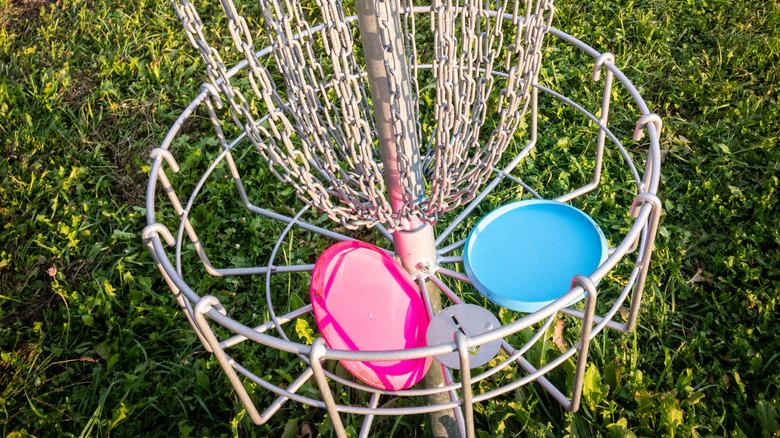
There are thousands of disc golf discs and manufacturers to choose from, which can be very overwhelming for new players. Each disc performs slightly differently, so for beginners, a starter set is usually the easiest and most affordable way to begin. If you want to save more money, you can also go to a disc golf store and find discs in the used bin for as little as $2. To understand what the discs do and what you should be looking for, you need to understand the flight numbers on a disc. The numbers, in order, are speed, glide, turn, and fade. Speed roughly relates to distance, glide relates to loft, and turn and fade relate to how much the disc moves side to side in the air.
Most disc golf discs fall under the categories of driver, midrange, and putter. As a beginner disc golfer, you are looking for one of each with more turn, as these discs will compensate for your slower arm speed as a beginner. Avoid discs with too much speed or fade, as they won't fly properly until you develop a stronger throwing technique. If you do buy a starter set, it will typically come with a driver, midrange, and putter that all have more turn, so it will be better suited to you. As you advance, you can explore the nuances of each disc type — but for beginners, three discs are all you need to start.