

How Often You Should Reseal Pavers To Protect Them From Damage
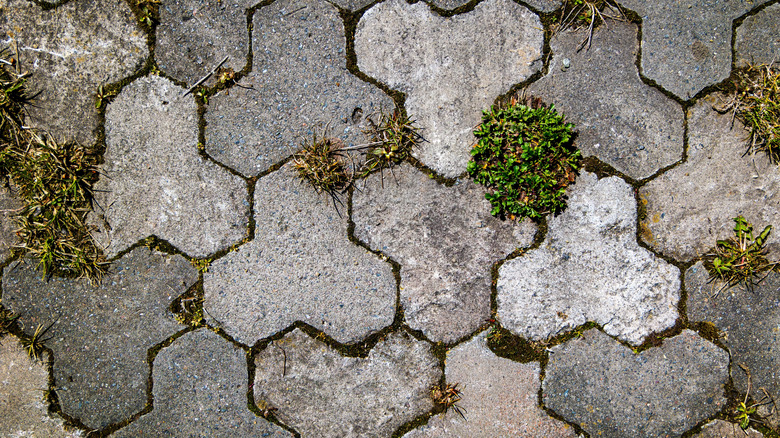
When was the last time you sealed your pavers? Pavers add clean and sleek aesthetics to your driveways, patios, and other spaces in your yard, and they can take your landscaping to the next level. However, when they get worn out and aren't taken care of, they begin to look less functional and more like they belong in a dystopian novel. Rather than leaving your yard to look like the zombie apocalypse is upon us, you may want to consider resealing your pavers every few years.
When determining if your pavers need a refresh, consider how long it's been since the last seal, their current condition, and any damage they've sustained. One important thing to note is that all pavers should be sealed — every one of them. Concrete is a porous substance, and sealing your pavers will keep them from getting stained, which can ruin the overall aesthetic quickly. You also want to make sure you clean your pavers before sealing them. Aside from preventing stains, sealing your pavers also helps bring out their colors and designs, making them more visible and pleasing to the eye and your landscape. While there is a timeline for sealing, you may opt for earlier dates if you notice some of the signs that your paver sealant is wearing off.
How to tell if you need to reseal your pavers (and how often to do it)
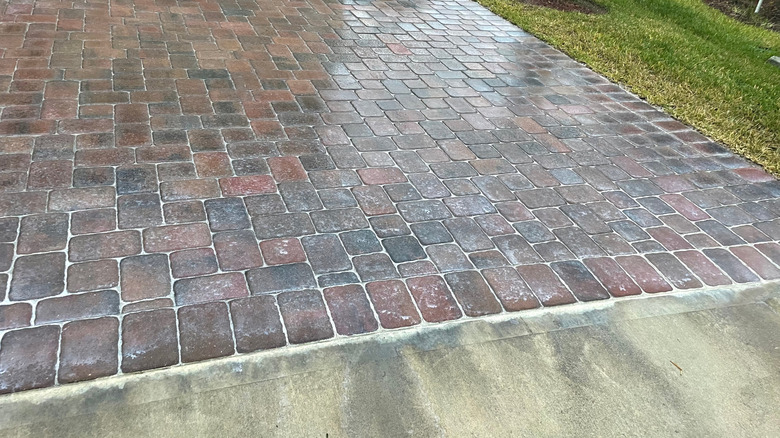
While you should be resealing your pavers every three to five years, determining which of those times is best depends on a few factors. If your pavers are in a covered area, they'll need to be resealed less often than those that are exposed to the elements. Pavers protected by the shade of trees can go longer without a refreshed sealant than those that are exposed to more UV light. If you live in a humid environment or an area with lots of snow and ice during the cold season, you'll likely need to reseal more often as well.
Sealant helps protect your pavers from grass growing up and ants building hills in between them. If you notice these things happening around your pavers, you waited a little too long to reseal — but it's not too late. Just make sure you pull all of the weeds and do a good power washing of the pavers to remove dirt, ants, and ant hills before you get started. There are easy ways to clean your concrete areas. Another thing that regular sealing maintenance helps with is preventing concrete efflorescence, which is the hazy white substance that sometimes appears on concrete. It's a sign that moisture is getting into your concrete, which can lead to mold growth if not taken care of.