

Comfort Hacks Seasoned Hikers Swear By (That Even Beginners Can Use)
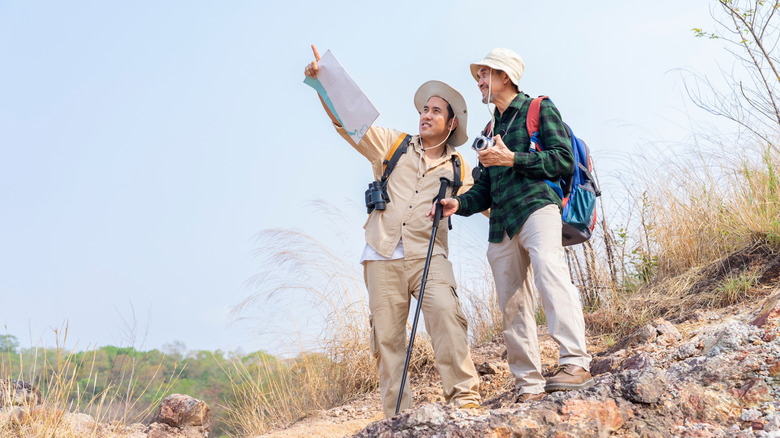
If you're relatively new to any type of hiking, you might be expecting a little bit of discomfort for your effort. Blisters, sore shoulders, aching legs, and other ailments might even seem like the price of admission for getting out there in the first place. For many beginners, these issues can even become the norm; as long as you tough it out, push through the pain, and wear your misery like a badge, chances are you're doing it right. But the truth is, most of that discomfort is usually a sign that something is being overlooked.
Seasoned hikers often feel quite different about the trail's aches and pains. To them, pain isn't really a badge unless you've learned from it. They know that staying comfortable throughout a hike doesn't make them softer; it just makes them smarter. And over time, they've collected a veritable toolkit of low-effort tricks, tweaks, and habits that transform what would normally be a grueling hike into a genuinely enjoyable one. And the best part is that most of these hacks don't require much experience to implement.
If you're looking to turn hiking into a hobby – something you treat yourself to rather than push yourself through – comfort isn't so much a luxury as it is a skill. And like any skill, the more you practice it, the more you get to explore and enjoy the wilds without getting wrecked by it. That way, you can spend far more time enjoying the journey than you do fussing over the destination.
Distribute weight evenly in your pack
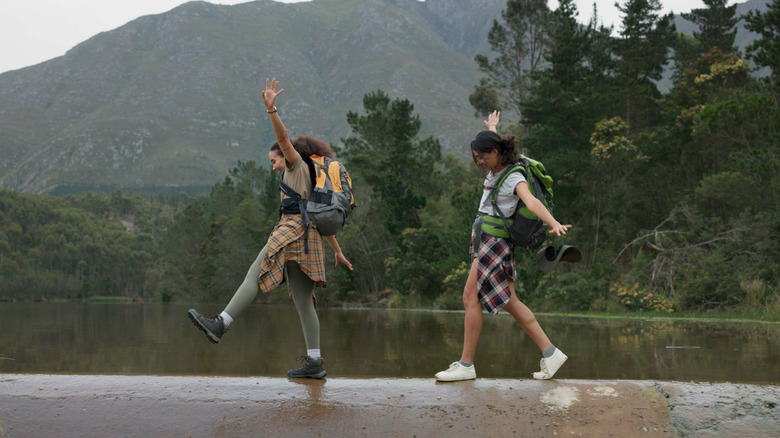
It can be easy to chuck everything you want to bring along for a long hike into your bag without giving it much thought. After all, most people spend more time planning what they're going to pack than they do actually packing. And make no mistake, your gear definitely matters, especially on a longer trip like a backpacking trip or thru-hike. Feeling confident in what you've got on hand goes a long way toward feeling confident about making the trek in the first place.
However, seasoned hikers know that how you pack is just as essential. Not just because it makes finding what you need quickly more convenient, but also because the way you distribute the weight in your pack can positively or negatively impact fatigue and strain throughout your trip. The key is to position your heaviest items, such as your water reservoir, close to the center of your back, high and snug against your spine. By doing this, you keep your center of gravity stable rather than having your gear pull you wherever inertia chooses, straining your muscles and joints in the process.
When your pack moves with you, rather than against you, your muscles stay fresher longer. And because your weight is distributed properly, you're also supporting proper posture along the way, not to mention keeping mental fatigue at bay, too. No matter what type of hike you're about to undertake, being mindful of your weight placement is one of the simplest and most powerful ways to boost comfort and empower you to trek that much farther.
Bring a pair of clean socks and change into them before bed
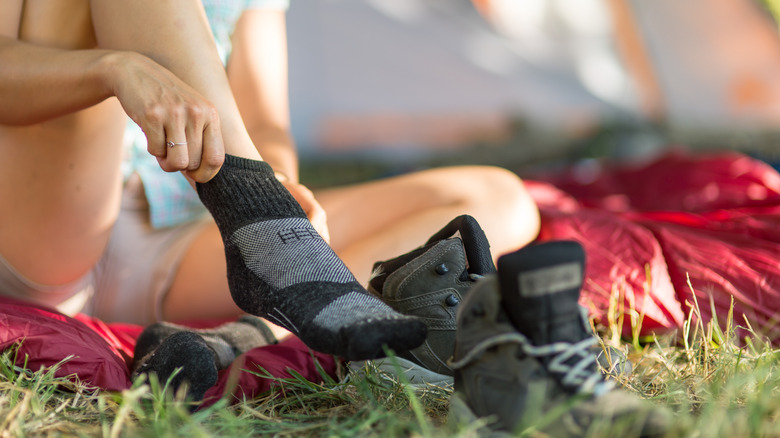
Nothing spoils your enthusiasm for the outdoors quite like hiking around in soggy socks. Many new hikers spend most of their time bracing for mileage, bad weather, or rough terrain, so it should come as no surprise that taking care of your feet is mission-critical when it comes to keeping your spirits up during a hike. Because the fact is, the best footwear in the world won't protect you from what happens when sweat, dirt, and friction team up.
That's exactly why seasoned hikers swear by the universally loved bedtime sock swap. Just imagine: It's finally time to call it after a long day on the trail. You pitch your tent, debate whether you've got enough fuel in the tank to fuss over dinner (even though you should always eat), and you're ready to hit the hay ... with wet socks. Not only will swapping them out for a nice, dry pair feel downright luxurious at this point, but it'll also protect you from developing blisters, hotspots, and cold-weather chills.
At that point, your fresh socks will wick away any leftover moisture, giving your feet a chance to reset, recover, and breathe. It also sends a signal to your brain, letting it know the hard work for the day is over and blessed recovery has finally begun. For something that weighs practically nothing, having an extra pair of clean socks might be one of the most valuable comfort items in your entire pack.
Pre‑warm your sleeping bag or jacket with a hot-water bottle
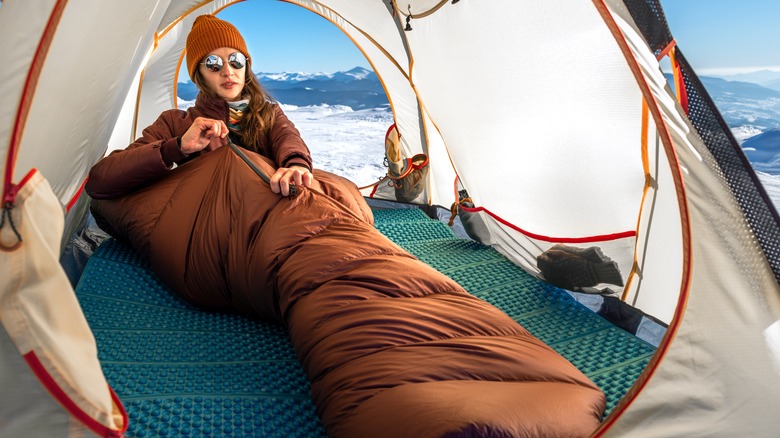
Hiking overnight comes with its own set of challenges, not the least of which is staying warm while you sleep. A couple of common tactics that many hikers use to mitigate cold temperatures are to pile on layers or buy the best sleeping bag they can afford. The problem is that warmth isn't just about insulation, and even with the best equipment around, it won't change how uncomfortable it can be to crawl into a cold bag or a stiff jacket when your body's already tired from a long day.
Thankfully, there's an old-school trick seasoned hikers still swear by. For this, you want a sturdy, leakproof bottle with hot – but not boiling – water. Right before bed, slide that bottle into a sleeve to insulate it, and then tuck it into your sleeping bag. The bottle will make your bag nice and cozy, and when you get in, simply push the bottle down below your feet, where it'll continue to trap heat under the covers throughout the night. For day hikers, that same bottle can be used on breaks to soothe sore muscles and warm cold hands.
What makes this hack so powerful is not just how targeted and immediate it is, but also how easy it is to incorporate into your own hiking routine, since you're already taking most of this equipment with you anyway. Rather than forcing you to depend on your own body heat to keep you comfortable, that warmth is already waiting for you when you need it.
Pack a lightweight comfort item
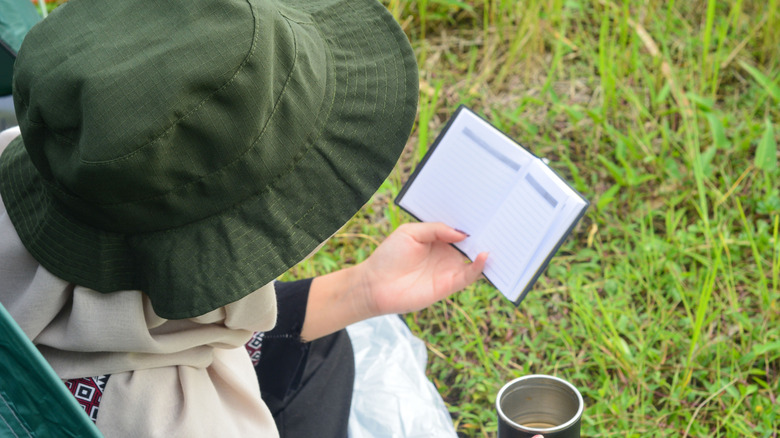
When planning a hike, there's a lot to think about to ensure a safe and enjoyable trip. For many, that means locking down where they're going, the gear they'll need, and ideally some hiking essentials for emergencies for when things don't go to plan. But depending on the terrain and how long your hike is, you can expect a certain amount of stress on your body that compounds over time, to say nothing of mental fatigue.
Many new hikers forget to anticipate that mental toll, but veterans plan for it, and one of the easiest ways to reduce that fatigue is by packing one small item that's purely for luxury. For some, this could be something that feeds your soul along the way, such as a book or journal. For others, it could be a fun travel mug or a small cache of your favorite tea. It's going to be different for everyone.
Just remember the point with this item isn't survival. It's something you treat yourself to, so always have something to look forward to. Beyond that, these items represent micro-rituals, and you'd be surprised at how much they boost your morale. Over time, they anchor you by reinforcing your sense of identity whenever your day-to-day challenges start to wear you down. In that respect, whatever you choose to bring with you is as much about resilience as it is indulgence. For especially long and gruelling hikes, you'll need as much of that as you can possibly get.
Plan your meals and snacks to fuel your hike

If you're used to shorter hikes, you probably packed water, but it's possible you didn't think about food. And if you did, it may have amounted to a couple of granola bars or jerky that you chucked into your pack. You know you'll be back to the comfort of your own home in just a couple of hours, so there really isn't much need to worry about being without food for very long. But as hikes get longer and longer, having fuel on hand is essential.
The trouble is that many beginners don't realize just how many calories they burn on longer hikes. For backpackers and thru-hikers, the number of calories burned in a single day can reach up to 5,000, roughly 300 per hour. This is way above what you might expect if you're just trying to get in a certain number of steps per day, since hiking also includes changing terrain and the weight of your pack.
The bottom line is that your body will need to replenish itself on a longer hike, and not planning for that can be dangerous. Ideally, what you want to do is plan for steady energy throughout the day. To achieve this, veteran hikers not only include a mixture of snacks and meals, but they also aim to snack every hour or two. This helps maintain their energy levels, as well as being an effective way to keep their mood and morale high for the road ahead.
Invest in trekking poles
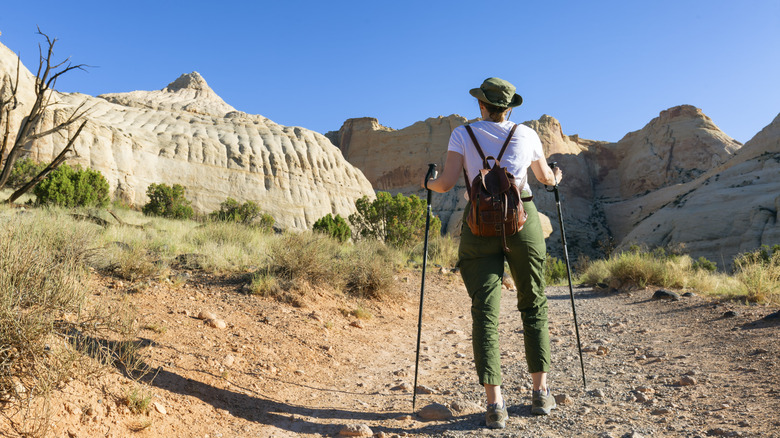
To the uninitiated, trekking poles can look like overkill. At best, they're reserved for folks out on steep alpine climbs, and at worst, they're simply comical. But planning for comfort on the trail really boils down to mitigating strain wherever possible. After all, hikes aren't really sprints; they're marathons.
By adding two extra points of contact with the ground with trekking poles, experienced hikers can shift a significant portion of their weight to their upper body. Indeed, studies have shown that trekking poles reduce the stress on your knees by as much as 25%, and the impact that has over the course of a long hike or multi-day trip just can't be overstated. Furthermore, they improve posture and reduce the likelihood of ankle rolls.
Trekking poles are not unlike insurance for your joints. By using them, you can hike farther with less pain, recover faster, and boost stability across less-than-ideal terrain. For those with old injuries, sore hips, or even just long-term hiking goals, they're easily one of the smartest investments you can make for your comfort and endurance. Considering that they're lightweight and easily stored when not in use, there aren't many good arguments for not taking them with you.
Hike by time, not by distance
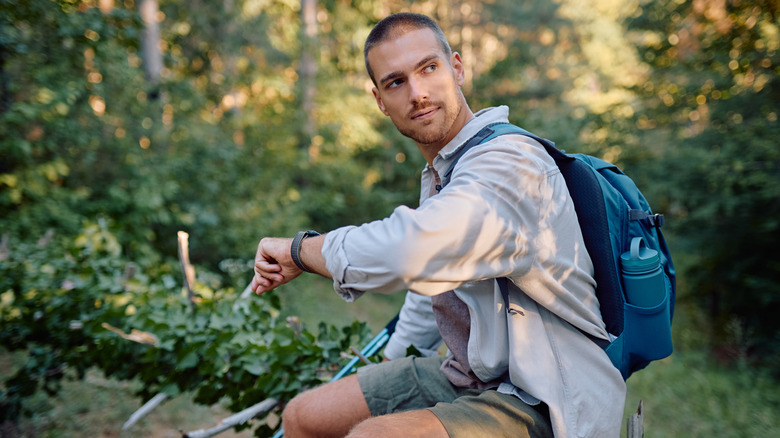
When you're new to hiking, it's super easy to fixate on how many miles you want to cover. You might think something like "10 miles sounds doable" or "five miles sounds too easy." But the issue with this line of thinking is that it doesn't account for variables, such as terrain or weather, which play a huge role in how the trail will feel. It also doesn't account for the ebb and flow of your energy level, or how you might feel six to 10 hours in. Distance sounds good on paper, but it leaves much to be desired when you're out in the middle of nowhere.
That's why it's so important to chase time instead of miles. Doing so shifts the way you think by placing clear benchmarks for when it's time to turn around or wrap, regardless of where exactly you landed for the day. Not only will this prevent any late-date burnout, but it'll also help you listen to your body and be flexible. On top of that, there's a massive difference in how you feel when you end a day hike with gas in the tank, instead of when you're running on empty.
Hiking by time instead of distance reframes your time outdoors as an experience rather than a test. Moreover, no one's ever earned a badge by crawling into their car completely exhausted. Instead, you win by pacing yourself in a way that feels good to you. And not only will this metric feel way better, it'll also be a million times safer.
Master the pocket strategy for instant comfort
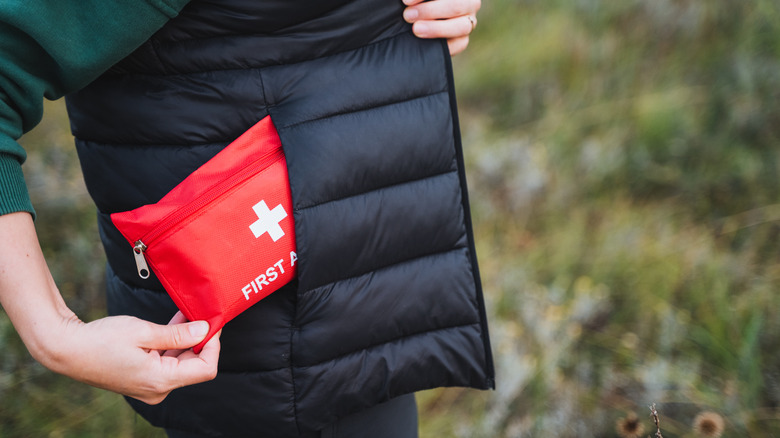
Mitigating strain is the name of the game when it comes to mapping out a hike you'll actually enjoy. But until you've done it a handful of times, it can be difficult to appreciate how your packing system can add to your discomfort. You're pretty sure you'll need the gear you have, but until you've had to stop everything you're doing just to fish out that granola from the bottom of your pack, you might not know there's a better way to organize your stash, whether that's food, water, or something else entirely.
Enter the "pocket strategy," a deceptively simple method that experienced hikers use to organize their hiking essentials. The idea is to make thoughtful use of your pockets and treat them like high-access zones. Prioritize gear or rations you're most likely to use while en route from one rest stop to the next, such as food, water, sunglasses, sunscreen, or gloves. Literally anything you might need often.
What this strategy unlocks is both efficiency and comfort, not to mention reducing any wasted energy. By organizing your loot in this way, you spend less time stopping, unpacking, and searching, which can seriously disrupt an otherwise pleasant jaunt through the undergrowth. And believe it or not, it also keeps your mindset sharp. What you need is always on hand, and if you need it in a jiffy, you won't have to scramble or dig around your pack like some lost raccoon ever again.
Never forget your buff
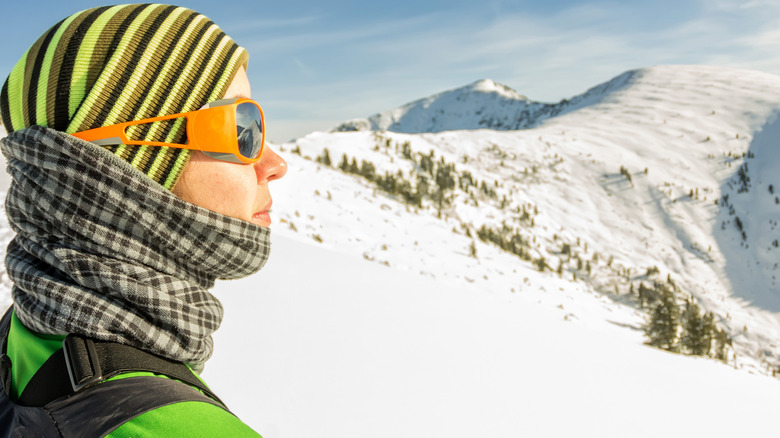
If you're planning a hike as a beginner, it's really easy to get swept up in all the obvious items you'll want in your toolkit. Hiking boots? Check. Raincoat? Check. The right backpack? Of course. After all, these are definitely important, and there's no real argument for not taking them with you. However, there are a variety of other neat tools you can add to your gear, and while it takes some trial and error to find what works for you, some are a lot more obvious than others. If you ask any seasoned hiker, however, you might be surprised to hear them parrot this tip: Never forget your buff.
A buff solves problems before they become problems. In hot weather, for example, your buff will wick sweat, shield your neck from sunburn, and even double as a headband. In the cold? Suddenly, you've got a balaclava, a beanie, or a neck gaiter, all locking in warmth and making it much easier to regulate your body temperature. Add a bit of water, and it'll help you cool down, or twist it up for extra wind protection. You can even wear it as a sleep mask if you're overnighting someplace that's crowded.
If you weren't sure just how much of a difference a glorified headband could really make, you certainly wouldn't be alone. But what makes buffs special is how versatile they are, and folks are still finding new ways to make use of them. When you're depending on the outdoors for a good time, that versatility comes in real handy.
Mind your sleep and recovery
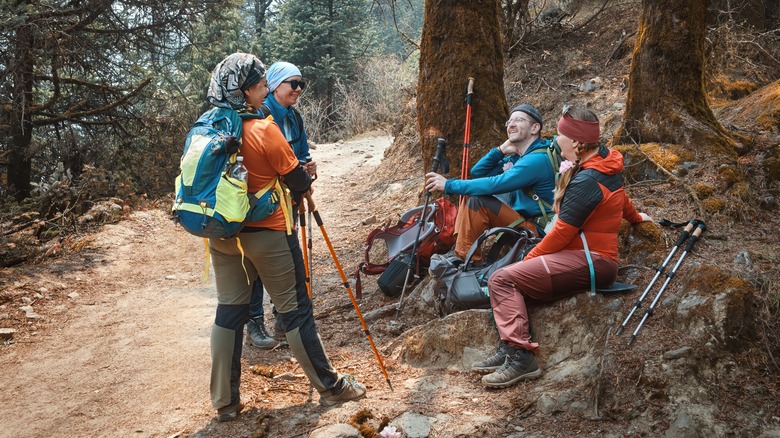
While preparing for a longer hike, it can be far too easy to get swept up in anticipation of the exertion side of the equation. You map out where you're going, the terrain you're expecting to cover, and what you'll need to make the hike as smooth as possible. You already know it's going to demand something from your mind and body, and so you get to work preparing to spend the energy all that effort is going to require.
The operative term there is "spend," however, and focusing solely on that operative word is a common beginner backpacker mistake. Seasoned hikers know that if they want to stay comfortable, energized, and safe, they need to treat recovery like it's a part of the equation. When your body is resting, it enters a sort of repair mode. It rebuilds muscles, restores energy, and even processes inflammation. How well it does all of that depends on how intentional you are with listening to your body and giving it the rest it needs. This means taking breaks regularly and, if you're hiking overnight, investing in a quality sleep system. Even stretching before you slink into your sleeping bag can make a noticeable difference come the morning.
When you make recovery a priority, you find that you can stay stronger for longer. It helps you keep your mind and body sharp and resilient, especially on longer treks. Because when you start the next leg of your hike refreshed, every single thing you do afterwards ends up feeling that much easier.