

The Common Gear Mistake To Avoid When Encountering Bears While Hiking
We may receive a commission on purchases made from links.
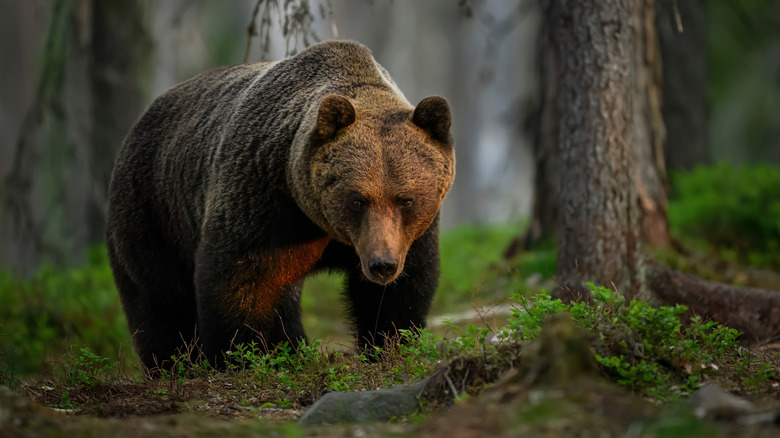
When hiking, it's sometimes a thrill to see wild animals you probably wouldn't find in your own yard. But if you're in one of the 13 national parks known for bear watching, it can be scary if you spot a bear in the woods or along the trail. As tempting as it may be to drop your backpack, either to distract the bear for a few moments and get a head start leaving the area or to reduce the weight on your back in case you need to run, don't drop your backpack. That pack is like a layer of armor on your back, plus it likely contains some food and potentially car keys, a wallet, or other important items you'd have to retrieve later.
Whether you're dealing with brown or black bears, dropping a backpack with food in it would only teach them that packs contain food, which could incentivize them to get closer to humans in the future. Never allow bears to reach your food, and certainly don't offer it to them — if you do, they may start to equate human encounters with food.
Getting too close to the wildlife is one of the biggest mistakes people make when visiting national parks. Sometimes, an up-close and personal bear encounter happens purely by mistake; perhaps you didn't see the bear in the woods until you're mere feet away. When this happens and things look a little scary and potentially dangerous, stay calm and remember a few tactics that can help you stay safe.
What to do during a bear encounter while hiking
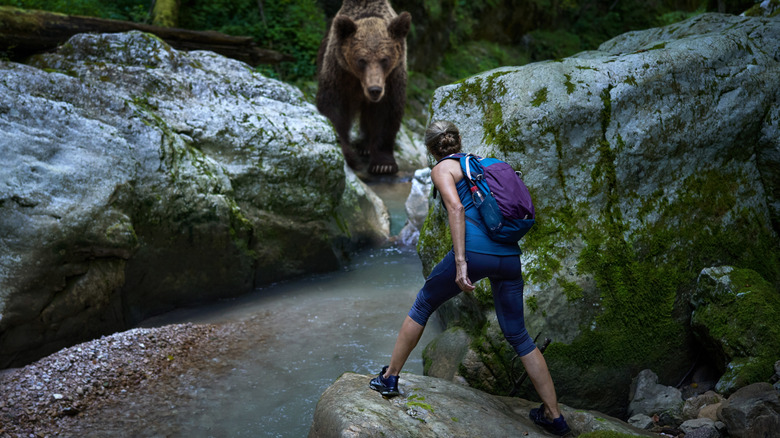
Noise can discourage bears from getting close to you, which is why some hikers chat with their friends or wear bear bells if they're going solo. If you encounter bears in the woods, stay calm and talk in a low voice. The goal here is for the bear to realize you're a human and not a prey animal making a distress call. Don't scream in a high-pitched voice, try to imitate the bear by growling, or move too quickly. Calmness is key.
How to respond in a bear situation depends on the kind of bear you're dealing with. Black bears scare easily. If you're confronted with one in the woods, rather than dropping your pack and running, make yourself as big as possible and shout to scare the bear away. Then, escape to a safe place, like a car or building. Don't climb a tree to avoid a bear, since bears can climb, too. Don't try to outrun a bear, either, since they're faster than humans. If the bear is far away and not behaving aggressively, keep your eyes on the bear and walk slowly and calmly away from the area. If your path is the only exit, don't block the bear from exiting or it may feel trapped. Just move out of the bear's path as much as possible and wait until it leaves.
Grizzly bears are much more aggressive, so if one attacks you, lie facedown and play dead. Keep your hands over your neck and your backpack on — that way, if the creature swats at your back, it's more likely to hit your bag than your body. Don't make noise, just wait a few minutes until after you believe the bear has left the area. It's a good idea to keep a bear spray such as SABRE Frontiersman Max on hand in these situations. If the bear seems aggressive and closes in on you, spray it as directed.