

What To Do If Your Neighbor's Fence Is In Your Yard
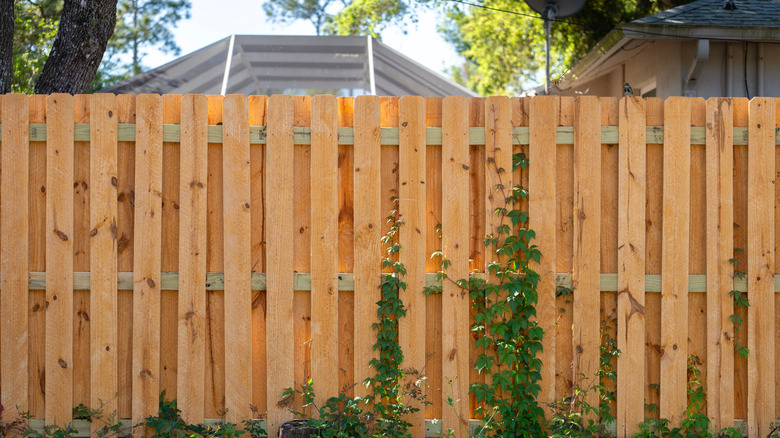
As the proverb goes, good fences make good neighbors. Providing backyard home security, privacy, and a sense of ownership, a property fence can be a good thing — unless it is in the wrong place. While planning that next-level landscaping project or looking into selling your home, you may find that the fence you thought defined your property line actually encroaches into your yard. If you don't address this problem now, you'll not only be missing out on square footage that is rightfully yours, but you may face issues with trying to sell your home down the line.
First, make sure your suspicions are correct. Property law is complex, and you need facts on your side to address a wrongly-sited fence. Start by checking your deed and plat map (both of which you should have received when you bought your house), and make sure your documents are current. If you don't have a map or you aren't sure if it up to date, go to your local county assessor's or clerk's office and look up your parcel map (many jurisdictions have online mapping portals to make this process simple).
If the boundaries still aren't clear, you will want to hire a surveyor, who will use parcel information, survey markers, and mapping tools to verify your property lines. You can also check whether the fence was built legally by researching permit records at your local planning or zoning office and checking with your HOA. Once you confirm that the fence isn't where it is supposed to be, it's time to talk to your neighbor.
Negotiate first to avoid a costly dispute over the fence

Before knocking on your neighbor's door, remember that they may have bought their property with the fence already there, or they may have built it mistakenly without even knowing the correct boundary. Start your negotiations by assuming good intentions, and try to solve the problem collaboratively. You could ask your neighbor to relocate the fence, but since the cost of installing a privacy fence is significant, don't be surprised if they don't jump at the idea of demolishing it and rebuilding it on their own. You may need to offer help, financially or with your own labor, to move the fence.
If you paid for a property survey, be sure to mention this in your negotiations so that your neighbor understands what you have already invested. If you found out that the fence was built illegally or in violation of HOA rules, be sure to use this information as leverage as well. Your neighbor will likely want to avoid fines or enforcement actions.
If there are signs it's time to replace the fence anyway, it is a perfect time to discuss cost-sharing a new fence with your neighbor and fixing the placement so that it follows the true property line. This is likely the best case scenario — your relationship with your neighbor remains a positive one, both your property boundaries are consistent with your deeds, and a costly legal dispute is avoided.
Legal remedies may be needed for the fence

If negotiating with your neighbor doesn't go well, you can look into hiring a third party mediator to help find a solution. Your county or state may have resources to help you find mediators who specialize in property disputes. Using a mediator will cost less than going to court, and can help facilitate a binding solution. If the fence only encroaches a foot or two onto your property and you don't mind losing a bit of yard, you could ask your neighbor to share the costs of hiring a real estate lawyer to simply fix the property's legal description and settle the property lines (known as a "quiet title" action). Both of you will end up benefiting from clarified property boundaries for future land improvements or resale.
If negotiations totally fail, you'll need to hire a lawyer to pursue getting the fence removed or to get paid for the property encroachment. Beware that if the fence has been there a long time, the law could be on your neighbor's side. Under real estate law, there is a concept known as "adverse possession" that basically means if the fence has been there for many years, the property behind it may legally be "possessed" by your neighbor. You can still take action in court for them to pay you for the property and clear up the title, but they may not have to move the fence.
If the fence is more recently built, you will need a court to order its removal (called an "ejectment action"). While you may eventually be able to recover some of your legal costs through a court order, know that taking legal action is a longer, more expensive road than negotiation. Ultimately, ask yourself: How much trouble (and money) is this fence worth?