

How To Prevent Theft While Hiking In Popular National Parks
We may receive a commission on purchases made from links.
If you love to hike, a number of national parks should be on your bucket list. In addition to a wide variety of trails, these national parks have plenty of activities you might not know about. One activity that has become increasingly common in national parks, however, is not one you will find promoted anywhere and is something you definitely want to avoid: Theft, usually due to car break-ins, is not uncommon at national parks, as well as local and state parks, throughout the United States. Luckily, you can take some steps to prevent theft while hiking in popular national parks.
Theft is actually the most common type of crime committed in national parks. This is due to a few reasons, but mainly, thieves see an opportunity for an easy score, often because people tend to have a false sense of security in national parks and don't take the necessary precautions. Additionally, trailheads are often somewhat remote or off the beaten path. Add to this the fact that thieves know hikers will be on the trail for a predictable amount of time, and it equals an almost ideal scenario for thieves.
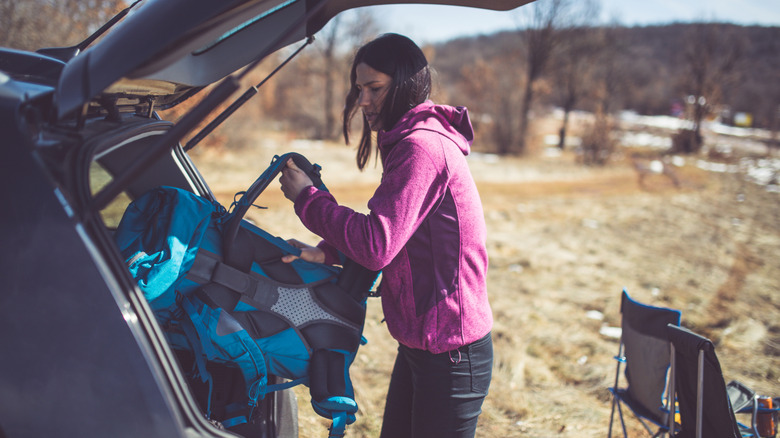
The only way to guarantee your possessions won't be stolen out of your car is to not leave anything in your vehicle. That means that when you pack and leave your house or hotel, only take what you need for your hike so nothing of value is left behind. You should even remove any items from your car that aren't needed for your hike. Just remember that one hiking mistake to avoid is overpacking, since all that extra weight will cost you on the trail. It also often leads to valuable items being left in your vehicle, where they are vulnerable to theft.
Make your vehicle appear empty
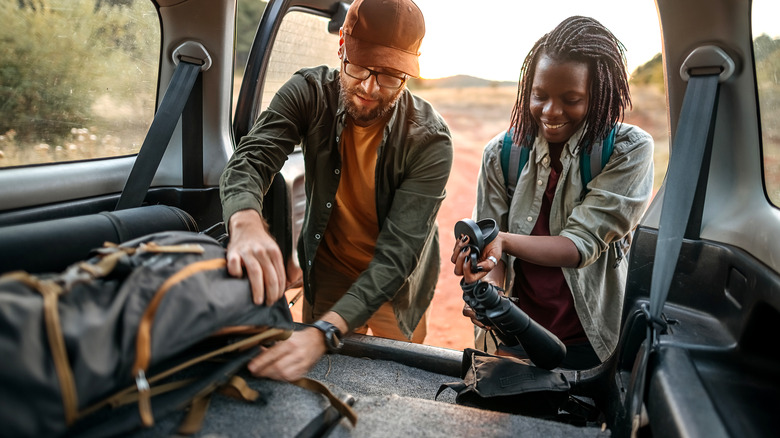
If, for whatever reason, you do need to leave possessions in your vehicle, you should at least make the car appear empty. While someone would likely be able to find whatever you hid if they were to do a thorough search of your vehicle, odds are they will pass over your car if they do not see anything of value in plain sight. So hide your items, particularly those of value, so that they are not easily seen through the windows or windshield.
The most secure place to hide valuables is in your trunk. If you have an SUV, you can hide them in the spare tire compartment in the cargo area or under the seats. For pickup trucks, it's handy to have a bed cover like the MOSTPLUS Tri-fold Truck Bed Cover to keep items secure and hidden away. If items must be stored in the cab, hide them under the seats. Wherever and however you hide your possessions, you should take care of that before you enter the parking lot at the park. Criminals are adept at staking out areas to look for potential targets. If one sees you stashing a bunch of gear before hitting the trail, they will know your car contains something of value, even if it is not visible from the outside.
Some hikers, to send the signal that there are no valuables in their vehicle, leave the glove box open. If you employ this tactic, it is necessary to remove the glove box light so it does not drain your vehicle's battery. Placing a sunshade across your dashboard can also prevent potential thieves from getting a good look into your vehicle through your windshield, reducing the odds of them attempting to break in.
Pay attention to where you park
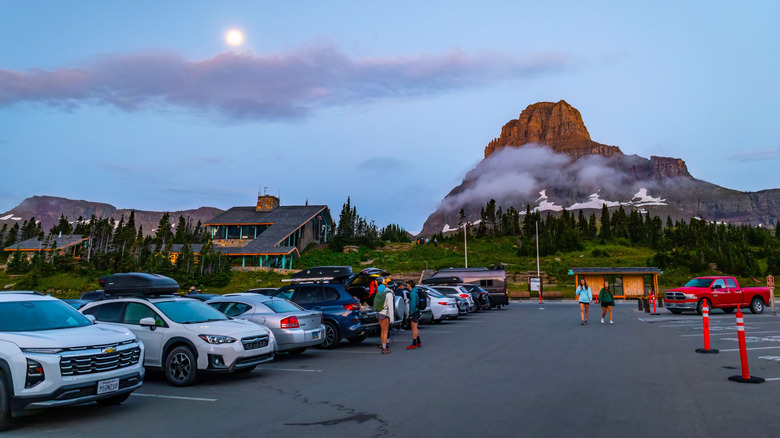
Where and how you park matters when it comes to avoid car break-ins and theft while hiking at national parks. Park as close as you can to the attendant kiosk or park office, if possible, since those areas are more likely to be monitored by park staff. Of course, those spots are often taken. If that is the case, pick a spot that is close to other cars, well-lit, and, preferably, well-trafficked by either cars or people, such as a spot close to the trailhead or in the main parking lot. Another option is to leave your vehicle behind altogether and get a ride from an outfitter, public transit, or ride share service if available.
Once you've chosen a parking spot, take a look around the area. If you notice any suspicious activity or something doesn't seem quite right, hold off on getting out of the car and call the park rangers or 9-1-1. When you exit your car, be sure to grab all your gear, then roll up your windows, lock your doors, and set your vehicle alarm. Additionally, be sure to carry your keys with you. Do not leave the keys in your vehicle or stashed under the sunvisor or gas cap.