

Make Snow Removal Easier With The Help Of A Cooking Essential
We may receive a commission on purchases made from links.
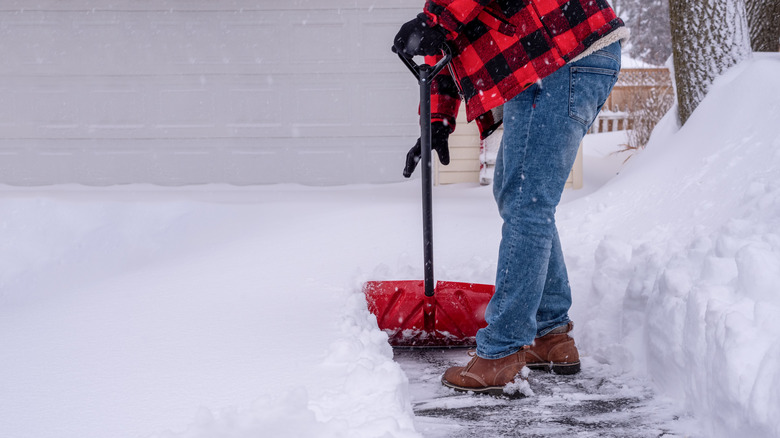
Shoveling snow may be fairly easy (dare we say enjoyable?) when it's light, fluffy, and no more than an inch deep, but as it piles up when the temperature is near freezing, excessive moisture happens. That snow becomes heavier the wetter it is, turning a could-have-been-simple task into quite a struggle.
Sometimes it's hard to know how fluffy or heavy snow is until you step outside to shovel it. If snow sticks to itself like it does when it's right for snowballs and snow forts, it'll stick to the shovel, too, making that shoveling task even more tiresome. Instead of waiting until the snow melts, or secretly wishing you had a flamethrower, one simple solution may already be in your pantry: cooking spray.
Spray-on oils designed to keep foods from sticking to pans also keep snow from sticking to shovels. In turn, it's much easier to fling that snow where you want it to go, rather than having half of it stick to the snow shovel, weighing it down and making you more tired with each pass. Make sure the spray you choose is an oil-based spray, such as Pam Superior No-Stick Purely Olive Oil Spray. Using a lubricant on the shovel blade is one of those clever hacks that makes snow removal easier than ever, and your back will be happier for it.
Effectively lubricating a snow shovel
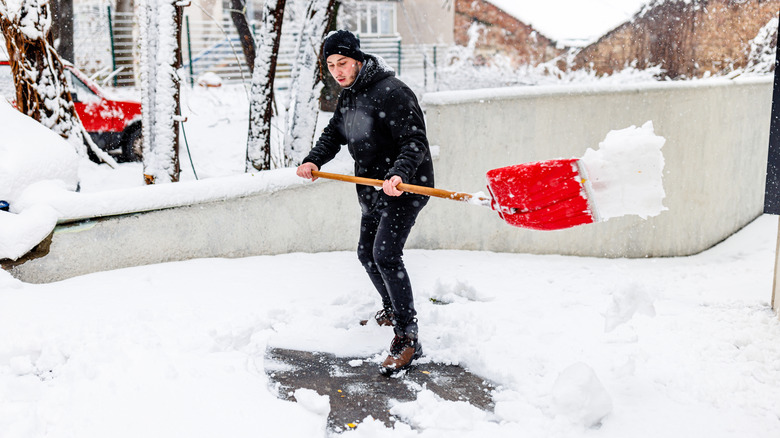
To efficiently shovel snow from your deck, driveway, or paths around your home, spray cooking oil liberally over the front and back of the shovel blade, including the bottom edge. Do this before shoveling and reapply as needed while you shovel wet snow. Keeping the shovel outside in cold weather also helps prevent the snow from sticking, because a warm shovel would just melt some of the snow as it shovels, making the snow wetter, which makes it clumpy, heavier, and harder to throw from the shovel.
Cooking oil isn't the only thing that helps snow slide off the shovel blade. A silicone oil designed for lubricating outdoor metal equipment works just as well. Spray the lubricant on a clean snow shovel blade, especially the lower areas that reach the snow first. Wipe it with a soft cloth, shovel the snow as usual, and reapply the silicone as needed.
WD-40 also helps snow slide off of the shovel more easily. WD-40 Big Blast has a wider spray nozzle that applies the product over a larger surface area at once, perfectly designed for this type of application. Apply the product on both sides of the blade to help the shovel glide on and through snow. To make things even easier, don't wait for the snow to stop for the day. The best time to start shoveling is while the snow is still falling and still a manageable depth. If you tackle it while it's not too deep, it'll take less time to shovel. That may mean an extra shoveling session or two per snowfall, but over all, the workload will be easier.