

Avoid Setting Up Camp Next To This Type Of Foliage To Prevent Bear Encounters
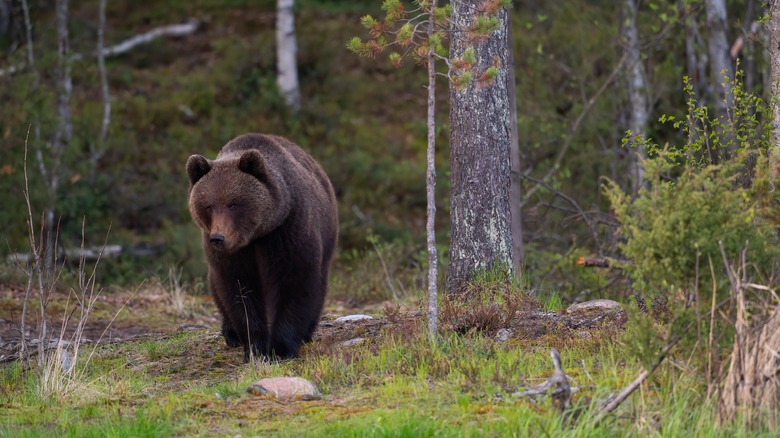
Knowing what to do if a bear attacks you while you're out hiking can save your life, but it's still better to avoid such encounters whenever possible. There are plenty of precautions you can take on the trails, but a simple step you might be missing happens when choosing your campsite. Berry bushes near your campsite might seem like an easy snack for you, but you aren't the only one who finds them appealing! You don't want to get between a hungry bear and its dinner, so it's safer to avoid these bushes altogether. Bears will fight over food, especially if they feel like the food is limited and needs to be defended from rivals. Don't let them think you're competition — avoid camping near berry bushes!
Improper food storage is one of the easiest mistakes that attract bears campers can make, but it isn't just your own food that can bring bears to your campsite. Berries are an important natural food source for bears, especially during late summer and early fall. This is when bears are trying to store up energy reserves for winter. Berries are rich in vitamins, antioxidants, and sugars that make them highly valuable to bears. Even berries that we don't normally think about as being edible, such as dogwood berries, are attractive to bears. Your own food should be stored 100 yards or more from your tent, and the same rule applies to the bear's food!
Are berries the only plant to avoid when camping?
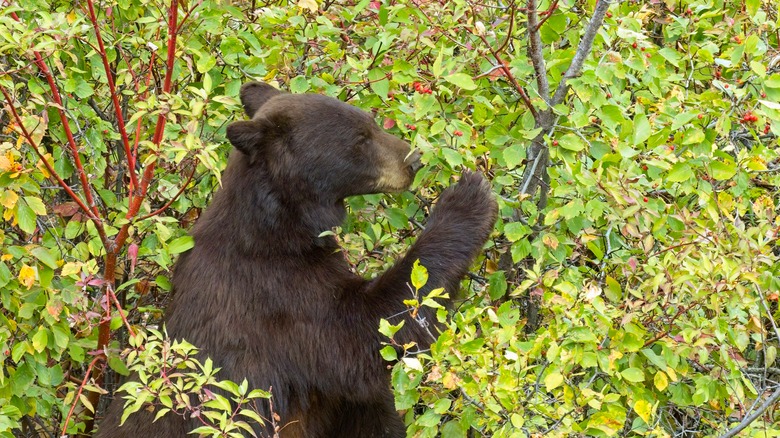
While berries are one of the most important food sources for bears during summer and early fall, they aren't the only one. If you're camping in spring, avoid campsites surrounded by early flowers and young, tender plants. Camping in the middle of a clover field or patch of dandelions sounds charming, but these plants serve as an easy food source for bears that are just coming out of hibernation. Insects also offer a lot of protein for bears, so fallen logs that might be hiding grubs should also be avoided.
Bears continue eating these plants during summer. Fields of wildflowers may also attract deer or elk. As omnivores, bears eat meat and will hunt fawns and calves. You certainly don't want to be caught in between a herd of elk trying to protect their young and the bear that's hunting them! Set up your tent somewhere more bare, and save the flowers for hikes when you can be fully alert and have your bear spray in a convenient place.
In addition to plants, you should avoid camping near running water when in bear country. While the sound of a river is incredibly relaxing, wildlife may pass through on the way to grab a drink. In summer, bears often stop by rivers to fish. Carrion will also attract bears, particularly in spring and fall when hunting is more difficult. At least some food sources are easy to avoid — no one wants to sleep near a deer carcass!