

Lanternflies Will Be A Thing Of The Past With The Help Of These Kitchen Staples
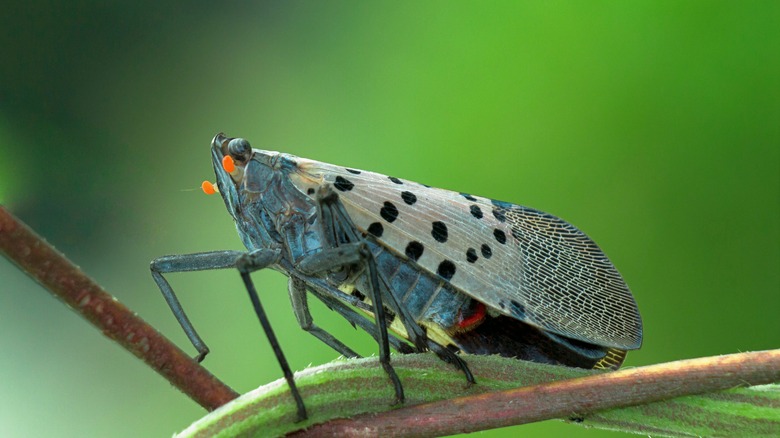
In recent years, the spotted lanternfly (Lycorma delicatula) has become a growing issue in the United States. This moth — with black-speckled, brown wings — is indigenous to China and Vietnam but has spread to other countries, causing environmental damage by draining the sap from beneficial plants. First detected in the U.S. in 2014, it was listed as an invasive species in the northeast in 2022. While the invasive insect has now been identified in 19 states and the District of Columbia, there are easy ways you can help join your state's efforts to eradicate this scourge. With very little time and effort, you can kill lanternflies on your property without harmful pesticides. You just need a few items from your kitchen.
The spotted lanternfly can find a home in trees growing in your backyard, such as fruit trees, maples, oaks, and birches. While Ailanthus (tree of heaven), black walnut, and grapevines are among their favorites, these insects can feed on pretty much any plant with a stem. These vegetarian vampires damage plants by drinking their sap, leading to wilting. Plenty of indigenous pests feed on sap, including leafhoppers and many species of aphids. But the spotted lanternfly is particularly destructive because it secretes a honeydew waste that causes sooty mold to cover plants, inhibiting photosynthesis. The bulk of its damage in the U.S. started in Pennsylvania, where it has threatened industries such as logging and fruit production.
Fortunately, lanternflies are pretty fragile: They don't bite or sting, and don't have any sort of body armor. They can be easily squashed, or smothered and killed with standard homemade pest repellents, like vinegar and water blends, dish soap, or certain essential oils. But you want to make sure you apply these deterrents properly, to avoid harming your plants even more.
How to kill spotted lanternflies with household remedies

To identify and rid your property of lanternflies, grab a spray bottle, dish soap, and water. You'll want about a 10% dilution, as concentrated dish soap can also be harmful to plants.You might simply see lanternflies sitting on the branches of your trees, but if not look for signs, especially a dark mold on the leaves and branches of your plants and fruit trees.
Part the leaves to look for flies, then spray it with a thick coating of the mixture. This should smother the moth, or you can drown it in a bucket of water. Also, spray their eggs if you find them. Some states are urging citizens to target egg clusters over squashing the sap-sucking adults. Lanternfly egg clusters are white or brown and look like mossy scabs. These they'll lay on almost any solid surface, like patio posts, grills, or outdoor furniture.
You can also spray vinegar on lanternflies and their eggs. You don't even need to dilute it with water, though concentrated vinegar can damage plants. Vinegar kills lanternflies by dehydrating them and damaging their exoskeletons. There are yet other means, like sticky traps or neem oil, though some people have found this last option to be ineffective. You may also think twice about using neem oil, as it's toxic to beneficial bugs and moderately toxic to fish.
You can also plant a tree of heaven to attract and trap lanternflies, as it's a favorite food of these pests. But most government agencies are urging people to pull these invasive plants since they do attract and help propagate lanternfly populations. Trees of heaven are also a little-known threat to other plants in your yard, thanks to the allelopathic chemicals they release which damage plants growing around them.