

The Best Method For Planting Pumpkins In Your Garden
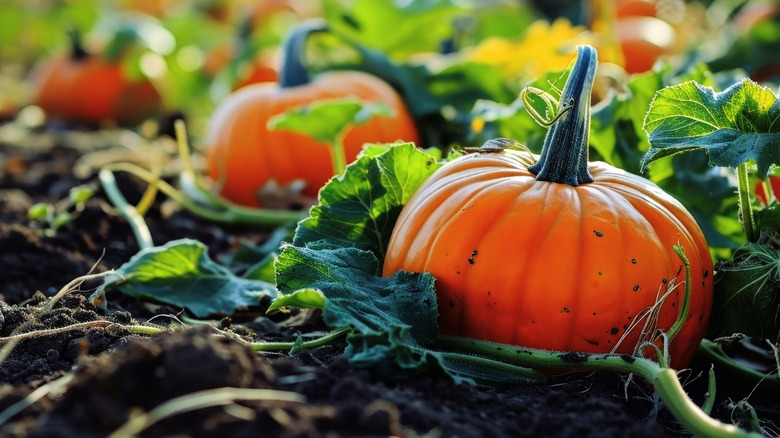
Nothing is better at capturing the fall season than orange leaves and even more orange pumpkins. These fruits are excellent for decoration, fun to carve, and delicious to eat. The key ingredient in of our 5 fall-favorite recipes for cozy campfire meals, pumpkins are a highly versatile fruit and a key part of the fall season in North America. In fact, pumpkins have been grown in North America for 9000 years, being a staple food in Indigenous communities, in part because every part of the pumpkin is edible. As excellent as pumpkins are, it makes sense to want to plant them in your own garden. To get them fully grown and harvested at just the peak time in fall, start by planting in late May if you live in the north, and early July if you live in the hottest parts of the south.
While you can grow pumpkins on your balcony in container gardens if space is an issue, planting in your garden is best because vining pumpkins require 50 to 100 square feet of space minimum. If you don't quite have enough space, make sure vines grow to the furthest edge of the bed (or consider miniature pumpkins, which need a little less space). You will need very rich, well-draining soil filled with organic material. Sow seeds about 8 inches apart, in rows spaced about 8 feet apart, or by planting four to five seeds each on low mounds about 4 feet apart. Once the seedlings are a few inches tall, thin things out to one plant every 2-3 feet or two to three plants per hill, transplanting the other plants if you can.
Growing and harvesting pumpkins
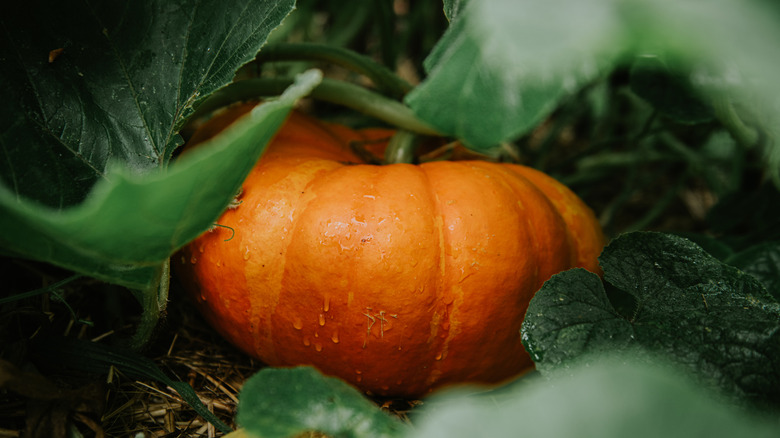
To make your pumpkins thrive and grow to their biggest size, you will want to water them deeply, about 1 inch of water every week. If you are struggling with watering, you may want to utilize the must-try watering advice for flourishing fall pumpkins. Drip irrigation works well with the long vines and runners. Additionally, bees are crucial for pollination, so avoid using any insecticides that may kill bees and try these 12 tips to make all the bees come buzzing to your garden.
To prevent unnecessary competition from weeds, removing any as they appear. Add mulch around your pumpkins, which will not only suppress weeds but also help with pests and moisture retention. You should fertilize your pumpkins frequently once they reach about 1 foot tall, using a nitrogen-heavy fertilizer to satiate their energy needs.
Wait to harvest until they are completely orange, with no green left (assuming you're growing orange pumpkins. Obviously, if you are planting non-orange pumpkins this method of identification will not work, but all pumpkins, no matter the color, should be fully ripe once they reach a consistent color and the rind is hard.
At this point, they are ripe and ready to harvest. Depending on the season, they may be ready earlier than you desire, however if you cut the stem properly they should keep longer. To harvest, cut the vine, about 3-4 inches above the fruit, with a sharp knife or pruner to prevent damaging the stem. Once you have harvested the pumpkin, don't carry it by the stem and allow the stem to dry attached to the pumpkin. Once picked, if properly stored, your gourds will last up to three months.