

Plant This Tree To Fill Your Small Yard With Fragrant White Blooms
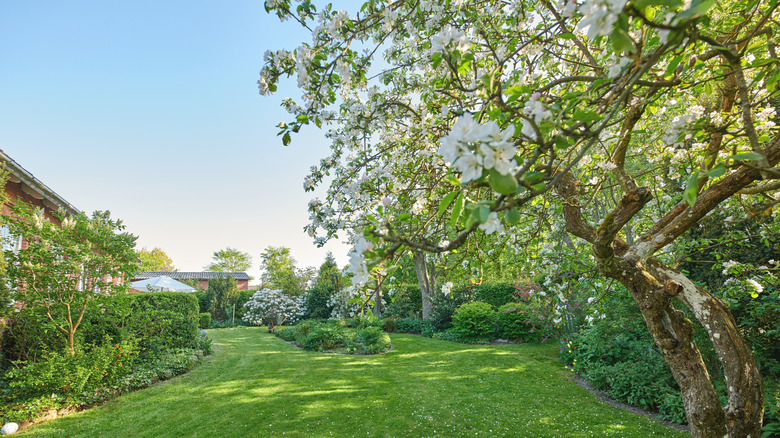
There are a number of tricks for making a small yard look bigger, from installing a charming footpath to creating an inviting-looking focal point. Planting a modestly sized tree is another effective option. A fringe tree (Chionanthus virginicus) is an excellent choice for compact yards, especially small city lots, for several reasons. First, it maxes out at a height and width of 20 feet. Second, it tolerates pollution exceptionally well. As an added bonus, this species produces showy white flowers that bloom in the spring. In addition to emitting a pleasant fragrance, the blossoms attract pollinators that benefit the other flowering plants in your yard. They may even be able to mask the odors of skunk cabbage, crown imperial, and other bad-smelling plants in your garden.
Though the fringe tree is related to the olive trees that fill the Italian countryside, it's native to the eastern half of North America. This deciduous plant thrives in USDA hardiness zones 3 through 9, which cover much of the continental United States. Fringe trees also produce dark blue berries that attract songbirds to your garden. These fruits are enjoyed by other animals, too, including small mammals. The tree will produce cooling shade for your yard without taking up too much space, and its leaves turn a pretty shade of yellow in the fall. Its bark adds visual interest with red furrows and ridges in a deep, chocolate-brown hue.
Helping your fringe tree thrive and flower
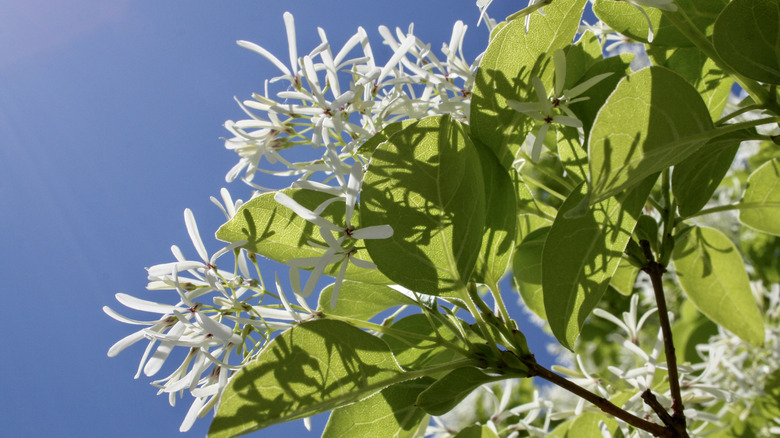
Keeping your fringe tree healthy is the best way to encourage an abundance of sweet-smelling blooms. Understanding this plant's preferences is a good starting point. In general, the fringe tree is a low-fuss plant that's great for gardening beginners. Though it prefers moist soil that drains well, it can handle challenges such as wet soil every now and then. It's also not picky about sunlight, thriving in both full sun and partial shade. It can also adapt to a range of soil textures. If your planting site is rich in clay or sand, consider mixing in some compost to keep drainage issues at bay. Don't fret if your fringe tree only grows about 6 inches per year. This slow growth is typical for the species and not a concern as long as the tree remains healthy.
Safeguarding a fringe tree's health also involves watching for signs of borers and scale insects. These pests tend to target fringe trees during periods of minimal rainfall. Borers typically leave sawdust near the base of an infested tree. A sudden influx of woodpeckers is another red flag, as these birds love to eat borer larvae. Scale insects are typically tinier than a pinhead, so it can be hard to tell that they're bugs at all. If you can see them, they often resemble tiny fish scales on branches or leaves. Yellowing leaves and lots of small lumps on branches can also indicate a scale insect problem. If you suspect an infestation, applying a horticultural oil can help.