

A Clever DIY Fly Trap To Try Out In Your Outdoor Space
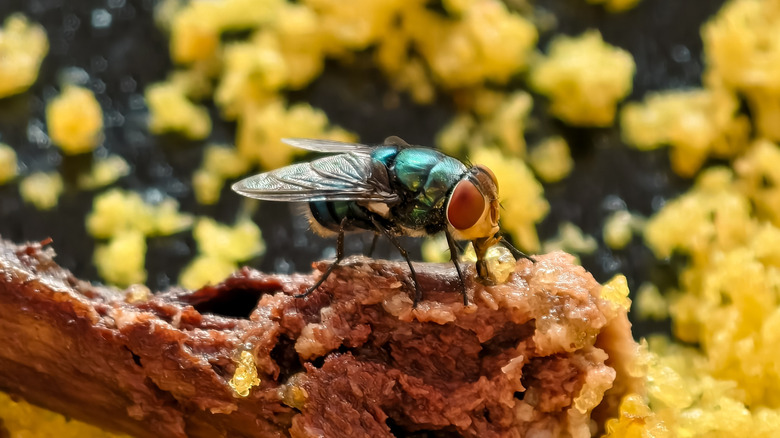
The battle between humans and flies is never ending. If you have a lot of flies in or around your porch or yard, your first line of defense before making a homemade fly trap is to limit their breeding grounds so they don't swarm your yard. They are attracted to decomposing flesh, standing water, overripe or rotting food, garbage bins, and animal waste. Some general tips to avoid attracting flies to your side of the street include sealing trash, covering compost piles, regularly picking up animal waste, removing fruit droppings, and keeping up on landscaping to prevent puddles and standing water. You can also consider adding plants that repel pests naturally.
Even if you keep your house and yard free of attractants, adult house flies have a great sense of smell and will travel anywhere from one mile up to a whopping 20 miles if they catch a worthy whiff. Fortunately you can work that superpower to your advantage. DIY fly traps made by slathering honey on paper work by using their intense attraction to honey's rich sugary smell, then trapping them in its stickiness.
Homemade fly traps will significantly reduce the number of flies breeding near your house and catch any that sneak over to your backyard BBQ. Trapping flies will not only prevent your guests from getting the ick, but can also help avoid the transmission of diseases. This clever fly trap is easily made with household items. You will need scissors and a used newspaper, paper bag, or other unneeded craft paper. Grab a paintbrush, a tray or wire rack, water, paper clips, string, and of course honey (a mixture of corn syrup, water, and sugar also works).
How to make sticky fly paper with honey
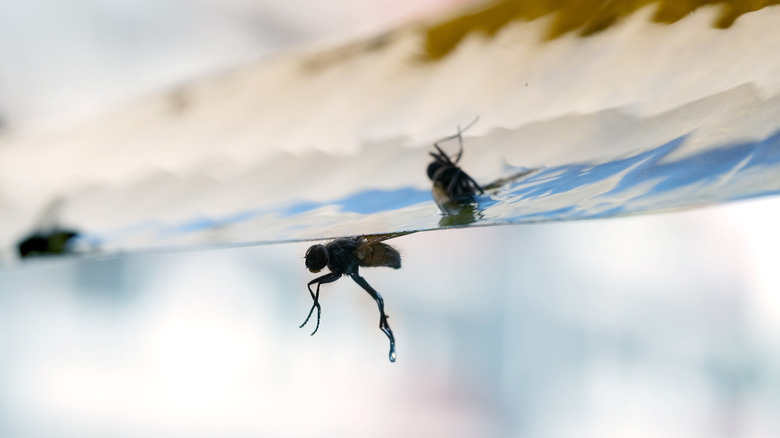
Store-bought sticky traps work by luring flies to their scent with attractant granules, and then trapping them on a very sticky surface. Homemade sticky paper fly traps work just the same, but can be made with items already in your home at a fraction of the price.
First, cut the paper into strips 2 to 4 inches wide. Next, microwave or warm the honey in a pot to make it less viscous. You may need to add some water to make it easier to brush onto the paper. When the honey is workable, dip the brush into the honey and gently brush it along the length of the newspaper. Once the paper is covered, let it dry on a tray or wire rack. Alternatively, poke a paper clip through the top and hang your DIY sticky trap outside immediately. Pick locations where flies are troublesome and where the traps won't get stuck to other things if the wind picks up. Don't have extra paper handy? Use strips of duct tape coated in the honey water or sugar water. You won't want to spread it on too thick as you want the adhesive to do its job. Keep an eye on your traps to make sure they are still sticky, replacing as needed or filled.
If you find you are also struggling with fruit flies or mosquitoes, you might want to add these DIY funnel traps using baking staples to your arsenal. But remember that not all bugs are bad. In fact, some insects are beneficial in fighting the "bad guys" that visit your gardens, and you want to think twice about killing the good bugs.