

Keep Your Yard Free Of Ticks With A Must-Plant Herb

Spending time in your backyard means enjoying beautiful weather, fun with the pets and kids, and cookouts with friends and family. No one wants to have to worry about getting ticks from being outdoors, but it is a common occurrence — especially in the summertime, when ticks are more prevalent. Any number of things can happen to your body when you get bitten by a tick, including contracting a serious illness, so it is important to do what you can to repel them from your yard. One way you can achieve a tick-free yard is to plant catnip (Nepeta cataria). Also known as catmint, this relatively low-maintenance perennial provides several benefits, including deterring mice and rats, attracting beneficial pollinators, and, of course, repelling ticks.
Catnip thrives best in sunny or partially shaded spots, making it easy to find a good home for it. It's a hardy plant, too, as it easily resists diseases and pests, making it one of the fuss-free plants that are great for beginners. Catnip can quickly spread and get out of control, but it can be curbed by planting it in containers or raised beds. These also work well for setting the plants around the perimeter of the yard, which will help make a tick-repelling wall of foliage. If you have outdoor cats, however, they may roll in your catnip plants, which can damage them. The only way to really protect them is to cover the container with a cage or barrier with holes too small for cat paws to reach through.
How to care for your catnip plants
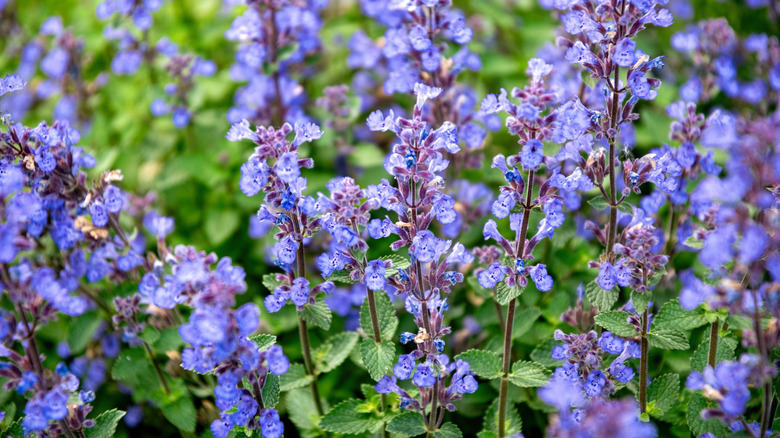
Raising catnip is a pretty easy task, making it a great choice for newbie gardeners. Plant it in the spring after the last frost has passed, about 18 to 24 inches apart, in well-draining soil with aged compost mixed into it. If you are growing your catnip in containers, they can be planted any time of year — but spring or fall will reap the best results. Aside from preventing the plant from spreading too much, this will also mean you can easily move the catnip around your garden; you can even bring a container or two indoors for your kitties to enjoy.
For a stronger, more pungent aroma, plant your catnip in sandy soil. You should not need to add fertilizer as long as the soil is suitable. In fact, fertilizer could negatively affect the potency of its smell. Water your catnip once the top inch of soil is dry, but take care that you don't make these major mistakes when watering your garden and plants.