

It's Baby Copperhead Season: Tips For Staying Safe On Your Next Hike
We may receive a commission on purchases made from links.
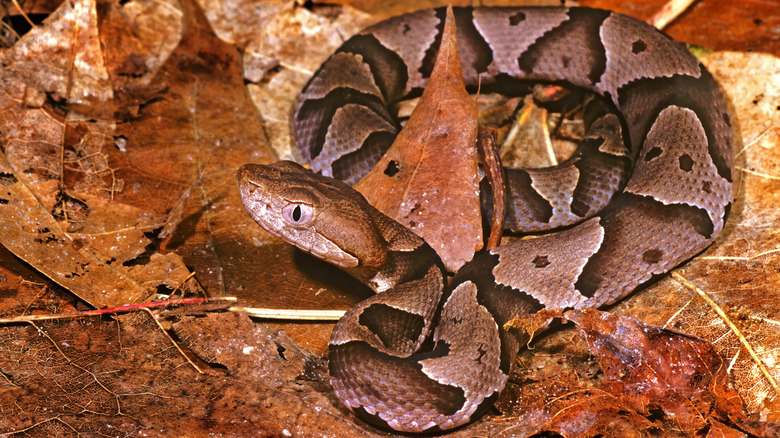
Copperheads are among the most dangerous types of snakes in the world, commonly found throughout the eastern half of the United States. While they aren't necessarily thought of as an aggressive snake, they don't hesitate to strike when startled or disturbed. In fact, in North Carolina, the state that has the highest rate of snakebites in the U.S., copperheads are the culprit in an overwhelming majority of the cases. A large percentage of copperhead snake bites throughout the U.S. occur during fall. This time of year is known as baby copperhead season, but there are some easy tips for staying safe on your next hike, including watching your step and dressing appropriately.
There are several reasons more bites take place during fall. For one, thousands of newborn copperhead snakes will be slithering around. Secondly, adult copperheads are quite active, as they prepare for the winter. For humans, fall is often considered the best time of year for hiking. So, in addition to autumn being an active time for copperheads, there are typically more hikers on the trail as well. With that in mind, you should not only know what to do if you're bitten by a venomous snake, but also know how to avoid being bitten in the first place.
The most important thing to remember when hiking in copperhead territory is to watch where you put your hands and feet. They are masterful when it comes to camouflage, seamlessly blending in with leaves and grass. Additionally, copperheads, especially young ones, tend to stick to shaded areas and are often found alongside or under rocks, ledges, or logs. To avoid being bitten, it is critically important to look before placing your hands or feet anywhere along the trail.
Dress for success – and safety - during baby copperhead season
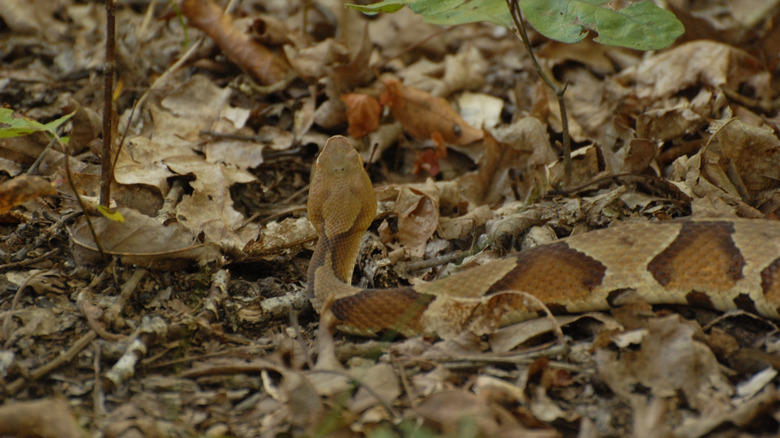
What you wear on your fall hike can also help keep you safe from snakebites. During autumn, the cooler temperatures often dictate wearing long sleeves, thick pants, and layers. However, even when the weather is on the warm side, dressing with thick pants and hiking boots, as opposed to shoes, can help keep you safe. For additional peace of mind, throw on a pair of protective leggings like the ForEverlast snake guards, which can offer some protection if an unseen snake takes a swipe at you.
When moving along the trail at night or during lowlight periods such as dusk or dawn, use a flashlight so you can clearly see what's on the ground in front of you. Using a hiking stick or trekking poles can be useful for probing the trail ahead and alerting snakes to your presence. Additionally, often these objects can serve as a distraction: Snakes intent on striking may attack the sticks instead of your legs. If you do happen across a copperhead while hiking, give it space and leave it alone. Mostly they want nothing to do with you. Never try to pick up, move, or handle a copperhead or any type of snake in the wild. While this may (sometimes) seem like common sense, this behavior leads to numerous snakebites each year.