

The Surprising Item That Can Help Your Compost Pile Break Down Faster
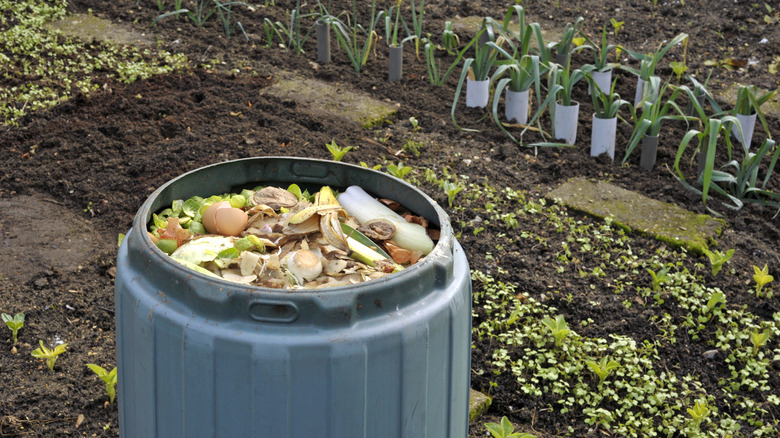
If you're looking for something to help your compost break down faster, look no further than beer. Unlike humans, you see, decomposing organic matter doesn't mind if a pint of pilsner has gone flat. Compost will gladly accept beer in any condition. Beer encourages a compost pile to break down more rapidly due to its sugar and yeast content. The yeast found in beer can help organic matter decompose and is also capable of reducing the amount of methane your compost pile produces. It also encourages the growth of other beneficial microorganisms and wards off microscopic pathogens that don't belong in your pile. The sugar in beer feeds the pile's helpful organisms, as well. A few other beer-based substances are also beneficial and contribute to this effect.
Most beers are suitable for composting, but some beer yeasts may accelerate the process more than others. Saccharomyces cerevisiae, a fast-fermenting yeast that's a favorite of home brewers and a common ingredient in ales, is known to raise the temperature of compost piles and accelerate the breakdown of their contents. According to a 2024 article in Environmental Science and Pollution Research, Saccharomyces cerevisiae is especially helpful for composting low-pH food waste, which can be slow to decompose. The article's authors found that this yeast jump-started the composting process and facilitated the growth of thermophilic bacteria, which are essential for converting organic matter into compost. Brettanomyces bruxellensis, a yeast favored by many craft brewers, is another popular choice for enhancing the contents of compost bins. So, next time you set out beer traps in your garden to help control slugs, dump the leftover lager into your compost pile to speed up the breakdown and add a little extra nitrogen and other nutrients.
How to use beer in your compost pile for the best results
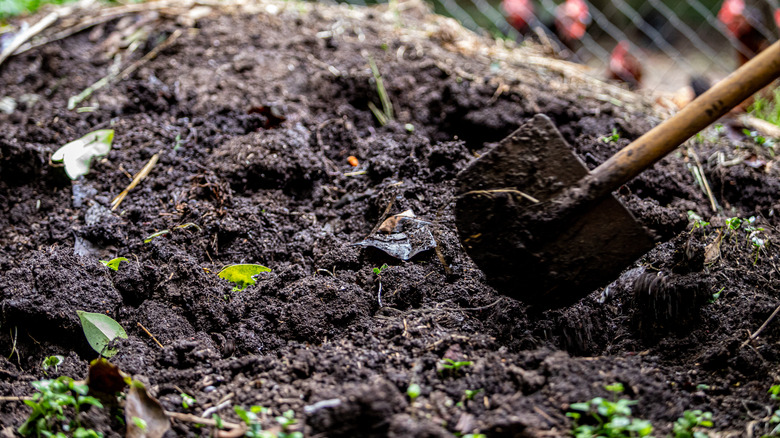
Beer isn't guaranteed to supercharge your composting efforts, but there are a few things you can do to increase your chances of success. First, protect the yeast by monitoring the temperature of the pile. Saccharomyces cerevisiae and many other yeasts thrive when the temperature is between 77 and 95 degrees Fahrenheit, and they start to die when the temperature goes above 122 degrees Fahrenheit.
Second, avoid serving your pile too much beer, as this can attract fruit flies and alter the pH level. Excess moisture, whether it comes from beer, rain, or damp grass clippings, can also kill the bacteria needed for the decomposition process. If your pile is looking soggy after a glass of suds, incorporate dry organic matter that's high in carbon. Wood chips or cut-up newspapers should suffice. One or two cups of watered-down beer is plenty for each cubic yard of organic matter in your bin. Diluting the beer is necessary because it lowers the alcohol content. Too much alcohol can harm your compost pile's microbes.
Adding beer to the pile once or twice a month is a good idea, but not everyone has a steady supply of beer. If you're not a lager drinker, consider incorporating other sources of yeast into your compost pile instead. Spoiled wine, for example, can be poured on a compost pile to add yeast and moisture. As with strong beer, dilute it so its alcohol doesn't do more harm than good. After you've discarded the wine into your pile, you can even compost the natural wine corks, as well as the cardboard boxes. Just check that the cardboard doesn't contain glossy coatings or other materials that should not be composted.