

The Citrusy Herb That May Be The Key To A Pest-Free Yard
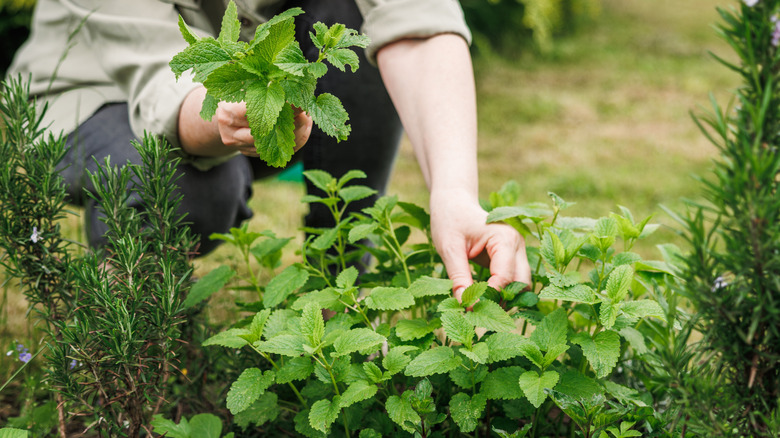
A wonderful thing about gardening is discovering that different plants can have different purposes; it's not always just about their beauty or their culinary value. Plants that repel pests from your garden naturally are the perfect example of that. What if a pest-repelling plant were easy to grow, smelled pleasant, and had other beneficial properties? Enter lemon balm (Melissa officinalis), one of mint's citrusy relatives.
Named the 2007 Herb of the Year by the International Herb Association, this edible plant emits a lovely lemony aroma, especially when its leaves are rubbed or its stems are snipped. This easy-growing, bushy perennial also attracts pollinators; bees, in particular, enjoy its tiny white, yellow, or pinkish blooms. The lemon-like fragrance repels mosquitoes and gnats, so it could be an excellent addition to your favorite outdoor living areas in your yard.
The leaves are high in citronellal, a compound similar to citronella, which is used in many commercial mosquito repellents — some varieties have higher concentrations of this, such as "Quedlinburger Niederliegende." If your pond or other areas in your yard are swarmed with mosquitoes, crush some lemon balm leaves in your hands and rub them on your wrists, ankles, and other exposed areas that mosquitoes tend to love to protect yourself against their bites.
Lemon balm's benefits
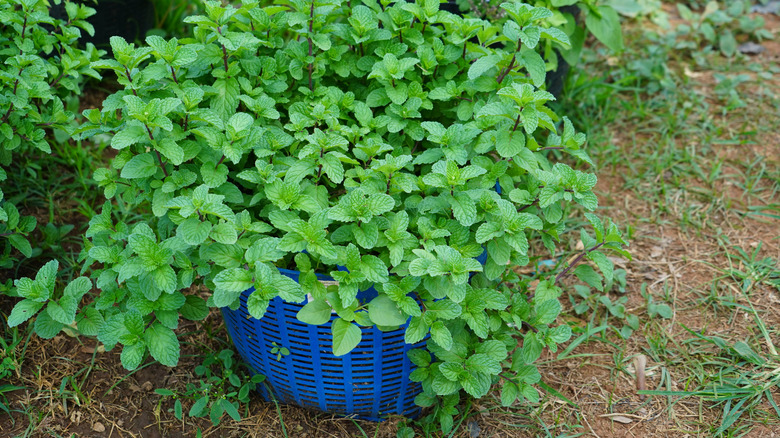
Lemon balm grows with practically no effort at all. Since lemon balm self-seeds and is an aggressive and prolific grower, you'll want to keep it in check by either planting it in containers or by deadheading the spent blooms before they go to seed. Enjoying full sun or partial shade, it can easily grow more than 2 feet wide and tall. Over time, it easily spreads to other areas of the yard if allowed to go to seed. Cutting the plant back once it's done flowering creates new, lush leaf growth. Lemon balm can be propagated from cuttings or by dividing larger plants in spring or late fall. Once established, it grows easily, even when it's ignored or forgotten for a while, so it's one of those fuss-free plants that are great for beginning gardeners.
As well as pest-resistant qualities, it also has a pleasant taste and can be used for culinary purposes, like adding a citrusy note to salads and fish dishes. It can even be used in hot or iced tea. Historically, lemon balm has also been used in medicinal applications. King Charles V of France supposedly drank lemon balm tea for its health benefits. Today, the Cleveland Clinic notes that it could boost mood and cognitive function, and it may have a calming, anti-anxiety effect. Fresh or dried lemon balm leaves may also be added to a hot bath for an enjoyable, fragrant soak. To make cleanup easier, keep the leaves in a muslin bag, similar to using a tea bag.