

The Kitchen Staple Some Gardeners Use To Deter Grasshoppers
We may receive a commission on purchases made from links.
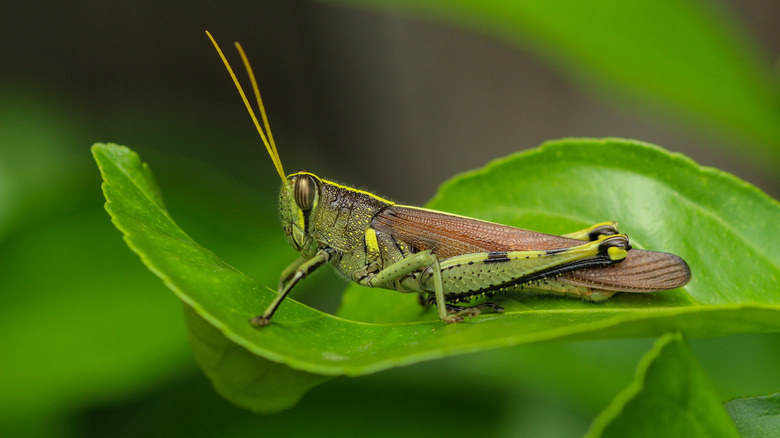
There are some insects you should think twice about killing, should you see them in your garden, such as bees. Grasshoppers, however, do not fall into that category, as they can quickly devastate your vegetable garden, ravenously chewing leaves all the way to the stem. As a result, should you notice signs that grasshoppers are infringing on your garden plot, it is imperative to quickly take action to prevent a full-on plague from occurring. While there are a number of ways to help protect your crops, vinegar is the kitchen staple some gardeners use to deter grasshoppers.
There are actually quite a few unexpected uses for vinegar around your lawn and garden, including driving away pests such as insects and small rodents. It is the smell of vinegar that is thought to be the key to deterring grasshoppers and other pests. Not only is the acidic scent of vinegar unpleasant to insects, it can also serve as an irritant to their sensitive scent receptors and disrupt the pheromone trail many insects rely on in order to follow each other to a food source. This is why vinegar is often used to clean grills and outdoor furniture, as it helps keep scavenging insects away.
While vinegar can be an effective deterrent, it also has limitations. For one, although vinegar can be effective in preventing grasshoppers from taking an interest in your garden initially and can push out a handful of individuals, it is not able to drive away a horde of hoppers. So, if your garden is already overrun with grasshoppers, you'll need to find another solution. Additionally, vinegar remains effective for a relatively short period of time following application. Therefore, you will need to reapply often in order to keep grasshoppers at bay.
How to use vinegar to keep grasshoppers at bay
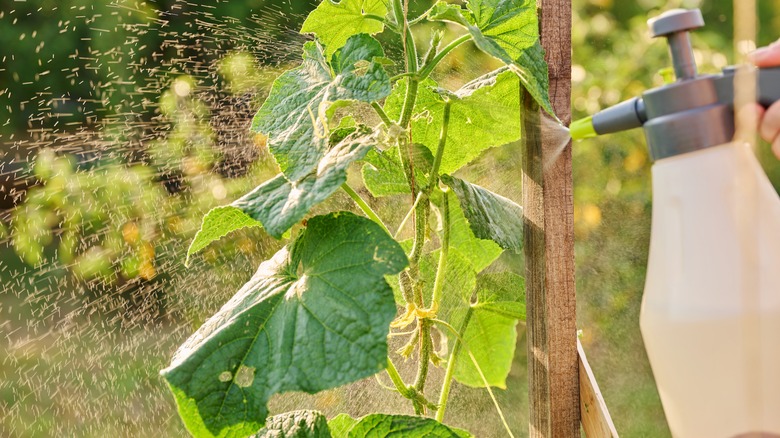
Using vinegar to keep grasshoppers out of your garden is a relatively simple process. There are two ways in which it can be done. The first, and most common, is to create a vinegar and water solution which can be sprayed onto garden plants and around the perimeter of your garden. To do this, mix one part vinegar, either distilled white or apple cider varieties, with three parts water. Diluting the vinegar is critical, as full-strength vinegar, thanks to its acetic acid properties, can function as an herbicide and is often used as the primary ingredient in DIY weed killer. Even if it does not kill your garden plants, vinegar that has not been properly diluted can lead to plant burn and other issues.
The water and vinegar solution should be placed in a mister bottle or small handheld sprayer like the Chapin Multi-Purpose Sprayer. Using a fine mist setting, lightly spray all but your most delicate plants. You can also spray around the perimeter of the garden. This is typically best done during the morning, as that is when grasshoppers tend to be most active. Keep in mind, you will need to reapply every few days, as well as after any rain event.
The other option for using vinegar to dissuade grasshoppers is to place that same solution in small bowls or open containers. Then, put these in various open spots throughout your garden and around the perimeter. This can be a very effective way to deal with grasshopper nymphs, which is key to preventing a full-on outbreak. Be sure to refresh the liquid in these containers regularly to maintain potency for maximum effectiveness.