

Why You Should Think Twice Before Using Resin To Glue Down Garden Stones
We may receive a commission on purchases made from links.
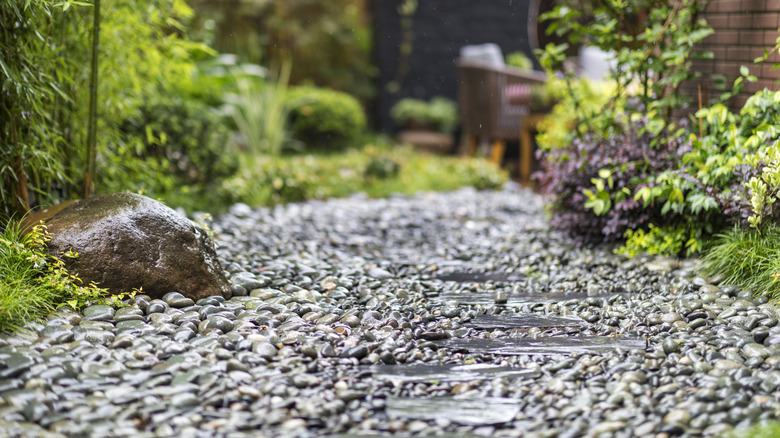
Garden stones are a great landscaping feature that don't take a lot of work to put in place. If you want to create a path through your garden to prevent visitors from stepping on your flower beds, there are few better options. However, while some landscapers just place the stones on the ground, others recommend using resin to glue them down, and that might not be such a great idea for your outdoor space.
Studies have found that epoxy resin releases Bisphenol A into the soil, which impacts the water supply. The chemical has been linked to certain cancers, reproductive problems, and developmental issues in children. The state of California has also found that epoxy resin is associated with asthma, skin allergies, and issues with the nervous system.
Additionally, resins like epoxy and polyester are particularly harmful to the environment because they're made out of petroleum. That means that the production and decay of these resins can disrupt the balance of the ecosystem by contaminating the soil. If you live next to a tributary, you could be putting larger waterways at risk if you use this type of resin. Silicone-based resins, on the other hand, have some environmental benefits — like the fact that they don't break down into microplastics — but they still aren't a great option. Their production creates greenhouse gases, and they can remain in the soil for centuries.
What to use instead of a composite-based resin
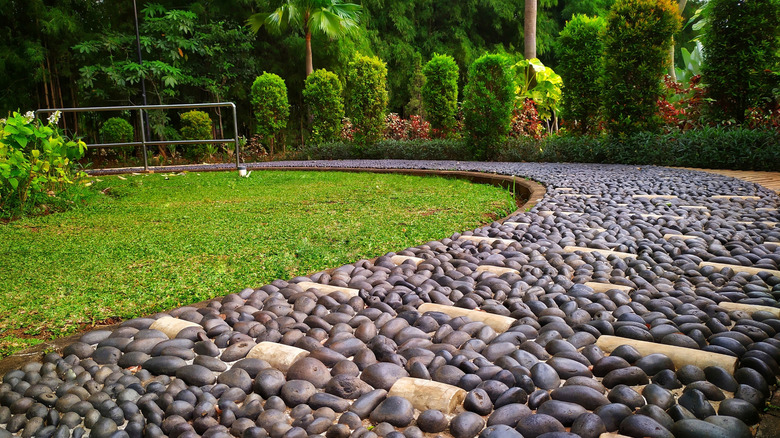
So what should you use for garden stones if epoxy resin isn't such a good option? Well, you should consider a water-based polyurethane resin, like Vuba Store's Easihold Gravel Binder. This type of resin doesn't require as much of a dependence on fossil fuels, which reduces greenhouse gas emissions. But not all environmental contamination happens during production, and this is an area where water-based polyurethane resin also excels. It has lower volatile organic compound emissions (aka gasses emitted by a product) than its synthetic counterparts and relies less on harmful chemicals.
However, there are still some environmental downsides of water-based polyurethane resins that you should be aware of. They are made of crops like corn and sugarcane that may be cultivated using harmful pesticides or large amounts of water. It can also still leach contaminants into the water supply but at a slower rate. While water-based polyurethane resin is a relatively green option, your best bet may be to just put your garden stones in place and pack them with gravel or sand. Or you can DIY your garden path with repurposed vintage plates, which will add some character to the design.