

When And How To Prune Your Tomato Plants In Early Fall
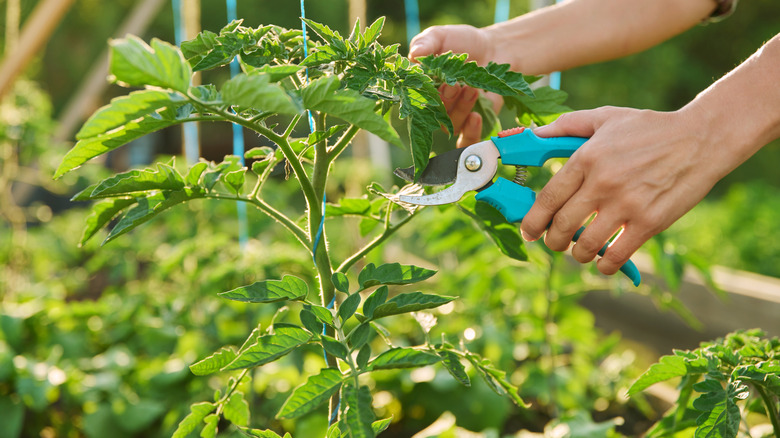
When fall is in the air and the weather begins to feel a little crisper, you may start to think about those plants in your garden that aren't as cold-hardy as others. Tomatoes are one of those plants that aren't cut out for sustaining fruit growth in the colder months. That means there's a point where you'll want to harvest the last of your crop, and do something to help protect your plants for their dormancy during the winter if you live where it gets below 50 degrees for an extended time. Colder weather will start to slow the growth of your tomatoes, but there is something you can do to speed it up — prune them, which can help bring dying tomato plants back to life.
Pruning your tomato plants should happen at least a month before the first frost. If you're in a northern region or live at a higher altitude, that means you'll want to do this before fall arrives on the calendar. In more southern states, you can wait longer for that last pruning of the growing season. Keep in mind that for healthy tomato plants, it's essential to prune off dead and diseased leaves and stems regularly.
Before you begin pruning your plants, it's important to know whether you have determinate or indeterminate tomatoes. The easiest way to tell the difference is that determinate tomato plants are bush-like and only grow to about 3 feet, while indeterminate ones grow along vines and need trellises to keep them off the ground. You don't really need to prune determinate tomatoes, but your indeterminate tomatoes will benefit from pruning.
How to prune your tomatoes in the fall
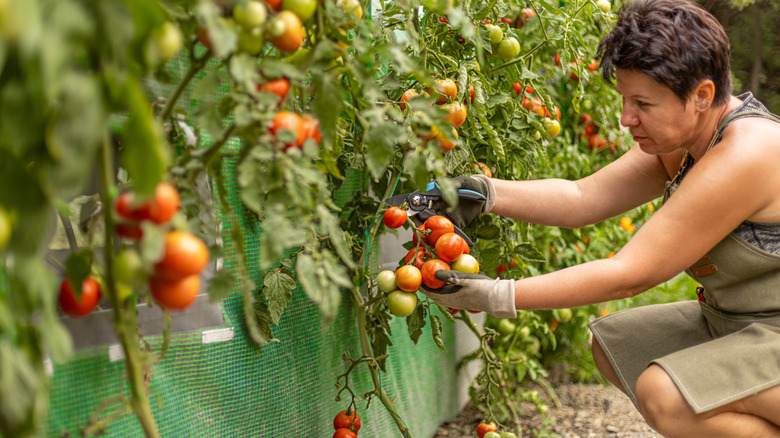
Late summer is the ideal time for heavy pruning, when you can trim back leaves and stems. Once fall is in the air, you'll want to clip off the growing tip on each of the main stems coming out from your plant. You can also pinch off any flowers that are starting to grow. Both of these things will help prevent the tomato plant from flowering and growing more fruit, allowing the remaining energy/sugars to be used for the complete ripening of the fruit already growing on the vines.
If the frost comes earlier than expected, allowing your plants to stop growing by pruning the tips will also help ensure that the green tomatoes you're stuck with will have a chance to ripen the rest of the way once they're harvested and moved indoors. Just be sure to prune your plants only when the outside is dry, and don't pluck too many leaves off at a time, as pruning can cause stress to the plant. If snow arrives unexpectedly, there may be some tricks to rescuing your garden plants.
If you want to grow tomatoes throughout the winter, there are some short-season tomato varieties you can search out that take only a couple of months to bear fruit. Of course, these tomatoes also require care and still won't last long in colder weather, as it can damage leaves and stems and prevent the fruit from fully ripening. So, regardless of the variety of tomatoes you're growing, pruning at the proper time is crucial. However, we do have some tips on how to keep your tomato plants thriving all winter long.