

The Must-Plant Ground Cover With Gorgeous Color-Changing Leaves
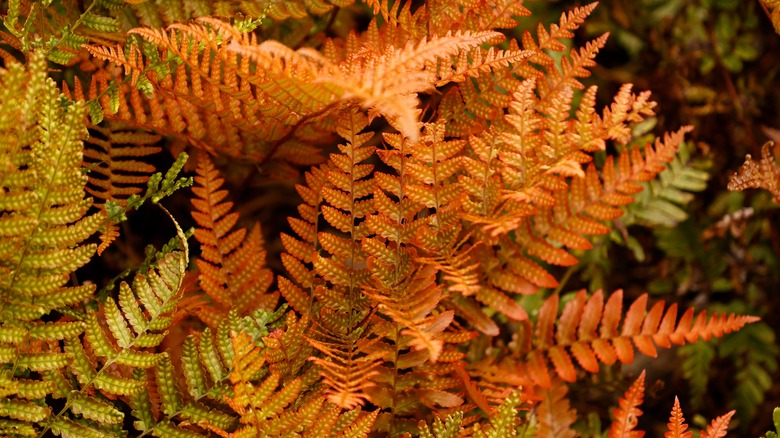
The medium green of most lawn grasses is attractive, but it's so common that it can feel a bit uninspired. Luckily, you don't have to blanket every inch of your yard in this color, as a well-chosen ground cover can add other beautiful hues to your lawn. Autumn fern (Dryopteris erythrosora), sometimes called Japanese shield fern, is a particularly pretty option to consider. Its spore containers, or indusia, are a bold red, and the color of its leaves changes throughout the seasons. The fronds of this fern are pinkish brown or reddish orange when they first peek out of the ground during springtime, but they take on a deep shade of green as they mature. In the winter, they often fade to lime green or yellow. Some cultivars sport copper-colored fronds in the fall.
As autumn fern's name suggests, fall is a good time to add this plant to your landscape. The season's cool weather encourages the fern to focus on root development rather than leaf formation, its primary springtime concern. Autumn fern is also known for the frilly look of its fronds and its ability to fend off hungry deer. If you decide to plant autumn fern, be sure to monitor its spread and take action should it try to escape your property. This plant has been deemed invasive in the city of Alexandria, Virginia, as well as some national parks in the mid-Atlantic region, while the USDA lists it as one of the "New Invaders of the Southeast." Don't grow autumn fern in your yard if you live in these areas. If you do need to keep its wandering rhizomes contained, grow it in containers rather than planting it in the ground.
Caring for an autumn fern ground cover
Autumn fern is a great fuss-free plant for gardening beginners. This eye-catching perennial is not prone to diseases or pest problems. It can handle brief droughts once it has acclimated to its planting site, and it doesn't mind heavy clay soil as long as excess water drains adequately. If you have clay soil that doesn't drain so well, try mixing in some compost to remedy the problem.
Autumn ferns are pretty flexible about sunlight, too. As ground cover, the plant can thrive in many types of shade, from the dappled sunlight beneath a tree canopy to a shadow-covered area beside a house. In general, these ferns also excel in acidic soil and areas that provide a bit of wind protection. Keeping the soil damp and incorporating lots of organic material can help them stay healthy and vibrant.
Since autumn ferns are native to mountainous regions of China, Japan, and Taiwan, growing them in hilly yards is no sweat if the climate is tolerable. There appears to be some leeway regarding which USDA hardiness zones are considered best suited for them, although, generally speaking, they're likely to do best between zones 5 and 9. When deciding where to plant an autumn fern ground cover, keep in mind that each plant can grow as tall as 2 feet and as wide as 3 feet. Consider placing this ground cover near patches of bare ground so it will gradually fill them in. Or, use it as a grass alternative to reduce the amount of lawn mowing your property needs.