

The Well-Known Slug Deterring Myth You Should Stop Believing
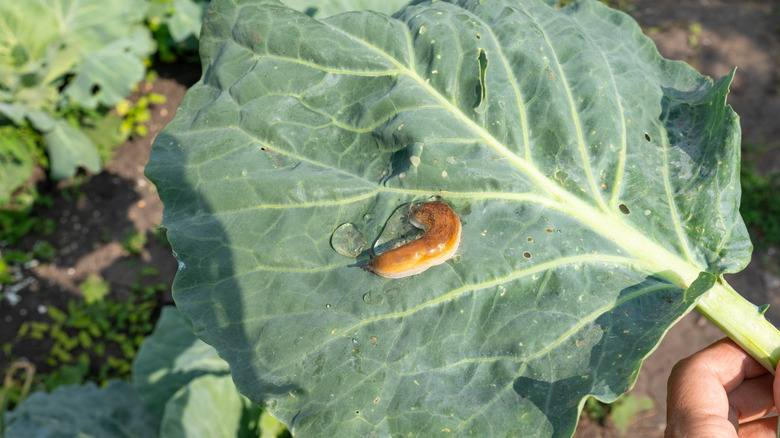
To some, they're cute, to others, they're a slimy nuisance — slugs are one of those garden pests that pop up once in a while. You know they've been there because they've munched holes in your plants. Unlike some other insects that only feast on plants, slugs eat a variety of garden greenery and decaying matter. But, while they are destructive to both flowers and produce, they also have some benefits, so you might want to think twice before killing them. For instance, slugs eat leaves, making them beneficial in compost piles.
Benefits aside, slugs must go if they're destroying plants, so you may find yourself reaching for some grapefruits to get rid of them once and for all. This is a hack we've seen countless times, but you can put the citrus fruit down. The truth is, there's not enough scientific evidence to support the claims that this hack will effectively eliminate the slugs disrupting your garden. So, before you start putting your grapefruit discards in the garden in hopes of no longer having to deal with slugs, let's look at why it might not be the perfect solution for your slug problem.
Why grapefruit might not get slugs out of your garden
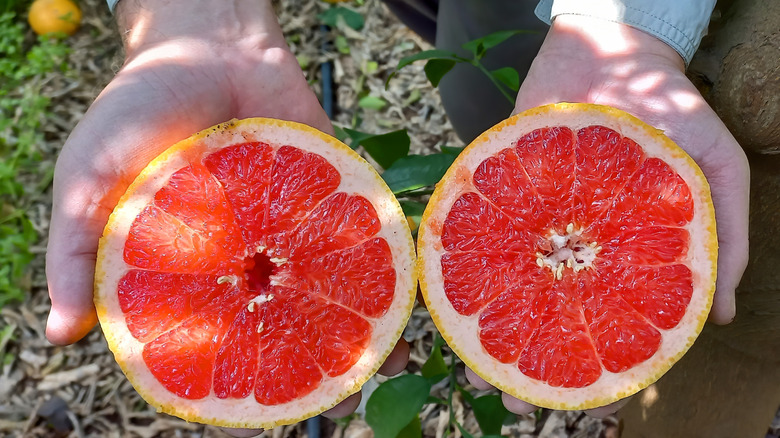
The idea behind the hack is that a halved grapefruit lying upside down in your garden will attract nearby slugs, and they'll get in there and start munching. Then, in the morning, you can grab up the grapefruit and do with it what you please, slugs and all. While some gardeners swear by this trick, it might not be as good as they claim.
As slugs aren't picky eaters, assuming they'll pass up everything else in your garden for some tasty grapefruit doesn't seem like a sure-fire thing. Plus, who's to say that you won't be attracting even more slugs to your garden if they like this tasty treat so much? And what exactly will make them stay on that grapefruit until you get out to the garden to snag them up? There are many variables when it comes to using grapefruit as a bait trap. Additionally, according to the University of Georgia, while some essential oils and herbal extracts can repel insects, they must be used in high concentrations, which is not achieved by simply placing a slice of grapefruit in the garden. You should still think twice about throwing out citrus rinds – rather than wasting them, toss them into a compost bin to add nitrogen to your soil.
The University of Minnesota Extension suggests some better and more valuable ways to deal with slugs. This includes hand-picking them off plants, using soapy water to drown them, or using pennies or diatomaceous earth to create barriers against them. You can even try setting beer traps for slugs. Dubious that they'll work? We did a deep dive into whether beer actually works to keep your garden slug-free.