

Attract Swarms Of Hummingbirds With These Huge, Tropical-Looking Flowers
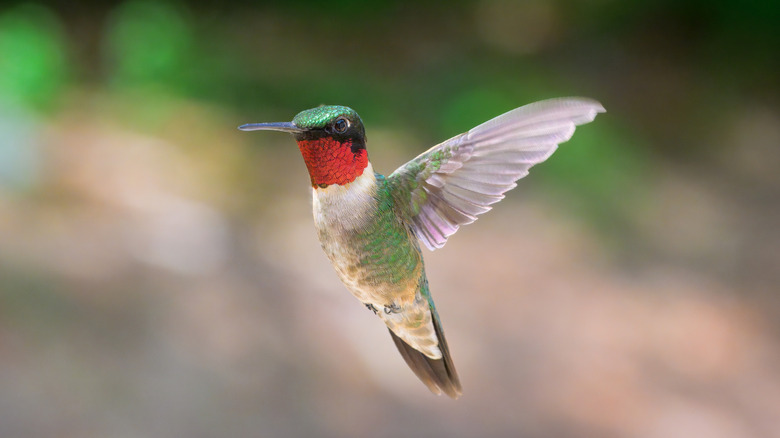
Some flowers do everything they can to attract admirers, especially if those admirers are willing to spread their pollen. Rose mallow (Hibiscus moscheutos) is a perfect example of this phenomenon, luring hordes of hummingbirds — and quite a few humans — with flowers the size of dinner plates. These blossoms come in alluring shades of pink, red, and white. As a relative of yellow hibiscus (Hibiscus brackenridgei), Hawaii's state flower, rose mallow looks like it hails from the tropics, but that's just another attention-grabbing tactic. This perennial actually thrives in USDA hardiness zones 4 through 9, a territory that includes Minnesota and other places known to have bone-chilling winters. The plant also prefers wetlands to oceanfront property, a fact that has earned it many nicknames, such as swamp rose, swamp mallow, and swamp rose-mallow. Whatever you call this enchanting plant, it's ideal for bringing a range of nectar seekers to your yard, from hungry hummers to beautiful butterflies.
Rose mallow is hard to miss in a landscape. It grows as tall as 7 feet, and it can assume the form of a shrub or a tree depending on how you prune it. Its gigantic flowers are quite fragrant and rich in nectar, which is exactly what makes it one of the plants that are attractive to hummingbirds. The tiny birds also appreciate the blossoms' saucer-like shapes, which help their long beaks access the nectar with ease. If hummingbirds have any complaints about rose mallow, they probably concern competition. Rose mallow is a magnet for the species of bees that feed on hibiscus flowers, as well as other long-tongued bees and 28 butterfly and moth species, whose caterpillars use it as a host.
How to lure hummingbirds with rose mallow
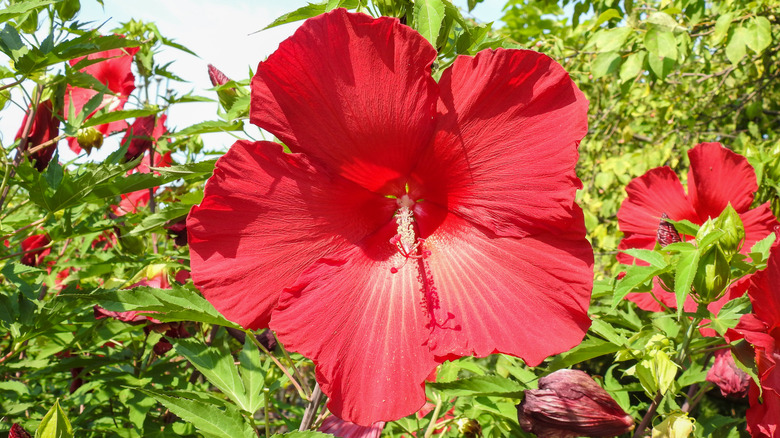
Adding more red to your garden can attract hummingbirds, so grow rose mallow cultivars that produce reddish flowers to make your yard a hotspot for these dainty creatures. The Blackberry Merlot, Midnight Marvel, and Vintage Wine varieties all have stunning crimson petals. Or, select a variety with a splash of scarlet in its center and pink or white on other parts of its petals. Dark Mystery and Summerific Perfect Storm are two beautiful options for this look.
Helping your rose mallows make as many flowers as possible can also bring about more hummingbird visits. For optimal blooming and good health overall, grow these plants in full sunlight. Snip off spent blossoms to encourage new ones to form. Each flower shows off for just a day or two, but some happy rose mallows make hundreds of them through the summer, and even sometimes the fall. Rose mallows' late bloom time is especially valuable to hummingbirds, since many of their other nectar sources have closed up shop by the time fall approaches.
Rose mallows like moist-to-wet soil, so be sure to keep them well hydrated. Overall, they're low-fuss plants suitable for beginning gardeners as well as seasoned growers. Do keep an eye out for pests, however. Japanese beetles and sawfly larvae can damage rose mallows, so monitor the plants for these insects. If you have lots of Japanese beetles in your yard, consider treating your lawn with Bacillus thuringiensis galleriae, or BTG, a naturally occurring soil microbe. It targets Japanese beetle grubs, which develop underground and then crawl to the surface when they're mature enough to ravage your plants.