

The Beautiful Rose Variety That's Actually An Invasive Flower

Roses are elegant and surprisingly hardy, and they're often seen as one of the longer-lasting garden perennial plants you can grow. This is a great quality in most roses, but, in the case of the multiflora rose (Rosa multiflora), it becomes disastrous. From its introduction to the U.S. in the mid-19th century until the mid-to-late 20th century, multiflora rose was a popular plant. The USDA even encouraged growing it, due to its many positive qualities. The berries are popular with wildlife, attracting songbirds to gardens and providing winter food for animals. The plant grows quickly, too, forming dense hedges that were useful both as living fences and for preventing erosion.
However, these same qualities led to it becoming invasive. The seeds are spread by birds after they eat the berries, and multiflora roses produce a lot of seeds. One plant can produce up to 500,000 of them each year, and they can stay viable for decades. Seedlings grow rapidly, outcompeting native plants. The thickets are also difficult to remove, both due to how densely they grow and how quickly they bounce back. Like other roses, multiflora roses have thorns, which certainly doesn't make them easier to get rid of! These thorns can also make them tricky to identify, and they are sometimes confused with brambles. Additionally, multiflora rose flowers do not look like typical roses.
How to remove multiflora roses
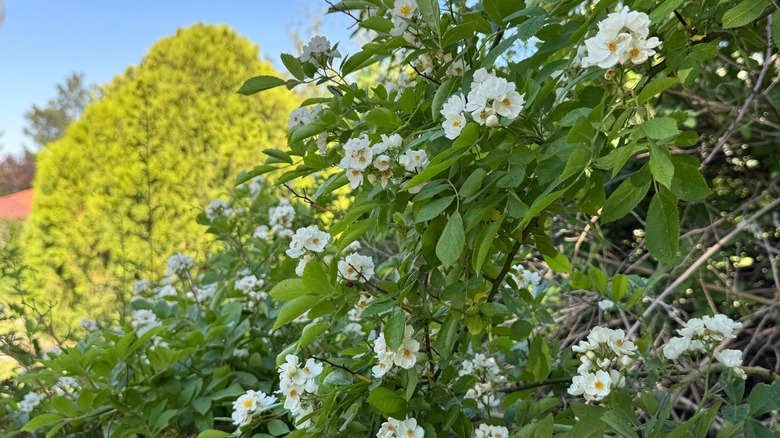
If you unknowingly planted mutliflora roses, or if they've spread into your yard from outside it, then you'll want to remove them as thoroughly as possible. These plants are difficult to get rid of, but not impossible. Prevention is the easiest method of control, so avoid planting multiflora roses and keep an eye out for any seedlings sprouting in your yard or garden. If the plants are already established, you'll need to take aggressive action as soon as possible to prevent them from spreading further.
Start by cutting the plants down as much as possible, ideally before they begin to grow berries. You may need to cut the same plant multiple times before it dies, so watch the area carefully for new growth. You can mow over them if they're short, although you should dig up the entire plant if you're able to. Remember to wear gloves, and be careful of the thorns. To make the process easier, use a long-handled weeding tool to avoid crouching on the ground for long periods of time.
Unfortunately, if there are too many multiflora roses or if they keep coming back, you may need to resort to chemical controls. Read the instructions on the herbicide thoroughly before using it, and follow them closely. After you've removed as much of the plant as you can, monitor the area closely for new growth. There may be seeds lingering in the soil. Mow the area regularly to cut down new seedlings as they emerge.