

Winter Is Coming And Here's How You Can Protect Your Plants From Snow Damage
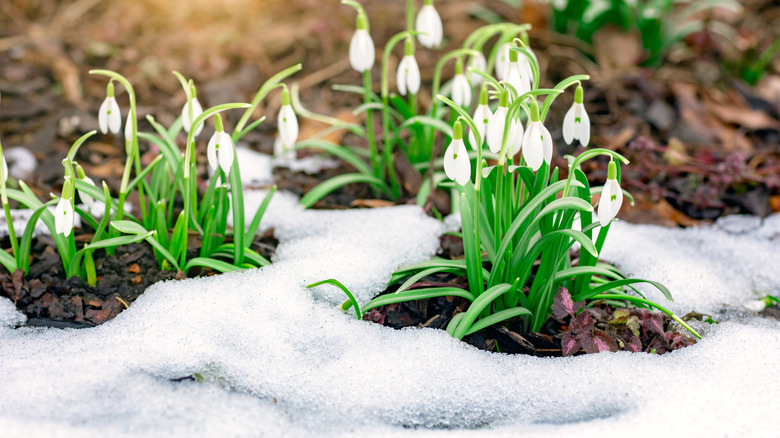
Winter weather can be damaging and costly to your lawn and garden. Snow, in particular, can stress your plants in many ways, from breaking branches on your fruit trees, to causing root damage and reducing photosynthesis in the rest of your plants. All of this can damage or stunt the growth of your yard's greenery, if it doesn't kill the plants off. While snow can have benefits to certain vegetation, and there are plenty of snow-hardy vegetables, if you've got ones that are susceptible to the cold, you are going to need to take steps to protect them.
The first step in preventing snow damage? Handle the potted plants. Any plants that are in planters and other containers should come into your house, or any indoor space with adequate warmth and lighting — this is particularly ideal if you want to keep your tomato plants thriving all winter long, for example. Without the ground around them to help keep them warm, your potted plants are the most susceptible to freeze damage. This may even protect the pots themselves, as well, since certain materials, such as terracotta and ceramic, can crack when they freeze due to their moisture-retaining properties. If you can't move your potted plants inside, the next best thing is to wrap the pots with a blanket to help insulate them.
Once that's done, of course, it's time to help out the plants that can't come inside, like the backyard hydrangeas that you're trying to care for this winter. This process is a bit more involved.
Here's how to snow-proof the plants you can't bring inside
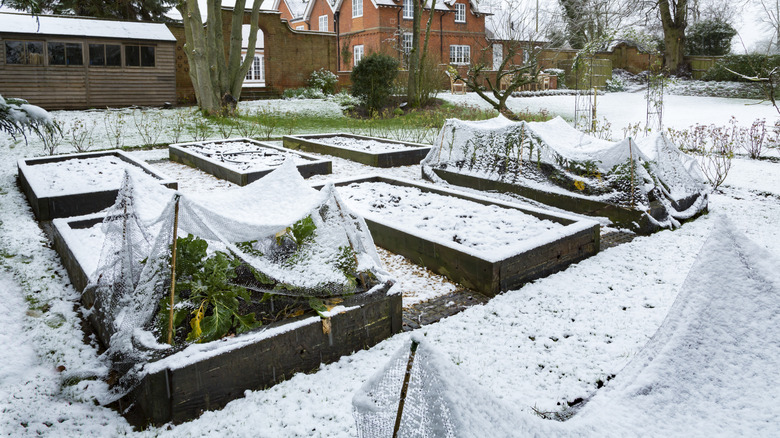
If you have cold-sensitive plants in the ground, you should cover them before the snow comes to provide insulation. As you prepare your sensitive plants for the snow, you should water, fertilize, and mulch them before you cover them. You will want to do this preparation before the ground freezes, as the ground may not absorb as much of the water when the temperatures are freezing.
Once you have watered your plants, you can cover them with a variety of different items. You can use frost cloths, old blankets (like those used to insulate outside planters), thick plastic, cardboard, or straw to cover your plants. You should also cover any garden beds with compost before any other coverage.
Young trees and shrubs also need to be protected from the snow because the weight of the snow can damage their branches. To protect them, prune regularly throughout the year and remove any dead, weak, or diseased branches that might break from the added weight. You can also use wire or tree supports to provide extra stability during any additional weight your trees and shrubs might have to endure. Just like with your other plants, compost can be added to the base of your young trees to protect them from the cold. Frost blankets can also be used for trees and shrubs, as well. If snow has accumulated and you need to remove it, there's something you should never do to get the snow off the tree — shake it. It's important to be gentle when removing it.