

The US State That Is Home To The Most Black Bears In America
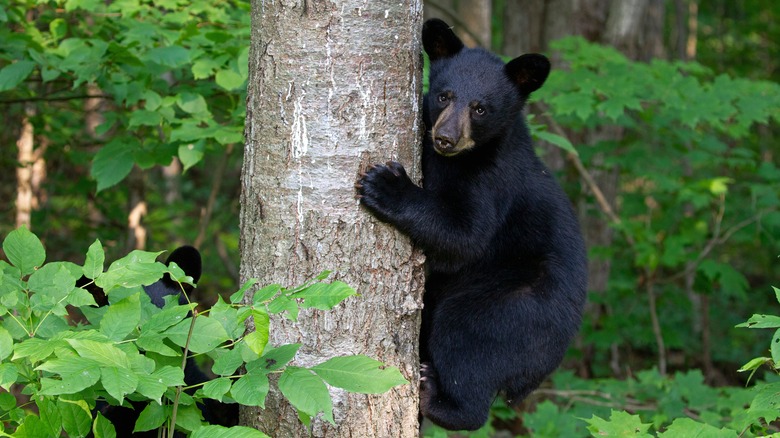
You may never actually see one, but black bears are everywhere. With an estimated 900,000 across North America, these fur-clad introverts are the continent's most common bear species. Although they're not exactly rare, they don't make a habit of introducing themselves. Black bears are notoriously shy, often skittering off the moment they catch a whiff of you, thanks to a sense of smell that's roughly seven times stronger than a bloodhound's. Most of the time, hikers will never know how close they came to a bear that already slipped quietly away. And while black bear populations have been steady in many locations, they are even venturing beyond their traditional ranges, occasionally popping up in states like Ohio, where locals haven't seen them in generations.
But one state leads the pack — or, rather, the paw. Alaska boasts more than 100,000 black bears, by far the largest population in the United States. Putting that in perspective, California's 35,000 black bears seem like a family reunion compared to Alaska's statewide bear bonanza. Maine ties the Golden State with around 35,000, and Idaho isn't far behind with 30,000. But don't leave out Oregon and Washington state, both tied at roughly 27,500 black bears. So what makes Alaska the reigning black bear capital? Two words: space and snacks. Vast, untouched wilderness means endless room to roam, and a smorgasbord of salmon runs, berries, and roots keeps them well-fed. Add in a cooler climate that still offers enough foraging time, and Alaska becomes bear paradise. It's the perfect recipe for a thriving population — just don't expect the bears to thank you for visiting.
What to do if you meet a black bear in the wild
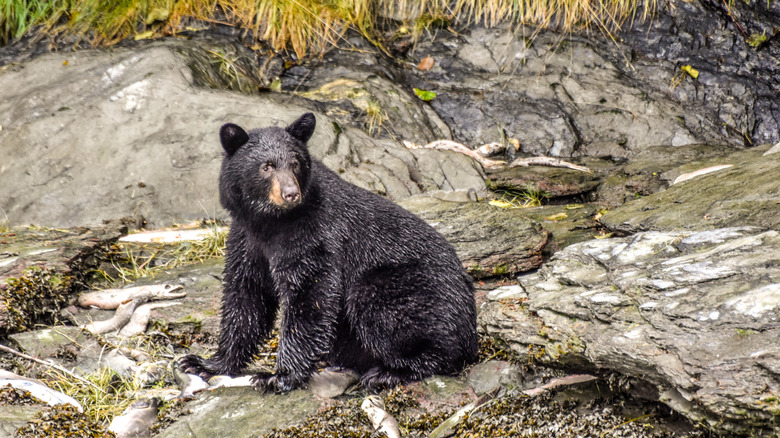
The odds of bumping into a black bear in Alaska — or anywhere else with high populations — are slim, but not zero. In fact, there are a few reasons why bear attacks might be on the rise. But if you round a bend on the trail and find one standing where you'd really rather be, don't panic. Black bears are curious by nature, but they're generally not aggressive toward humans. The best move is to stay calm, talk in a firm voice, and slowly wave your arms so the bear knows you're neither prey nor competition. Never run; sprinting can trigger a chase instinct, and they're faster. Back away slowly instead, keeping the bear in sight. Most encounters end right there, with the bear deciding you're boring and lumbering off.
But what if the bear doesn't leave? That's where strategy matters. If it approaches, stand your ground. Make yourself appear bigger by raising your jacket or trekking poles, and be loud without sounding panicked. If the bear gets within striking distance, fight back aggressively. Black bear attacks are extremely rare, but when they do happen, they're often predatory, which means that submission won't help you. Use rocks, sticks, or even your fists, aiming for the bear's face and muzzle. The goal is to convince the animal you're not worth the effort. You should also pack bear spray, because it can be effective if deployed before contact. Just make sure you know what bear spray actually is and how to use it. In most cases, though, you won't need any of these tips. With a healthy fear of humans and plenty of wilderness to roam, black bears usually prefer berries to backpackers.