

How To Care For Your Hydrangeas During The Fall Months
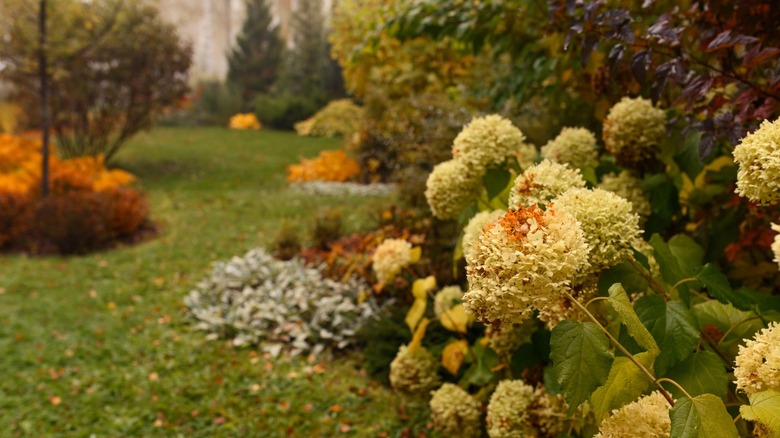
Once you have chosen an optimal spot in your garden to plant your hydrangeas (Hydrangea spp.), they should be thriving as summer transitions into fall. These beautiful plants, which include several popular species, are a garden favorite in the U.S. To care for them properly in the fall months, you need to know the dos and don'ts when it comes to deadheading, pruning, and more. One wrong move can lead to big problems, especially if you decide to prune too soon or too late.
Many hydrangea species continue to bloom well into the autumn months. Some cultivars display lovely flowers and foliage that can add a lot to your late-season landscaping. It's vital that you continue to give them plenty of water throughout the fall. Consider adding a time-released fertilizer in early fall if you notice yellowing leaves. Some gardeners prefer leaving dried hydrangea heads on their plants in autumn after they flower. This is a matter of choice and will not impact the health of your hydrangeas.
To prune or not to prune your hydrangeas
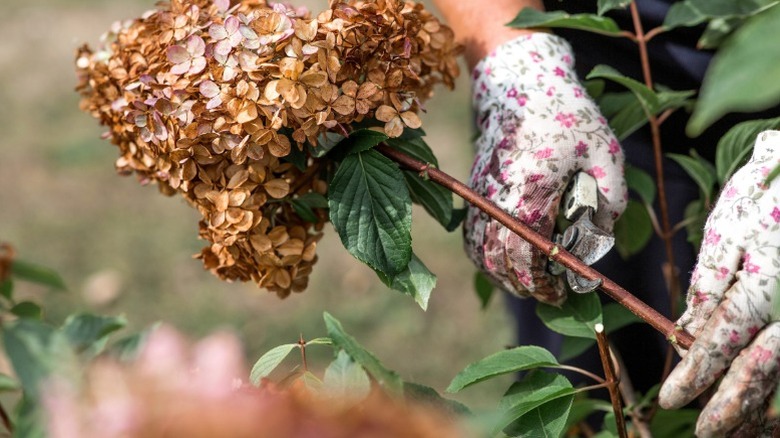
For certain hydrangea species, you don't really want to prune them in the fall, as this can prevent flowers from blooming the following spring. This is especially important if you have old wood hydrangea species in your yard, including bigleaf (Hydrangea macrophylla) and oakleaf (Hydrangea quercifolia). A little light pruning after your plants are finished blooming in the fall can be tolerated, but don't take off too much, and don't do it too late (late summer to early fall is best). Species that bloom on new wood, like smooth hydrangeas (Hydrangea arborescens) or panicle hydrangeas (Hydrangea paniculata), pruning is done in late winter.
Because you won't likely need to do extensive pruning in the fall, it can be a good season to start preparing for winter weather. Weatherizing your hydrangeas can be as simple as adding mulch around the base of the plants to protect them in late fall. Other fall maintenance includes cleaning up leaves that fall and build up around the base of your hydrangeas. This detritus can lead to disease if left alone. Finally, prepare your hydrangeas for winter by providing adequate water before a hard freeze and following other seasonal care tips.