

If You Want To Catch A Glimpse Of A Bald Eagle, You Might Want To Visit Alaska
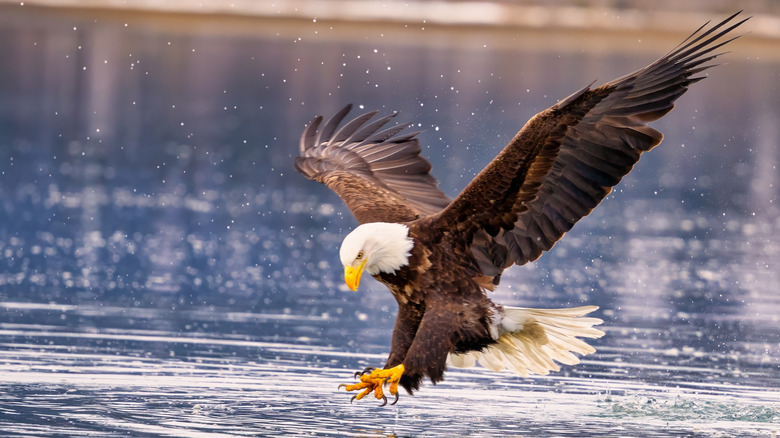
There's a reason the bald eagle is the national bird of the U.S. — as of 2025, only two states reported having no breeding pairs present. If you want the best chance to see a bald eagle in the wild, though, Alaska is clearly the place to be, as some 30,000 of these massive birds are estimated to live in the state.
That number is truly impressive considering that, as recently as the mid-20th century, bald eagles were an endangered species on the brink of extinction. They've made a strong comeback since then, though, and they show no signs of dwindling. Today, you can easily see bald eagles in zoos across the country, including in Alaska. It's also possible to see injured birds being cared for at the Alaskan Raptor Center in Sitka and the Alaska Rainforest Sanctuary in Ketchikan. Spotting bald eagles in the wild, however, is another matter entirely.
Where to see bald eagles in Alaska
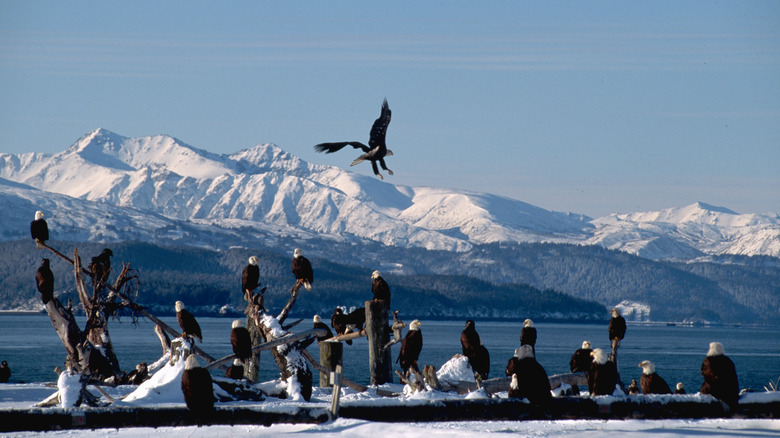
One of the best places to spot wild bald eagles is the Alaska Chilkat Bald Eagle Preserve, where over 3,000 of these birds come to stay each fall. In November, the preserve even hosts a festival celebrating them. Other places in Alaska to see bald eagles include Turnagain Arm, the Kenai River, Southeast Alaska, and Prince William Sound. They're most often found along waterways, hunting for fish and smaller birds. Fishing ports, where scraps are plentiful, are prime eagle-watching locations, as are landfills.
Adult bald eagles can stand over 2 feet tall and weigh up to 14 pounds, so they're pretty hard to miss. Their distinctive white head and brown bodies — common to both males and females — also make them easy to spot. It's possible you'll hear their sharp, piercing cry before you see them, too. In states with smaller populations, you may spot only one or two at a time, but in Alaska, the chances of seeing a group of them are much higher.
Spotting bald eagles in the wild is an unforgettable experience, and knowing the rules for watching them in nature will help protect both yourself and the birds. Meanwhile, these common-sense safety tips will make your next wildlife adventure even more enjoyable.