

How To Keep Your Garden Roses Blooming In Fall

Whether you grow tea roses or shrub roses, keeping them blooming during the fall can be a bit tricky. If you want to get the last flush of blooms as the days grow shorter and the temperatures grow cooler, the best things to do for your rose bushes in the autumn include a final round of pruning and deadheading combined with careful watering and mulching.
However, this process can be a bit nuanced. Modern rose gardeners are rethinking fall rose care based on what the plants need to prepare for winter. According to David Austen Roses, your fall rose care schedule depends on your climate. In southern climates, the end-of-season deadheading can happen in September to trigger a magnificent round of blooms about 45 days later.
In northern climates, your roses are slowing down around Labor Day, and deadheading isn't recommended after that. The general rule is to stop fertilizing and deadheading about 6 to 8 weeks before your first frost, being careful not to over-prune. If you prune too much too soon, it promotes late fall growth, which can be tender and susceptible to early hard freezes.
Watering and mulching your roses in the fall
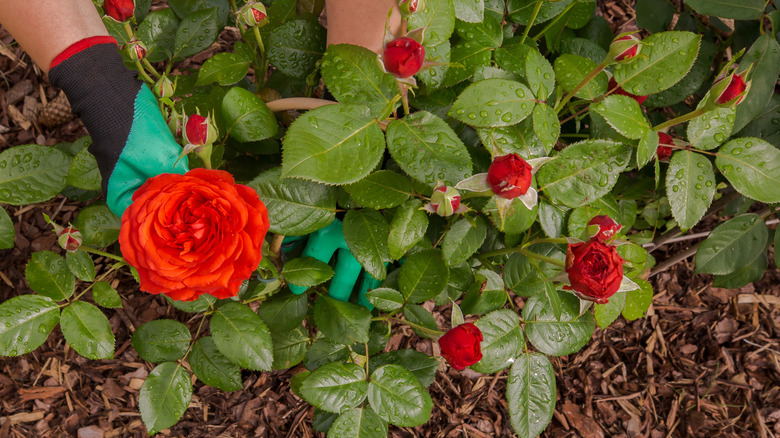
Like all plants in your garden, as temperatures drop, your roses don't need to be watered as frequently. Overwatering is one of the most common mistakes to avoid when watering your garden, but in the fall, it can be just as easy to under-water. Although the soil isn't drying out as quickly and the fall rains have started to appear, it's important to check moisture levels regularly. Roses require consistent moisture to support that final flush of blooms and keep roots healthy going into winter.
Another effective strategy to keep your roses blooming through the fall is to add a layer of mulch, including composted straw, pine needles, or bark. Mulching ensures the soil around your roses doesn't dry out by preventing evaporation on sunny autumn days. In northern climates, you'll want to add a thicker layer of mulch later in the season to protect the plant from winter freeze-and-thaw cycles.
While you should avoid overfertilizing your roses in the fall to discourage late growth, adding a layer of compost is recommended. Garden compost is excellent for roses, acting as a natural, slow-release fertilizer. It protects roses from cold and evaporation, ensuring that plenty of nutrients are available in the spring. (Just be careful to avoid composting diseased rose clippings — they are one of the things you should never compost.) With these simple strategies, you can give your roses everything they need to support that fall flush of blooms.