

A Partial Solar Eclipse Is Coming: Here Are The Best Spots For Catching A Glimpse
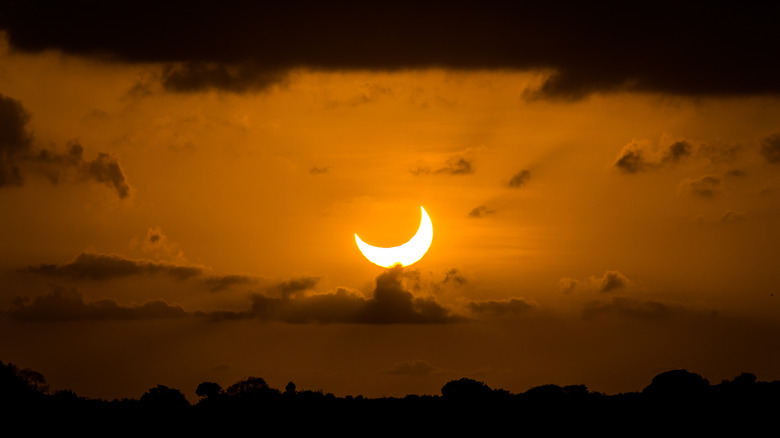
Solar eclipses are breathtaking celestial events — and you may be able to see one September 21st, 2025, depending on where on the planet you're standing. Although this is only a partial solar eclipse, rather than a total that would plunge areas in the path of totality into darkness, September's event is one that amateur and veteran astronomers alike can still enjoy. After all, not only is it set to take place the day before the equinox, but it's also projected that the moon will cover around 80% of the sun during this event, with the exact percentage dependent on location.
If that sounds interesting, you'll likely want to know where the partial solar eclipse will be visible on September 21st. This show-stopping event is for the southern hemisphere alone this time, visible only in a small area around the continents of Australia and Antarctica. Since this is the last eclipse of the year according to NASA, folks in the northern hemisphere will have to keep an eye out for next year's celestial events.
Before diving into the exact spots where this partial solar eclipse is projected to be visible — and what areas will see the most coverage — it's important to know how to view one safety, especially if this is your first time watching a solar eclipse. Even in the case of a partial solar eclipse, you should never look directly at the sun with the naked eye, binoculars, and other devices. Instead, to safely view an eclipse, it's essential to purchase certified viewers or glasses: Look for printed text on the temples that the glasses meet ISO — International Organization for Standardization — regulations). And just because the sun's blocked for a couple hours, don't forget to regularly apply sunscreen while you're outside.
Head way south for the September 2025 solar eclipse
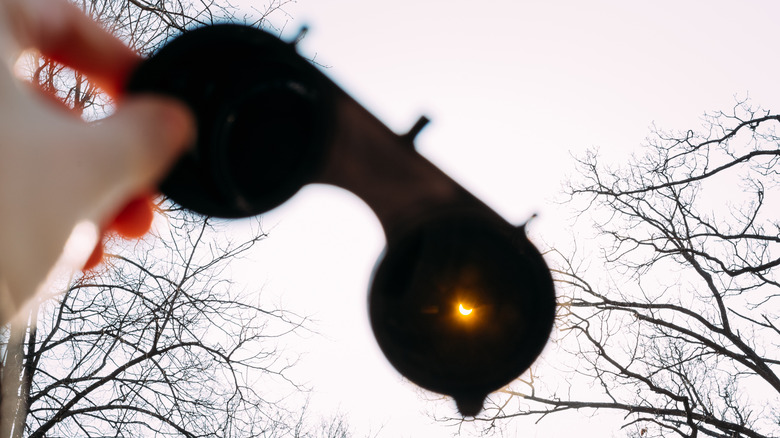
To see the September solar eclipse, you'll need to be in the southern hemisphere early on Sunday morning. This event is projected to begin at around 17:29 UTC (Coordinated Universal Time), but it won't reach its maximum eclipse until a few hours later at 19:41 UTC. Depending on where you're located exactly, this timing and how much of the eclipse you'll be able to see may vary.
The point of greatest eclipse won't be seen except for in a few locations in the southern Pacific Ocean, away from any inhabited land masses in between New Zealand and Antarctica. Without a boat or access to New Zealand's uninhabited Balleny Islands, those who will experience the greatest maximum eclipse will be the researchers and anyone else on the tip of Antarctica's Ross Island and the coastal islands. They will have the chance to see anywhere from 69 to 72% coverage. Of other locations, New Zealand's South Island will receive the most visibility during this solar partial eclipse, specifically Invercargill. If you don't feel like making the trek to Invercargill, Christchurch and the North Island's Wellington aren't too far behind. Several of the islands in the South Pacific also get a glimpse of the partial eclipse, albeit a less dramatic view. On the island nations of Tonga, Fiji, and Samoa, as well as the Cook Islands, you're getting 20% to 30% coverage. Places like New South Wales and Tasmania in Australia will also see at least a portion of this partial eclipse's shadow. Even in projected high coverage areas, individual viewing experiences may vary, especially with cloud cover. If the eclipse peaks your interest in all things skyward, consider hitting up the best places in the U.S. to watch the northern lights.