

Help Your Tomato Garden Thrive With These Small White Flowers

Tomatoes are one of the great joys of gardening, but they're also magnets for pests — especially the dreaded tomato hornworm. These large green caterpillars can strip a plant bare in a matter of days, leaving you frustrated! Fortunately, nature provides a charming way to keep these pests away from your tomatoes: sweet alyssum (Lobularia maritima). This low-growing ground cover produces clusters of delicate, honey-scented blossoms in shades of white, lavender, or pink. Beyond its graceful looks, this flowering companion plant can repel many pests naturally. When grown near tomatoes, they'll attract beneficial insects like ladybugs and lacewings, which prey on hornworm eggs and larvae. By attracting these natural predators into the garden, sweet alyssum can help stop infestations before they get out of control.
This beauty also offers additional benefits: it's loved by pollinators like bees and butterflies, doubles as a living mulch to suppress weeds, and helps soil retain moisture. With so many advantages packed into such a small plant, it's a smart addition to any tomato patch. Another bonus: Sweet alyssum is easy to grow. Just 4 to 6 inches tall, it can create a gorgeous flowering border to beautify your garden when planted alongside your tomatoes. You can start it from seed or pick up nursery-grown plants. As long as it's grown in well-draining soil with plenty of sun, you'll enjoy its blossoms and its garden-protecting benefits with very little effort on your part.
How to naturally protect your tomatoes from hornworms
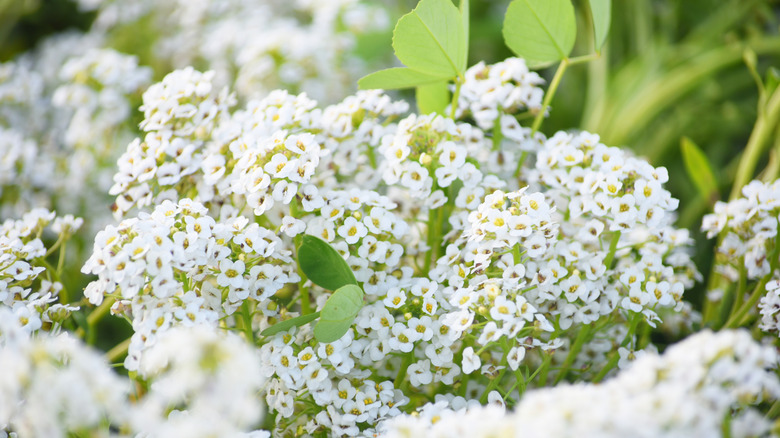
In most of North America, sweet alyssum can be grown as an annual, but in frost-free zones (9–11) it can survive as a tender perennial. It thrives in cooler weather, blooming in spring, taking a pause during the heat of summer, and then, almost as a surprise, bursting back into flower again in the fall. But in case sweet alyssum isn't quite your style, there are plenty of other helpful companion plants that can also shield your tomatoes from hornworms. Marigolds and zinnias repel them with their scent while attracting pollinators; zinnias may even draw hummingbirds to your garden. Basil is another excellent choice, bringing both beauty and practicality. Not only does it pair beautifully with tomatoes, such as in the classic Caprese salad, but its strong fragrance deters hornworms — some gardeners even believe it can make your plants produce even more and tastier tomatoes!
Even after employing these natural prevention methods, it's important to stay vigilant for the hornworm. Check the undersides of tomato leaves daily for eggs, which hatch within a week. Remove them promptly and drop them into soapy water before disposal. Watch for other telltale signs of damage, including chewed fruit, nibbled foliage, or droppings — small, pellet-like clumps scattered around your plants. And don't overlook the hornworms themselves. At 4 to 5 inches long with a horn-like tail, they're surprisingly well-camouflaged, but easy to spot once you know what to look for. By pairing tomatoes with the lovely sweet alyssum or other companion plants, and staying alert, you can enjoy a flourishing, pest-resistant garden all season long.