

Choose The Perfect Tomato Plant For Your Garden With These Tips
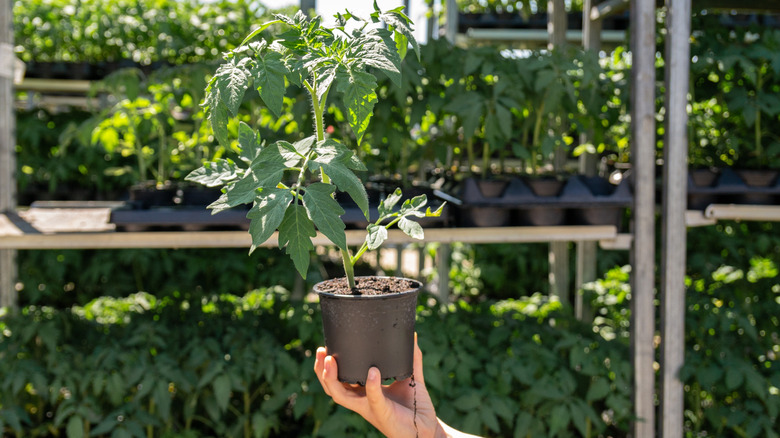
Tomato plants (Solanum lycopersicum) are a popular choice for backyard vegetable gardens since they're relatively easy to grow and produce lots of delicious fruit. For example, beginning gardeners seeking fuss-free plants often choose cherry tomato vines because they're forgiving yet bountiful, even when their caregivers forget to fertilize them. Plus, many varieties of these small and tasty fruits can be cultivated at home. You can set yourself up for success with tomatoes of any size by choosing healthy seedlings. It's also important to select tomato varieties that can handle the growing conditions of the garden you're preparing for them. This means considering space constraints, weather patterns, and more.
In general, tomato plants need full sun, well-draining soil, and plenty of nutrients since they're heavy feeders. If you live somewhere Jack Frost never visits, you can grow tomatoes as perennials, but most gardeners treat them as annuals, planting new specimens each spring. When selecting tomato seedlings, don't assume that the largest ones are healthier or destined to produce the earliest crop. As tomato seedlings start to outgrow their nursery pots, they're prone to becoming rootbound. When a plant's roots are so crowded that they're poking out of the bottom of its container, there's a good chance that this potentially fatal problem has developed. Crowded roots may struggle to absorb water and nutrients, even after they're placed in a roomier space, unless you carefully unsnarl them first.
Avoid seedlings showing signs of stress
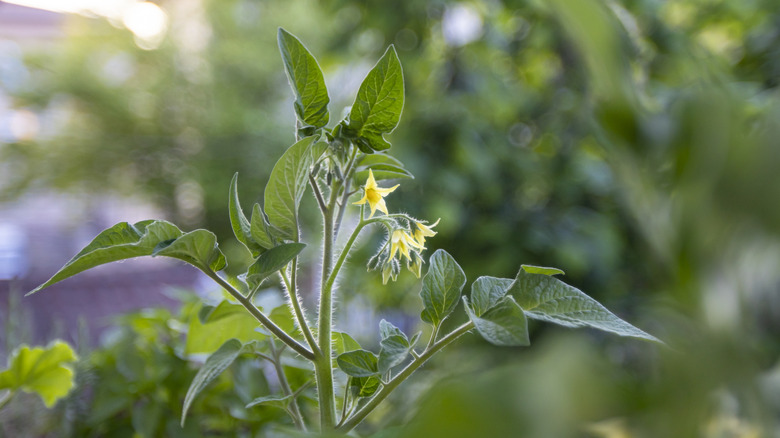
Mature tomato plants can generally tolerate some stress, but young ones may succumb to a range of strain-inducing problems, from nutrient deficiencies to avoidable garden-watering mistakes. When shopping for tomato plants, pass on stressed-out specimens. This includes seedlings that are flowering or starting to grow fruit. While flowers and fruit may seem to indicate well-being, they're actually evidence that a tomato seedling has felt overwhelmed recently. Stress-afflicted seedlings are prone to failing when they encounter cold air, chilly soil, or other garden challenges. Seedlings with flowers or tiny tomatoes are also likely to be weaker because they're funneling energy into making fruit while they're small. Instead, they should be focused on growing the strong stems and leaves needed to support many clusters of juicy red orbs.
Other signs of stress in tomato plants are a little more obvious. First and foremost, steer clear of seedlings with injured stems. These plants are highly stressed and prone to disease. Plus, the broken spots may be signs of pest damage. Patches of black or white in the stem area can also mean that a tomato plant is suffering from ill health, as can brown or wilting leaves. Rather than trying to correct these problems, buy a plant that has a sturdy, crack-free stem and vibrant green foliage. Avoid tomato seedlings that look leggy as well. Seedlings grow tall and spindly when they haven't received enough sunlight. The stress of this situation may make the plants less productive when it's time to grow fruit. Leggy tomato plants sometimes have trouble fending off pests and diseases, too.
Consider your garden's size and growing zone
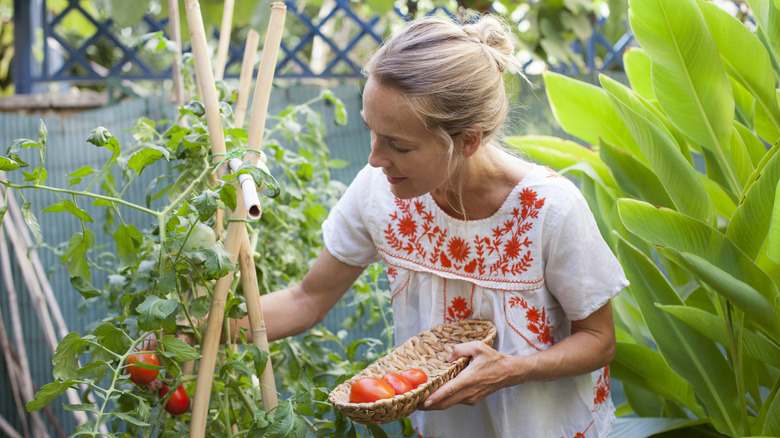
Knowing what USDA hardiness zone you live in will help you figure out which tomato varieties are most likely to thrive in your yard. It can also tell you the best time to plant tomatoes in your garden. Lower-numbered zones usually have shorter growing seasons because they experience frost and freezing temperatures for a larger portion of the year than other zones. This is why tomato varieties that mature quickly — like 'Early Girl' and 'Stupice' — do well in zones 3 through 6. Meanwhile, cultivars that can manage lots of heat — such as 'Heatmaster' and 'Phoenix' — are ideal for zones 9 through 11, whose summers are too hot for some types of tomatoes to handle.
If you're planting tomatoes in a container garden or another small space, choosing a compact cultivar is crucial. By and large, determinate tomatoes are the best fit for this situation. Determinate tomatoes make most of their fruit within a month or so and rarely grow taller than 2 to 4 feet. Unlike towering indeterminate tomato plants, bushy determinate varieties don't tend to need much staking or pruning. In other words, they're low-maintenance vines that yield earlier harvests. Since determinate tomatoes tend to ripen before frost arrives, they're also a smart choice for gardens with short growing seasons. For container gardens, try dwarf tomato varieties such as 'Red Robin,' which are designed for smaller patio containers. Just don't try to grow them in a larger garden, as they may underperform in this environment.