

Here's How To Identify And Treat Tomato Blight Before It's Too Late
We may receive a commission on purchases made from links.
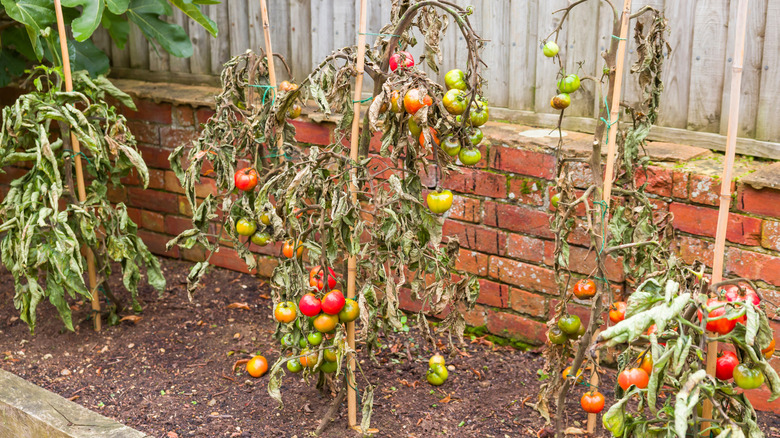
Tomatoes are the most popular garden vegetable grown in the United States. Although tomatoes are considered fuss-free plants, that doesn't mean they are without their concerns. One of those is blight, which is quite common and can cause a number of serious issues, including defoliation of tomato plants and damage to the tomatoes themselves. It can also spread quite quickly, infecting your entire garden if you don't take action to control it. Thankfully, blight is pretty easy to spot, with clear physical characteristics. By regularly checking your plants, you can detect and identify this fungal infection early and treat it with a number of solutions, ranging from increasing airflow to applying fungicide.
While gardeners may often hear the term tomato blight as if it is a singular disease, there are actually multiple types of blight to beware of if you are growing tomatoes in your garden. The three types of blight most commonly addressed on gardening sites are early, late, and Septoria, but gardeners should be aware of the fourth type, Southern blight. Each of these different types of blight has unique symptoms and affects tomato plants and fruit in various ways. But, they all have one thing in common — they are caused by fungus (though late blight is now classified as water mold).
With that in mind, it is imperative to know what to look for in order to be able to identify type of blight and monitor each of your tomato plants frequently throughout the season. It is also crucial to take action quickly once you notice the signs in order to salvage the affected plants and prevent the blight from spreading. If you discover the blight too late, you may be left with no choice but to destroy your current crop of tomatoes.
Keys to identifying tomato blight
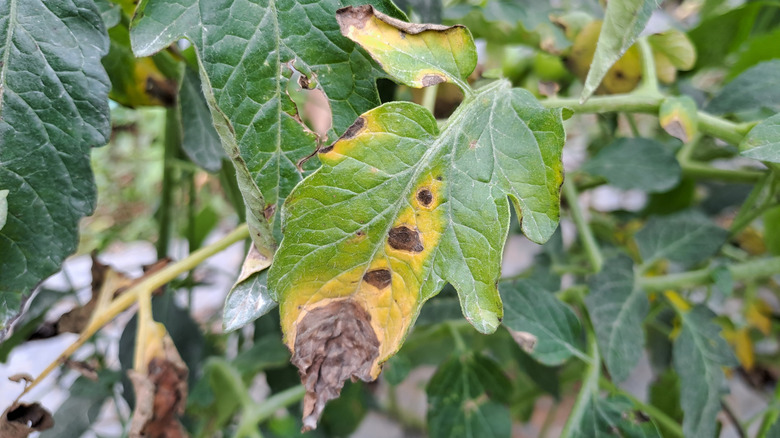
Early blight typically lies dormant in or on the soil during the winter, then becomes active once the weather warms, infecting tomato plants as it does. One of the telltale signs of early blight is what is often described as a bullseye pattern of leaf rot. This brownish spot of rot will sometimes be outlined with a yellow ring. These spots can also appear on the stems of the plant and on the tomatoes themselves. When it does, the area will often become sunken. Leaves and fruit may also begin falling off the plants when it is infected with early blight.
Late blight is perhaps the most critical of the different types of blight. It usually first appears as water-soaked spots on the leaves, which grow rapidly and form a white mold growth around the edges. Both leaves and stems will brown and shrivel rapidly once a plant is infected. The fruit may appear shiny, waxy, or as if it has a layer of grease. Dark spots can also appear and enlarge on the tomatoes. Late blight is especially active in cooler, wetter conditions, which is of particular concern if you are attempting to grow your tomatoes through the winter or late fall.
Septoria blight can typically be identified by a multitude of small brown spots appearing on the leaves of a tomato plant. As these spots enlarge, the leaves typically turn yellow and begin to fall. Southern blight is usually first spotted by the drooping of leaves on an otherwise healthy plant. This is often accompanied by a brownish rot around the base of the plant, which may also be covered by a white fungus around the soil line.
Prevention and treatment of tomato blight
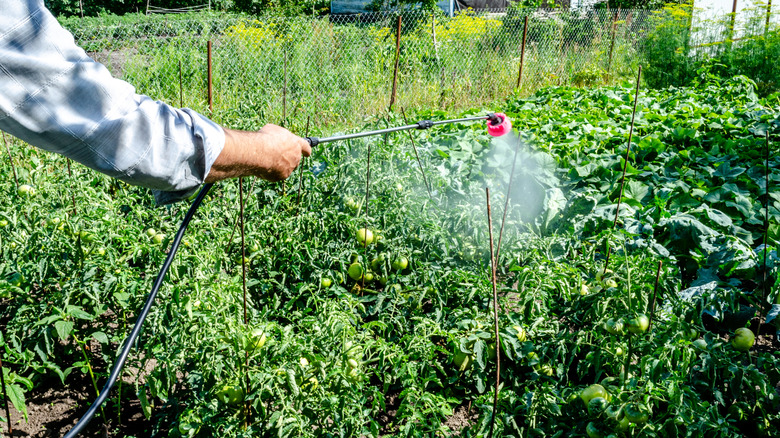
Treatment options for blight are limited, and the infection spreads extremely fast. That's why frequent inspections and health checks for your tomato plants are crucial. If you spot anything that you think could possibly be a sign of blight, you need to take action immediately. The best bet is to remove any portion of the plant that appears to be affected by blight. Be sure not to touch any unaffected portions of the plants while doing this, and thoroughly wash your hands before working with the healthy plants. Once removed, those pieces should be either burned or discarded in a sealed bag. You can also utilize a copper-based fungicide such as Capt. Jack's Copper Fungicide to treat the plants after removing the infected areas.
While those treatment methods can be effective if the blight is caught early enough, prevention is a much better option. This begins when planning your garden. Do not plant tomatoes next to potatoes, which are also susceptible to blight. You should also rotate your crops each year, taking care not to plant a new crop of tomatoes in a section of your garden that has been used for tomatoes, potatoes, eggplants, or peppers within a few years. Additionally, selecting blight-resistant strains of tomatoes will reduce the likelihood of an outbreak.
When planting your garden, be sure to station each tomato plant in a spot that gets plenty of sunshine and adequate airflow to reduce the high moisture conditions that can lead to blight. Airflow can be improved not only by spacing the plants, but also by staking them, frequently pruning low-hanging leaves, and removing weeds on a regular basis. It's also a good idea to surround the plants with mulch and use a soaker hose to water beneath the plants.