

Add A Slice Of Paradise To Your Garden With A Pollinator-Friendly Flower
We may receive a commission on purchases made from links.
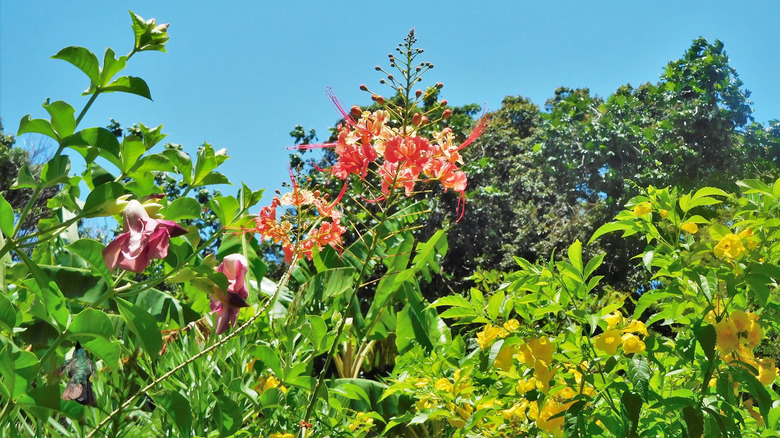
Some flowers draw almost as many lovestruck humans as nectar-seeking pollinators. One example is the gorgeous red bird of paradise (Caesalpinia pulcherrima), otherwise known as peacock flower and dwarf poinciana. Gardeners and hummingbirds are attracted to the red-orange color of its blossoms, with shapes that resemble feathered friends in flight. Hummers also love red bird of paradise because its flowers stick around for quite a while. The blossoms are a reliable source of nectar in late summer, when temperatures are hot and many other plants stop blooming. Plus, at 10 to 20 feet tall, red bird of paradise is easy for hummingbirds to spot as they flit through your yard. In addition to being a hummingbird magnet, this deciduous shrub can lure bees, butterflies, and other pollinators that benefit your local ecosystem.
Red bird of paradise loves the tropics, so it's best suited for USDA hardiness zones 9 through 11. It will often do fine in zone 8 as well. When grown in a truly tropical environment, it will bloom for much of the year. In climates that are a bit cooler, the flowers appear in late summer and are followed by seed pods in the fall. Be aware that the seeds have toxic levels of tannic acid, which can cause problems for pets and young children. In other words, take steps to ensure that no one's nibbling on a red bird of paradise in your care. To help with that, vinegar can keep a variety of critters out of gardens that contain this plant.
Caring for red bird of paradise
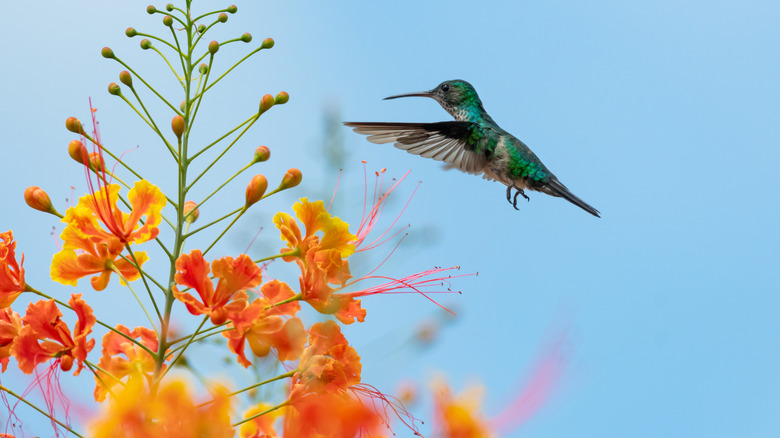
Keeping your red bird of paradise healthy and facilitating flowering are two ways to bring pollinators to your garden. The red bird of paradise doesn't need much special care to thrive, so it's a nice, low-fuss plant for beginning gardeners. The main pitfall to avoid is overwatering. Though red bird of paradise is a fan of humid weather, it doesn't like its growing area to be overly damp. For this reason, you should make sure its soil drains properly. If anything, this plant prefers to be a bit dry. It doesn't even mind the occasional drought once it has acclimated to your yard, so it's a good choice for xeriscaped areas.
A growing site that receives full sun will encourage your red bird of paradise to bloom with abandon. If this isn't available, the plant will also tolerate partial shade. Liquid fertilizer with ample phosphorous can also support the flowering process. FoxFarm Tiger Bloom liquid fertilizer concentrate is one option to consider. Apply it every couple of months while your red bird of paradise is actively growing, and steer clear of high-nitrogen formulations, which direct energy toward leaf development rather than flowering.
Your pruning shears can help you discover the versatility of this photo-worthy plant. With a bit of help from a cutting tool, it's possible to grow red bird of paradise as a tree, a shrub, or a hedge. Since red bird of paradise has prickly stems, avoid planting it beside your patio or other areas you might bump it by accident. The spikes are found on its bark, which come in pretty shades of gray, brown, and scarlet.