

The Common Wildlife Mistake To Avoid During Your Next Camping Trip
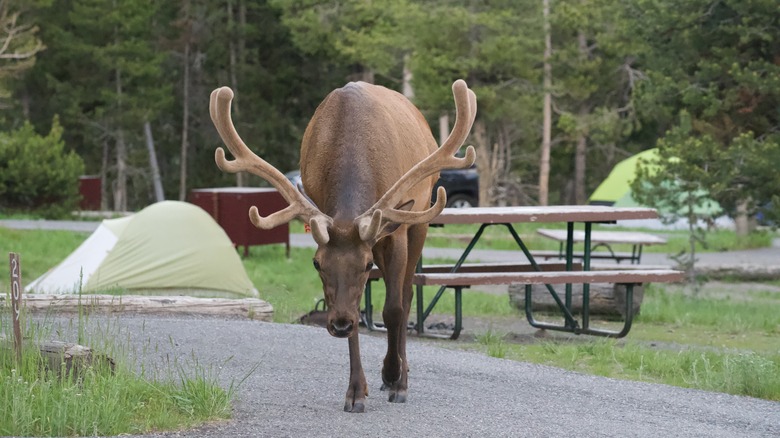
A camping trip is always an adventure in that you never know exactly what sights you may discover or what wildlife you'll encounter. Watching wildlife from afar is a rewarding experience that brings you closer to nature, yet it's important not to get too close. It may be tempting to share your snacks when a gaggle of Canada geese walks by or a cute chipmunk approaches your campsite, but feeding wildlife is one of the most common camping mistakes. Remember that while these creatures may be harmless, they aren't helpless; they don't need human help finding food. Feeding wild animals of any sort could prove dangerous or disastrous for the animals, and at times for yourself or even others who visit the campsite long after you've left.
It may seem like giving a handful of unsalted mixed nuts to squirrels is fairly harmless since they eat nuts anyway, but it's more complicated than that. Animals may choose to skip foraging and turn to humans to feed them if it becomes a common behavior at the park or campground. Picture the same scenario for large animals that become unafraid of humans, and you can imagine the potential ramifications. The cartoon Yogi Bear had an eternal quest to find pic-a-nic baskets, and the truth isn't so far off for actual bears that live near campsites (well, other than the hat and tie, walking upright while speaking English, and being friendlier than some humans). Human foods also aren't generally safe for wildlife, and those cute animals you enjoy seeing at the park could actually get sick from frequently eating what, to them, amounts to junk food with no nutritional value.
Why you should never feed wildlife while camping or enjoying parks
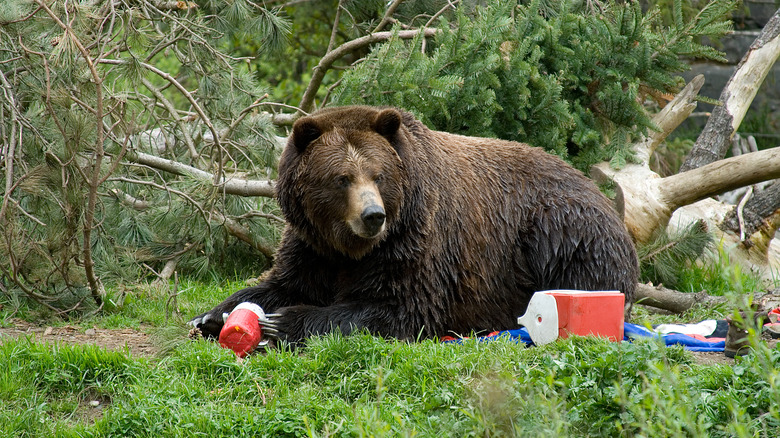
When wild animals stop foraging and rely on humans for food, it's called food conditioning, and it's a cause for much concern, according to the National Park Service. Food-conditioned wildlife may come a little too close for comfort to get those snacks they crave, even rummaging through your belongings to find a tasty treat. They could even become aggressive in their quests for food. Ultimately, it's not good for the animal or the camping humans.
To stay safe and keep the animals healthy and wild, some sensible rules come into play with food and trash — or rather, where to keep them — while camping. Pick up your trash and any crumbs or scraps after meals; the "leave no trace" concept helps the local ecosystem while keeping humans and animals safer. There are some important measures to take so you can cook safely while camping in bear country, or in areas known to have other potentially dangerous animals. For one, be sure to cook, eat, and keep your food, scraps, and anything else that smells like potential food at least 100 feet downwind of your sleeping area. This keeps curious bears at bay and also protects your campsite from coyotes at night.
Store your food by hanging it at least 10 feet up and five feet away from the tree or any other climbable structure. Your clothing may even smell of food after cooking; if so, be sure to store it and any other things that smell food-worthy by double-bagging them and storing them in bear-proof containers. Forgetting to do so is a common mistake that attracts bears to your campsite.