

This Southwestern State Is Home To The Most Rattlesnake Species In The US
We may receive a commission on purchases made from links.
Arizona is known for its desert landscapes. In fact, Arizona is the only U.S. state to contain a portion of each of North America's four major deserts — Chihuahuan, Great Basin, Mojave, and Sonoran. Given that deserts are often considered synonymous with rattlesnakes, it's not really a surprise that rattlers are among the creatures to beware of when adventuring in Arizona's deserts. However, it's not just that Arizona has a lot of these dangerous types of snakes, the Grand Canyon State actually has more different species of rattlers than any other state in the U.S.
There is a bit of discrepancy in exactly how many species of rattlesnakes reside in Arizona. The lowest count is 13, put forth by the National Park Service. Meanwhile, the Arizona Poison and Drug Control Center, which issues advice on what to do if you're bitten by a venomous snake, pegs the number at 15. There are other estimates out there, some which rise as high as 19. There are also subspecies: There are three subspecies of sidewinders calling Arizona home, for example. No matter the count, even the lowest number puts Arizona in the top spot for the most species of rattlesnakes in a single state.
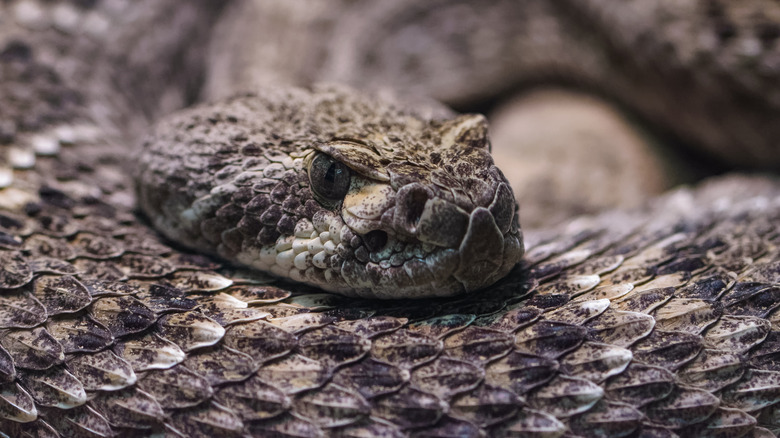
The most commonly encountered species of rattlesnake in Arizona is the western diamondback, which lives throughout the southern half of the state, along with the prairie and Great Basin rattlers. Other commonly encountered varieties of rattlers include southwestern speckled, northern blacktailed, Mojave (or Mojave green), Arizona black, and the banded rock rattlesnake. However, some rattlesnake species identified as living in Arizona are rarely seen. Species such as the twin-spotted and midget faded rattlesnakes are hardly ever encountered. Even the famed desert sidewinder is rarely spotted unless you're spending time in the southwestern corner of the state.
How to stay safe from rattlesnakes while adventuring in Arizona
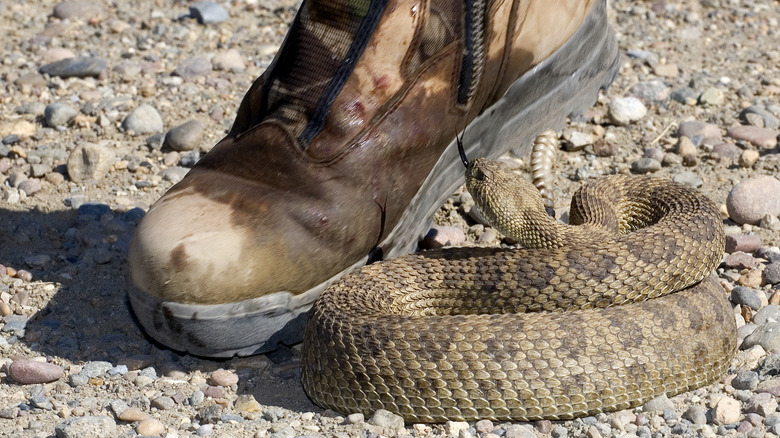
Although Arizona leads the country in rattlesnake species representation, there is no reason to avoid planning an outdoor adventure at one of the state's many amazing parks and wide open spaces. However, there are some steps to take in order to stay safe when sharing space with these desert dwellers. For one, you should be aware that spring through mid-fall is when rattlesnakes are most active. In spring and fall, rattlers are often active throughout the day. As the temperatures rise in summer, most often rattlesnakes will restrict their activity to late evening and night.
When hiking or moving about camp at dusk or at night, utilize a flashlight or lantern, especially during summer when they're more active. Day or night, stick to the trail and be sure to look before placing your hands or feet anywhere they might be resting. Even when they are inactive on hot summer days, snakes will strike if your surprise them in their hiding areas, including tall grass, rock crevices, brush, and wood piles. It is also a good idea to wear protective clothing such as ForEverlast snake guard leggings. With so many species in Arizona, it's worth getting to know their range and behavior patterns as well before you explore some place new.
If you do come across a rattlesnake while hiking, give it plenty of space and leave it alone. Do not attempt to approach it or move it off the trail. Allow it to move off or take a wide route around it. Keep in mind, even a dead rattlesnake has the ability to strike. If you are bitten, do not panic: Remove any restrictive clothing or jewelry, keep the bite area below heart level, call 9-1-1, and promptly get medical attention.