

The Must-Try Watering Advice For Flourishing Fall Pumpkins
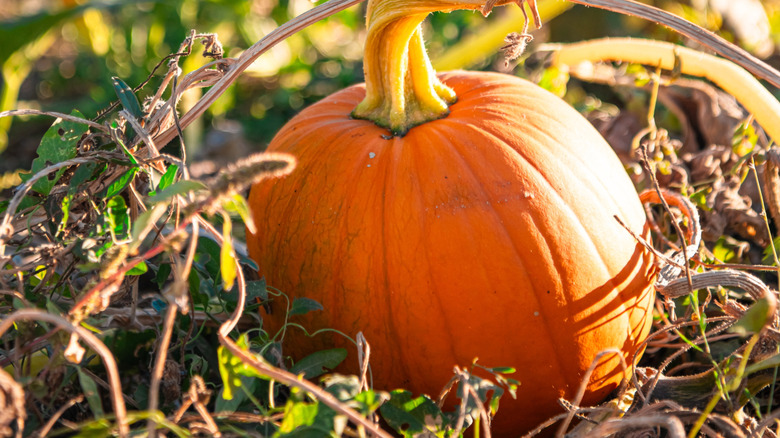
Growing your own pumpkins is a fun way to ring in fall, and will save you some money on jack-o-lanterns and pumpkin pie. While you may think you need a big patch for pumpkin growing, even folks with small yards can grow pumpkins — you can even grow pumpkins on your balcony. As long as you have a sunny spot for them and conduct some research on which varieties are best suited to your hardiness zone, you should have success. If you're hoping for flourishing fall pumpkins, it's all in how you water them, especially once they're already established.
First, water your pumpkins slowly so that the water reaches deep into the plant's roots. They'll thrive best with about an inch of water per week (up to 2 inches in hot weather). We're talking depth here: Don't overwater them by watering too frequently, as it's one of the major mistakes to avoid when watering your garden. The earlier in the morning you water them, the better, keeping the soil moist longer, rather than having water evaporate in the heat and sunshine.
Before you start watering them, though, keep this in mind: Pumpkins grow on vines along the ground. You don't want to cause stem rot or give the leaves powdery mildew by watering on top or under the plant. Instead of pouring water right at the base of your pumpkin plant, do your deep watering in a circle around the plant, giving about a two-foot leeway from the stem area. The roots will seek out the water, even though it's not being poured right on them. If you do see powdery mildew develop, you can get rid of the fungus with a little baking soda and dish soap.
A few more pumpkin watering tips
Watering alone is not going to keep your pumpkin plants happy — you can extend the moisture you're by mulching around the plants (again, avoiding the stem area and base of each fruit to prevent rot). Mulching your garden serves several important purposes: It also help keep weeds from growing around your pumpkins, which compete for water and nutrients, and can evengrow tall enough to block out the sunlight the vines needs to flourish. Start with black plastic mulch with seeds and transplants, but once established and the temperature gets above 75 degrees Fahrenheit, switch to organic mulches like straw or newspaper.
Here's where things get interesting — you'll want to stop watering your pumpkin about a week before harvest. This means it's essential to know what a ripe pumpkin looks like — they'll be firm and have the color you'd expect them to have (whether that's white, green, or traditional orange) and sound hollow when you thump them. Harvest time typically occurs in September or October. Before you cut off water entirely, however, you'll want to slowly reduce the amount as pumpkins are ripening. So, when you notice your pumpkins are getting close to ripening, cut back on watering to a little less (both in amount and frequency), perhaps delaying a day or two longer than you usually water them, all to help prevent fruit rot.