

This Dangerous & Unique Caterpillar Is A Surprisingly Common Threat To Hikers

We may receive a commission on purchases made from links.
Most outdoor enthusiasts realize there are a number of creatures to beware of when hiking across southern and southeastern regions of the United States. Dangerous types of snakes, black bears, mountain lions, and alligators are some that come to mind. However, from Texas to the Carolinas, there is another common, physically smaller, threat you're likely to encounter. The southern flannel moth caterpillar (Megalopyge opercularis), which is also sometimes referred to as the puss moth caterpillar, tree asp, or asp caterpillar, may appear harmless. However, it is among the creatures that are as cute as they are dangerous. In fact, it is one of the most toxic caterpillars in the United States.
The asp caterpillar is the larvae of the southern flannel moth. This dangerous, unique caterpillar is a surprisingly common threat to hikers, even though many of them do not realize it. The caterpillar is tiny, reaching lengths of around 1 ½ inches. The unique thing about it, other than it ability to deliver a potent and painful sting, is that it's completely covered in fine, wispy hairs. These hairs range in color from orange or brown to cream. Since mature moths typically lay two batches each year, there is no shortage of caterpillars. The asp caterpillar population is usually at its peak during late spring/early summer and again in the fall.
Typically found clinging to the underside of leaves of trees such as oak, elm, and hackberry, as well as pecan, it is not uncommon for people to not recognize these caterpillars as a living thing, much less one capable of inflicting harm. Due to its appearance, it is often a natural reaction for people to want to touch them, which is one of the most common ways stings occur, but all it really takes is just brushing past them.
How to avoid contact with asp caterpillars while hiking
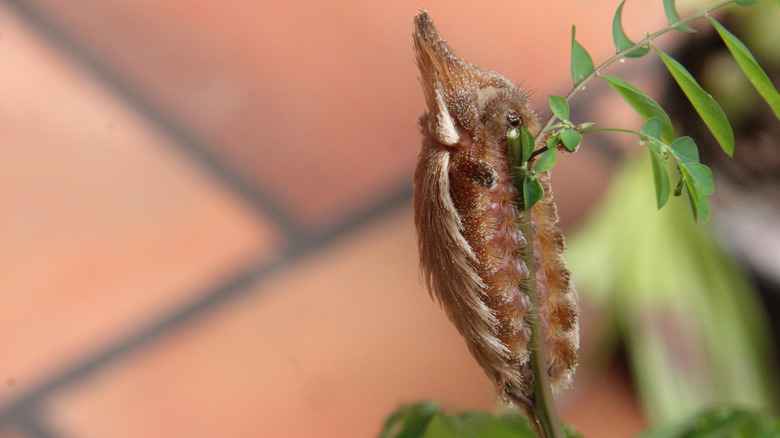
The best way to avoid contact with an asp caterpillar is knowing how to recognize one and not touch it if one is spotted. Because they are often curled under leaves, they're difficult to spot, leading to accidental contact. So what you wear while hiking can make a big difference. Since even casual contact with bare skin can cause painful stings, wearing long sleeve shirts and pants offers some protection. A wide-brimmed hat, like the GearTop sun hat, can also help deflect caterpillars away from your body should they fall as you walk under or through trees and brush.
Given that asp caterpillars will be found clinging to limbs and leaves, avoid walking under host trees or through dense brush as much as possible. When moving through these areas, watch where you place your hands and avoid contacting or shaking branches as much as possible, as this can cause asps to fall from above. You should also shake out and look over any clothing, shoes, or sleeping bags that have been left on the ground or hanging from tree limbs before wearing or using them, and again before packing things up.
Should you be stung by an asp caterpillar, the main goal is to minimize the pain. A well-stocked emergency supply kit for hiking can come in handy for this. If the stinging hairs are still stuck to your skin, remove them with sticky tape or tweezers. Then rinse with cool water and place an ice pack on the sting. You can also apply a mixture of baking soda and water or hydrocortisone to help minimize the pain. If you begin having an allergic reaction, seek medical help immediately.