

The Popular Kitchen Staple That'll Help Get Rid Of Mildew In Your Garden

You've spent days, hours, and even weeks working on and caring for your garden, and one day you walk out to find a powdery white substance on your plants. You spray them off, thinking it's just some weird dirt or something, only to come back and see the white blotches still there when the water has dried. Your plants have powdery mildew, but milk might help you protect them.
Before you start the removal process of powdery mildew, it's helpful to understand what you're dealing with and why it's occurring. It's a fungus that can affect many varieties of plants. It presents itself as a powdery white or gray substance on and under leaves, on stems, flowers, and even on fruits and vegetables. The organism spreads across the plant and targets new growth. That means it's essential to rid your garden of this fungus. If you live in an area with high humidity and experience an extremely warm and dry period, this can cause powdery mildew to begin spreading. If your plants don't get a lot of sunlight, this can also help the disease to thrive. It probably won't kill your plants, but it can damage them by causing them to wither, weaken, and grow more slowly.
Fortunately, you can create a milk spray that will benefit your plants. It works both as a treatment for powdery mildew and as a preventive measure in areas where the disease is common.
How to use milk against powdery mildew on plants
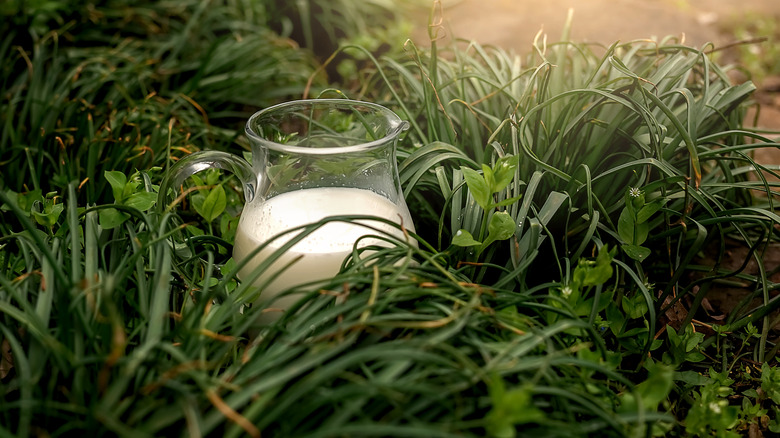
Before you walk out to the garden with a fresh gallon of milk, there is a process to using this basic food item to ward off powdery mildew. Whether you're using it to eliminate a case of mildew that has already appeared or to prevent it from happening in a garden where it has occurred before, you will want to mix the milk with water first. There are different measurements online, but the Almanac suggests using 1 part milk to 10 parts water. According to GrowVeg, it doesn't matter if the milk is skim or whole since scientists believe it's the protein in the milk, not the fat, that creates the effect of killing the mildew.
Plants that milk sprays have proven effective on include tomatoes, barley, pumpkins, cucumbers, and apples. You can also use it on flowers affected by powdery mildew, such as roses.
Unfortunately, the milk spray's effects don't last beyond the instant kill after a spray session, so you will need to continue spraying your plants on a weekly basis. Be sure to administer the milk spray when the sun is shining, to help "burn" off the mildew.
Not only will milk help you avoid powdery mildew, but there are other reasons you should start watering your plants with milk, including the fact that it will help keep deer out of your yard.